16 Simple Linen Closet Organization Ideas for Easy Access
This site contains affiliate links, view the disclosure for more information.
A linen closet tends to become one of the most overlooked storage spaces in a home. Towels get stacked unevenly, sheet sets lose their matching pieces, and spare blankets take up more room than they should. Linen closet organization addresses these specific problems within a shelved, vertical storage space that most households use daily.
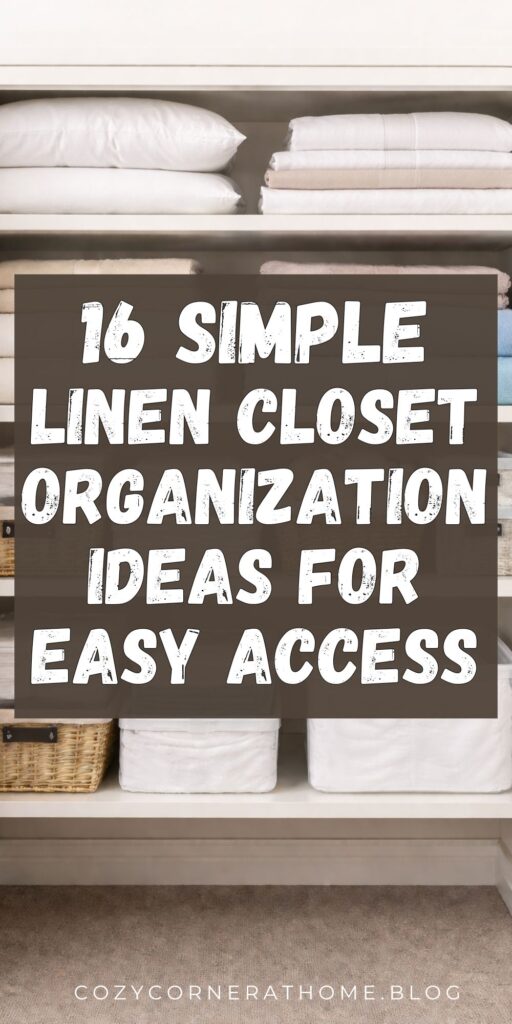
Because linen closets hold items in very different sizes and weights, one system rarely handles everything well. A folded king comforter needs different containment than a stack of washcloths. Sheet sets store differently than hand towels. Multiple methods, used together, tend to work better than any single approach.
This guide covers practical storage tools and methods suited specifically to linen closets — including shelf dividers, baskets, bins, labels, and door organizers. All ideas apply to the closet itself, not surrounding rooms or furniture.
- Measure shelf depth and height before buying any bins or organizers
- Group items by type and frequency of use before rearranging
- Combining two or three methods typically works better than using one alone
- Most tools here require no tools or permanent installation
Shelf Dividers Keep Towel Stacks From Toppling
Stacked towels tend to lean and collapse into neighboring piles, especially on wider shelves. Shelf dividers clip directly onto the shelf surface and hold each stack upright on both sides. They are one of the simplest additions to a linen closet and typically require no hardware.
Most clip-on dividers fit standard wood or laminate shelves. Adjustable versions slide along the shelf to accommodate different pile widths. However, they work best on shelves deeper than 10 inches, where the clip has enough surface area to grip firmly.
Wicker and Seagrass Baskets Contain Loose Linens
Open baskets work well for items that resist neat folding, such as spare washcloths, individual pillowcases, or small guest towels. Because baskets have defined walls, they keep loose pieces contained without requiring precise organization inside. Additionally, baskets in matching sizes create a consistent look across multiple shelves.
Sets of two or four baskets allow uniform sizing throughout the closet. Open-top styles offer faster daily access than lidded versions. Lidded baskets, however, work better for items stored less frequently, like seasonal guest towels or extra blankets.
Wicker baskets do not stack reliably when loaded. Plan for one basket per shelf section rather than stacking them.
Also Read: 21 Under Stairs Organization Ideas for Hidden Storage
Fabric Bins Simplify Sheet Set Storage
Storing a sheet set as one contained unit — fitted sheet, flat sheet, and pillowcases together — prevents the pieces from separating across different shelves. Fabric bins hold a complete set for one bed size and keep everything in one place. When labeled by bed size, they make it easy for anyone in the household to find the right set quickly.
Collapsible fabric bins are widely available online and in home goods stores. Most standard bins hold a queen or king sheet set when folded flat. Reinforced bins with structured sides hold their shape better on open shelves without support walls.
Fabric bins may sag on shelves narrower than 11 inches. Check shelf width before selecting bin size.


Clear Stackable Bins Make Contents Visible
When bin contents stay visible without removing anything from the shelf, items are less likely to get forgotten or buried. Clear plastic bins solve this by allowing a quick visual scan of what’s stored. Stackable versions also recover vertical space between shelves.
Clear plastic shows dust and smudges more visibly than opaque containers. Wipe down bins occasionally to keep the closet looking tidy.

Over-the-Door Organizers Use Wasted Door Space
The inside of a linen closet door often goes completely unused. Over-the-door organizers attach to the door and add pocket or rack storage without touching the shelves. Small items like washcloths, hand towels, and individual pillowcases fit naturally into fabric pockets or wire slots.
Fabric pocket organizers typically hold 12 to 24 items across multiple rows. Wire rack versions handle heavier folded towels without sagging. Both styles fit standard interior doors up to 36 inches wide and are available in a range of sizes at most home goods retailers.
Over-the-door organizers reduce the clearance between the door and the nearest shelf. Measure that gap before installing any rack-style version.
Pro Tip: Store the most-used items — everyday bath towels and current-season sheet sets — at eye level. Reserve the top and bottom shelves for items used less often, like seasonal blankets or guest bedding.
Store the most-used items — everyday bath towels and current-season sheet sets — at eye level. Reserve the top and bottom shelves for items used less often, like seasonal blankets or guest bedding.
Tension Rods Create an Extra Layer of Storage
A tension rod installed between two closet walls creates a secondary surface below a fixed shelf. Small baskets or hooks hang from the rod to hold washcloths, hand towels, or lightweight accessories. Similarly, a tension rod placed vertically between items keeps rolled towels upright without a bin.
No tools or wall damage are required. Rods extend to fit openings between 18 and 48 inches in most cases. They are typically priced affordably and available at most home stores.
Tension rods support light loads only. Avoid placing heavy stacks of thick towels or folded blankets on a single rod.

Labels Make the System Work for Everyone
A visually organized closet can still be confusing if no one agrees on where things go. Labels assign a clear category to each bin, basket, or shelf section, so items return to the right place after laundry. Because labels reduce guesswork, they also reduce the chance of the closet reverting to disorder over time.
Label makers produce clean, consistent text labels that hold well on smooth surfaces. Chalkboard labels work on fabric bins and allow editing when categories change. Clip-on tags attach to wicker or wire baskets without adhesive.
Standard adhesive labels may not hold on textured wicker. Use clip-on or string-tied tags for non-smooth surfaces.
Read More: 20 Kitchen Utility Drawer Organization Ideas
Rolled Towels in Deep Baskets Improve Daily Access
Rolling towels vertically and storing them upright in a deep basket makes each one individually accessible. Unlike flat stacking, rolled storage eliminates the need to pull from the bottom of a pile to reach a specific towel. Also, rolled items tend to stay neater because removing one piece does not disturb the others.
Bath towels roll to approximately 3 to 4 inches in diameter. A standard 12-inch wide basket typically holds three to four rolled bath towels side by side. Deep baskets with straight sides work better than shallow trays for this method.
Rolled storage does require a consistent rolling technique. Without it, the bin can look uneven over time.
Shelf Risers Double the Capacity of a Single Shelf
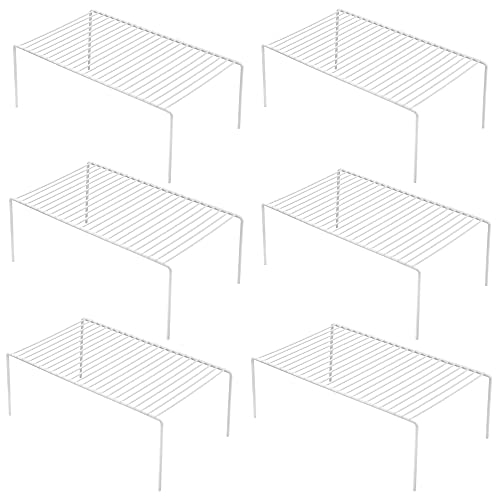
A shelf riser sits on top of an existing shelf and creates a second elevated level within the same bay. Folded items store on the lower surface while the riser holds another row above. This method can effectively double what a fixed shelf holds without adding shelving to the wall.
Metal wire risers allow airflow, which can help prevent musty odors in enclosed closets. Solid risers provide a more stable surface for bins and stacked items. Most risers fit shelf depths between 12 and 16 inches and are sold in a range of heights.
Risers raise item height and may reduce clearance to the shelf above. Measure vertical space between shelves before selecting a riser.
Group guest linens together in one labeled basket or bin. When guests visit, everything needed is in one place without searching through everyday items.
Vacuum Storage Bags Free Up Shelf Space for Seasonal Items
Bulky comforters and heavy blankets take up a disproportionate amount of linen closet space when stored uncompressed. Vacuum storage bags compress these items down significantly and keep contents protected from dust between uses. As a result, shelf space stays available for everyday linens throughout the season.
Most vacuum bags work with a standard household vacuum hose. They are sold in sets of four to eight pieces in sizes ranging from twin to king. However, compression can reduce loft in down or down-alternative fills over time, so they are better suited for synthetic or cotton blankets.
Reserve vacuum bags for items stored two months or longer. They are less practical for frequently accessed pieces.
Read More: 20 Kitchen Drawer Storage Ideas for Small Tools
Zone-Based Organization Structures the Whole Closet
Dividing the closet into zones by category, room, or household member gives every item a defined home. For example, one section might hold bathroom towels while another holds guest bedroom sheets. Each zone uses its own bin, basket, or shelf section to maintain clear separation.
Because zones create a consistent system, items return to the correct location after laundry without confusion. Labels, color-coded bins, or different basket styles help distinguish zones at a glance. This method scales from small single-shelf closets to larger walk-in linen spaces.
Zone-based systems depend on consistent habits from all household members. Without shared understanding of the categories, the system can break down gradually.