12 Hidden Storage Ideas for Subtle Organization
This site contains affiliate links, view the disclosure for more information.
Hidden storage refers to any system that conceals everyday items inside furniture, walls, or decorative objects. It solves a common problem in living rooms, entryways, and home offices: too many small items and not enough closed storage to contain them. Visible clutter on surfaces is often the result of furniture that prioritizes looks over function.
Most rooms need more than one hidden storage solution. Keys, remotes, chargers, blankets, and paperwork each need different containment. Additionally, access frequency matters — daily-use items need faster retrieval than seasonal ones.
This guide covers 12 methods that work without major renovation, including furniture-based options, wall-mounted solutions, and decorative containers.
Storage Ottomans
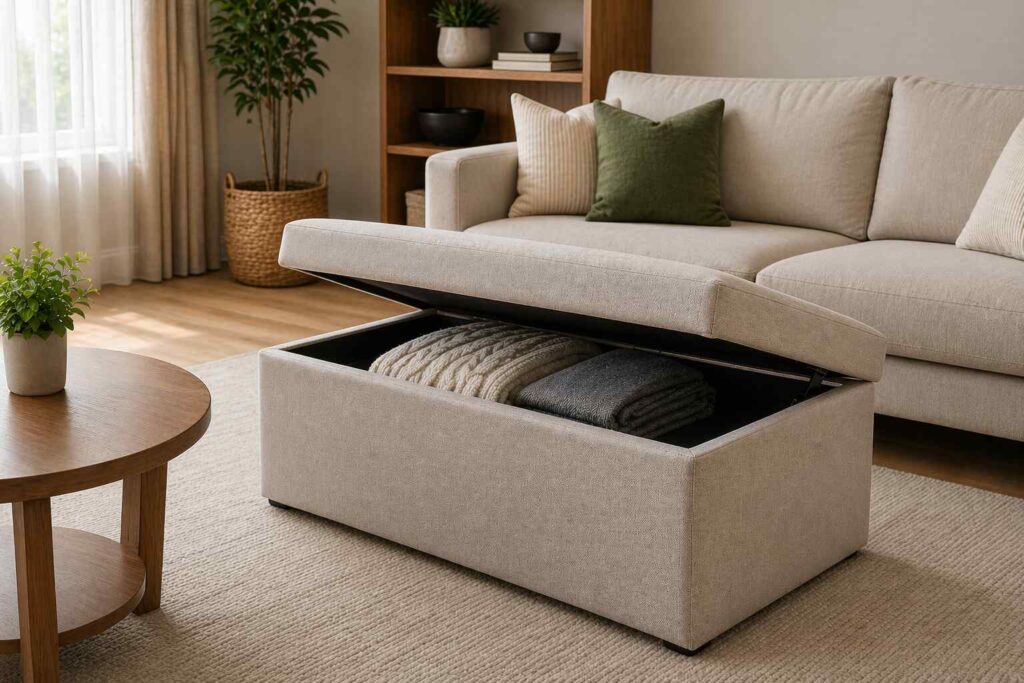
Storage ottomans hold blankets, remotes, games, and accessories inside an upholstered exterior. They sit in plain sight without signaling storage to guests. Most open with a hinged or removable lid.
Fabric-covered models typically hold 30–50 liters. They work well as coffee table substitutes in living rooms. Many include a tray-top insert for drinks.
This method suits soft or lightweight items only — dense objects can damage interior lining.
Entryway Benches With Interior Compartments
An entryway bench with hidden storage handles shoes, bags, and scarves without open shelving or wall hooks. The seat lifts to reveal the compartment underneath. Because the exterior looks like standard seating, it keeps entryways visually clean.
Wooden bench units typically offer 20–40 liters of interior space. Some include removable fabric bins for further subdivision. Widely available online and in home goods stores.
This method works best in entryways with at least 18 inches of floor depth.
Also Read: 12 Easy Vertical Pantry Storage Ideas for Narrow Spaces
Bed Frames With Built-In Drawers
Platform beds with built-in storage drawers use the under-bed zone for out-of-season clothing or extra bedding. The drawers roll out on casters and stay below the visible frame line. As a result, the room reads as uncluttered even with significant storage underneath.
Drawer depth typically ranges from 6–10 inches. Some models use hydraulic lift frames instead, opening the full mattress area.
- Works only on platform frames — standard box springs block access
- Not suitable for items sensitive to floor-level humidity
Flush-Mount Wall Cabinets
Flush-mount wall cabinets sit flat against the wall and close with magnetic or push-latch doors. When shut, they resemble wall panels. Inside, they hold cables, routers, office supplies, and small electronics.
These units typically install with standard wall anchors and require no framing modifications. However, loads over 20 lbs require stud mounting.
Toe-Kick Drawers
The recessed strip at the base of most kitchen cabinets sits unused. Shallow pull-out drawers installed here hold flat items like baking sheets, cutting boards, and trays. Because the drawer face sits at floor level, it stays invisible from standing height.
Toe-kick drawer kits fit standard 3.5-inch kick heights. They typically include front panels that match existing cabinetry when painted.
Drawer depth is limited to cabinet base depth, usually 20–22 inches.
Read More: 17 Spice Storage Ideas for an Organized Kitchen
Mirror Cabinets
Full-length mirrors with rear-access compartments appear as standard mirrors when closed. Inside, shallow shelves hold jewelry, accessories, or bathroom essentials. Since the mirror serves a daily function regardless, it draws no attention as storage.
Most units run 48–72 inches tall with 3–5 inches of interior depth. Available in flush-mount and surface-mount configurations at most home goods retailers.
Not suitable for humid bathrooms without moisture-resistant interior finishes.
Decorative Lidded Boxes
Rigid decorative boxes with fitted lids hold remotes, chargers, and mail on shelves or coffee tables without appearing functional. They read as décor. Similarly, lidded baskets in seagrass or wicker serve the same function with a softer texture.
Stackable versions typically come in sets of three to five with coordinated finishes. Available in standard sizes to fit most shelving units.
This method suits items retrieved occasionally — frequent access makes lids less practical.
Sofa Arm Caddies
Fabric caddies drop over sofa arms and hold remotes, phones, and glasses within reach. They stay invisible from across the room and remove without tools. Because they attach with no hardware, they suit renters or households that rearrange furniture often.
Most fit arms up to 8 inches wide and include two to four exterior pockets. Typically priced affordably at most home stores.
This method works only on padded arms — hard wooden arms do not hold caddies securely.
Lift-Top Coffee Tables
Lift-top coffee tables reveal a storage well beneath a surface that raises to working height. The mechanism serves two functions: hidden storage and an elevated surface for laptop use or casual dining. As a result, this furniture type suits small living rooms where space does double duty.
Interior capacity typically ranges from 20–35 liters. Many models also include lower display shelves.
This method does not suit households with young children — the lift mechanism can pinch fingers.
Pegboard Panels Inside Cabinet Doors
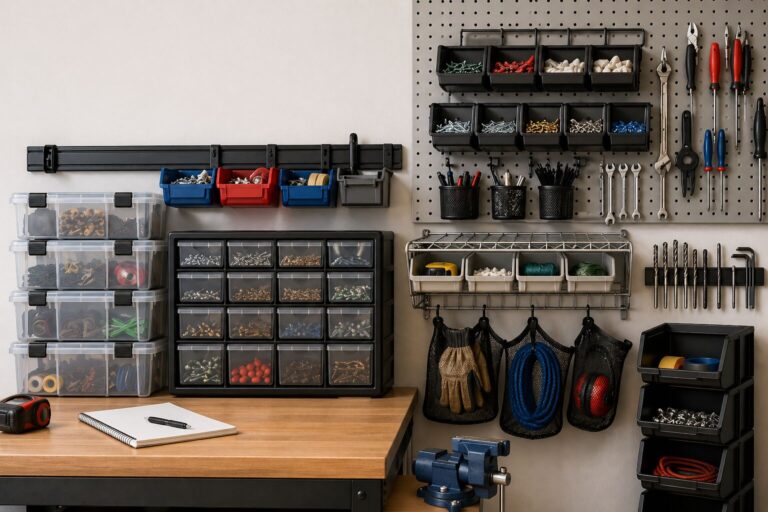
Cabinet door interiors typically go unused. Thin pegboard panels mount to the inside face and hold hooks, small bins, or clips for tools, supplies, or accessories. When the door closes, everything disappears.
Pre-cut inserts come in standard cabinet door dimensions. Also available in metal mesh versions that accept magnetic clips.
This method requires at least 2 inches of clearance between the door and interior shelving when closed.
Staircase Riser Drawers
Each riser on a closed staircase can become a pull-out drawer. Staircase storage works well for shoes, cleaning supplies, or seasonal gear. Pre-made riser inserts fit standard stair dimensions and require no major construction.
This method requires closed risers — open-tread staircases cannot accommodate enclosed drawers.
Hollow Furniture Bases
Some side tables and console tables include hollow base platforms or removable leg caps that reveal small interior compartments. These suit very small items like charging cables or keys.
However, access tends to be awkward compared to drawer-based options. For this reason, this method works best for items retrieved infrequently.
For more ideas, check out our storage section.