12 Easy Under Sink Organization Ideas for Cleaning Supplies
This site contains affiliate links, view the disclosure for more information.
The cabinet under your kitchen sink tends to collect more than it can comfortably hold. Spray bottles, sponges, dish soap, and extra trash bags all end up crammed into one awkward space — often around pipes that make organizing even harder. Under sink organization helps you actually use that space instead of just stuffing things in and hoping for the best.
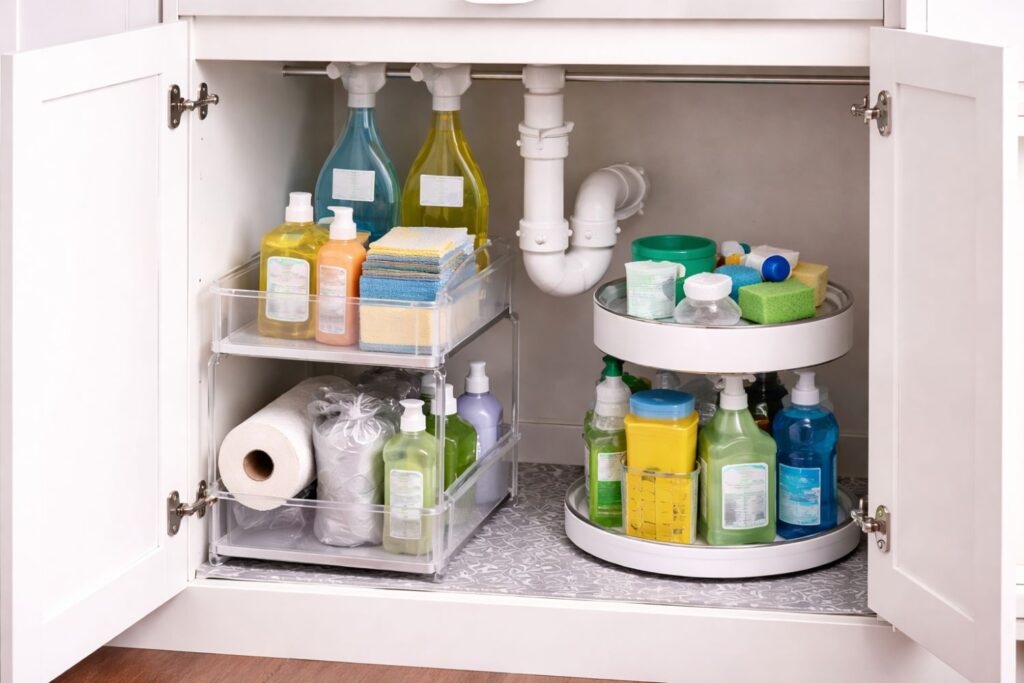
Most cabinets need more than one solution. A single bin rarely accounts for the plumbing, the varying bottle heights, or the door swing. Combining two or three methods typically works better than relying on one.
This guide covers practical options — from tension rods to pull-out drawers to door-mounted racks — that work in standard kitchen cabinets without major modifications.
- Measure cabinet height, width, and pipe placement before buying any organizer
- Most under-sink spaces work better with two or three systems combined
- Keep daily-use supplies at the front and occasional-use items toward the back
- Never block access to the shut-off valve beneath the sink
1. Hang Spray Bottles from a Tension Rod
A tension rod mounts horizontally inside the cabinet with no screws or tools required. Spray bottle triggers hook directly over the rod, clearing the cabinet floor for other storage. One rod can typically hold four to six standard bottles.
For taller cabinets, two rods at different heights can separate cleaning sprays from supplies stored below. Tension rods are widely available in adjustable lengths. They don’t work well for bottles with flat caps or wide bases that can’t hang.
2. Use a Pull-Out Drawer Organizer
Sliding pull-out trays install on the cabinet floor and glide forward on tracks. Because everything slides toward you, items at the back stay just as accessible as items in the front. Stackable two-tier pull-out organizer trays work especially well when vertical space allows.
Pipes may limit drawer width or block installation on one side of the cabinet, so measure carefully before buying. This solution works best with at least 12 inches of clear floor space.


3. Add a Two-Tier Adjustable Shelf
An adjustable shelf organizer sits on the cabinet floor and creates an upper and lower level of storage. Dish soap and sponges can go on top while trash bags or extra cleaning cloths store below. Most versions fit around a standard drain pipe without modification.
These organizers come in several widths. They don’t work in cabinets where the pipe clearance beneath the drain is very low.
4. Mount a Rack on the Cabinet Door
Over-the-door racks attach to the inside of the cabinet door and hold small bottles, sponges, and gloves without using any floor space. Most versions hook over the door panel without screws. However, the door needs to close fully with the rack in place, so check clearance before installing.
Over-the-cabinet-door racks are widely available online and at most home goods stores.
Check bottle caps for drips before storing them upright in any bin or tray. Even small leaks can damage cabinet wood over time.
5. Group Supplies in Stackable Bins
Stackable plastic bins let you divide supplies by category — one for sponges, one for dish soap, one for scrubbing pads. Clear bins work best because you can see the contents without pulling everything out. These are sometimes sold in sets of four to eight and fit most standard cabinet depths.
Stacked bins can shift if the cabinet floor is uneven, so check the base before stacking more than two high.

6. Try a Turning Tray for Deep Cabinets
A rotating tray brings items from the back of a deep cabinet forward without digging. Two-tier versions add a second platform for shorter bottles. Turntables typically range from 9 to 18 inches in diameter.
Measure pipe placement carefully before buying — the base needs to clear any plumbing running through the cabinet floor.
Related Post: How to Organize a Small Kitchen with Limited Cabinets
7. Mount Mesh Pouches to the Side Wall
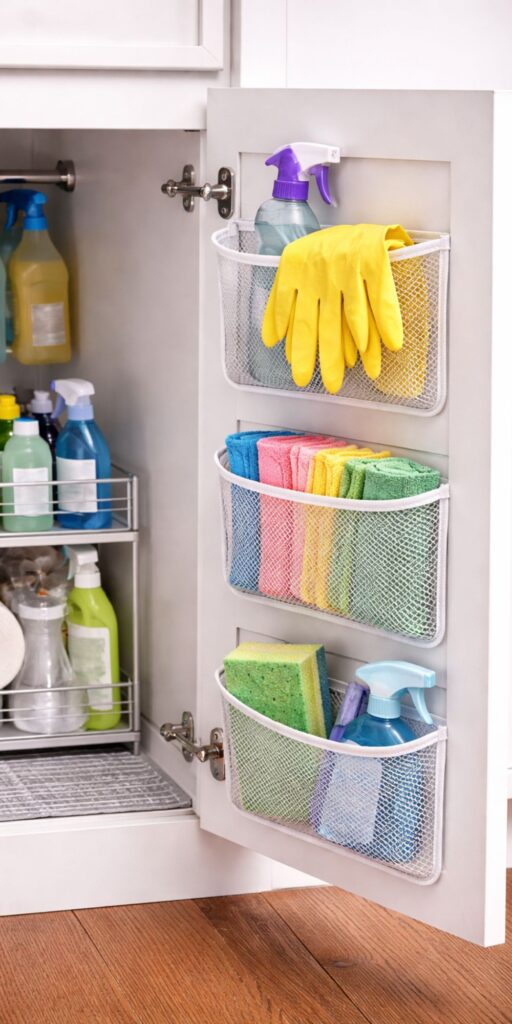
Adhesive mesh pouches attach to the interior side wall of the cabinet and hold flat items like rubber gloves, cloths, and sponges. Mesh allows wet items to dry without trapping moisture. Most pouches hold up to two pounds and install without screws.
These may not adhere well to painted or textured cabinet walls without reinforced adhesive backing.
Adhesive-mounted products need at least 24 hours to cure before you add weight to them.
8. Use a Handled Caddy for Portable Supplies
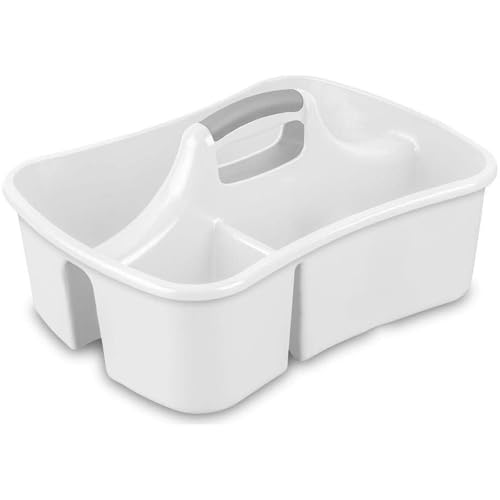
A handled cleaning caddy stores your most-used supplies as one portable unit that lifts out completely. When you need to clean another room, the whole caddy comes with you. Divided compartments keep bottles from tipping inside.
Caddies with wide handles may not fit under low tension rods or beneath a two-tier shelf without some rearrangement.
9. Install an Over-the-Pipe Tray
When a pipe runs through the center of your cabinet, standard organizers often can’t span the full width. Over-the-pipe trays include a cutout or arched base that sits directly over the drain pipe. They recover floor space that would otherwise go unused.
Measure your pipe diameter and height before buying — most versions fit only vertical drain pipes.
10. Keep a Slim Caddy for Everyday Essentials
A narrow caddy placed at the front of the cabinet keeps daily-use items within easy reach. Dish soap, a sponge, and hand soap can live here without getting buried. This works well alongside a deeper organizing system behind it.
It’s a simple addition, but it prevents the habit of just setting things down wherever they fit.
Also Read: 18 Kitchen Shelf Organization Ideas for Everyday Cooking
11. Line the Cabinet Floor with a Waterproof Mat
A waterproof cabinet liner sits on the floor of the cabinet and protects the wood from drips and leaks. It’s an easy first step before adding any other organizers on top. Most liners cut to size with scissors and lay flat without adhesive.
Ribbed or textured liners also keep bins and caddies from sliding around when you pull things in and out. These are typically priced affordably at most home stores and sold in rolls.

12. Use a Wire Basket for Bulky Items
A wire basket handles the items that don’t fit neatly into bins or caddies — extra sponge packs, large dish soap refills, or a spare bottle of cleaner. The open sides make it easy to see what’s inside without lifting the basket out. Baskets with handles make the whole thing easy to pull forward.
Choose a basket with a tighter wire spacing if you’re storing smaller items that might fall through the gaps.