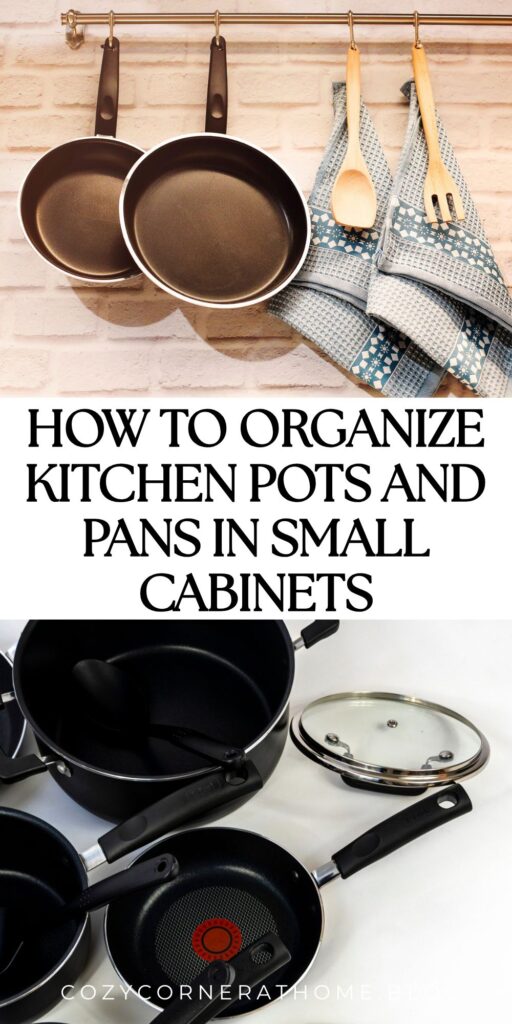
How to Organize Kitchen Pots and Pans in Small Cabinets
This site contains affiliate links, view the disclosure for more information.
Small kitchen cabinets create daily frustration when pots and pans pile up without a clear system. Learning how to organize kitchen pots and pans efficiently can reduce clutter and make cooking more accessible. This guide provides practical methods for maximizing limited cabinet space using simple tools and clear steps.
The techniques below focus on vertical storage, stackability, and access frequency. Most solutions require minimal investment and can be installed without tools. Each method addresses specific cabinet dimensions and cookware types to help you organize kitchen pots and pans based on your available space.
Measure Your Cabinet Space Before Reorganizing
Cabinet dimensions determine which organization methods will work. Measure interior height, width, and depth before purchasing any storage tools.
Record measurements for each shelf separately. Cabinets often have uneven spacing between shelves. Write down the distance from the cabinet floor to the first shelf, between shelves, and from the top shelf to the cabinet ceiling.
Check for obstructions like pipes or hinges. These reduce usable space and affect placement of organizers. Note their location in your measurements.
Remove and Sort All Cookware First
Empty the cabinet completely. Place all pots, pans, and lids on a counter or table. This step reveals the total volume you need to accommodate.
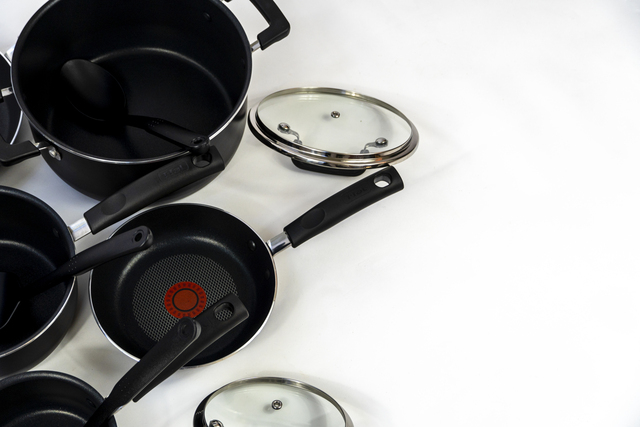
Group items by type: stockpots, saucepans, frying pans, lids, and specialty items. Count how many pieces are in each category. Discard or donate cookware with damaged non-stick coatings, warped bottoms, or missing handles.
Identify your most-used pieces. These should occupy the most accessible spots in your reorganized cabinet.
Stack Pots and Pans by Size and Frequency
Nesting same-type cookware saves the most space immediately. Place smaller pots inside larger ones of the same style. This method works best with saucepans and stockpots that have similar shapes.
Stack frying pans separately from pots. Frying pans have sloped sides that nest differently. Place the largest pan on the bottom and work upward to the smallest.
Avoid stacking more than three or four pieces together. Excessive stacking makes the bottom items difficult to access and can scratch non-stick surfaces.
Position frequently used items on top of stacks or toward the front of shelves. Reserve back corners and lower stacks for occasional-use cookware.
Install Shelf Risers to Double Usable Height
Shelf risers create a second tier within existing cabinet space. They effectively double the storage area on a single shelf.
Choose risers with heights between 4 and 8 inches based on your cabinet measurements. Metal or bamboo risers offer better durability than plastic options. Ensure the riser width fits completely within your shelf depth.
Place the riser toward the back of the shelf. Store shorter items like small saucepans or lids underneath. Position taller pots on top of the riser.
Use multiple risers if cabinet width allows. Leave 1-2 inches between risers for hand clearance when retrieving items.
Use Vertical Pan Organizers for Frying Pans
Vertical divider racks store pans upright like files in a cabinet. This method prevents scratching and allows single-hand retrieval.
Select organizers with adjustable dividers. These accommodate different pan sizes and handle orientations. Most vertical organizers fit pans ranging from 8 to 12 inches in diameter.
Position the organizer on a lower shelf for easier access. Pans stored vertically are heavier to lift from upper shelves. Insert pans with handles facing the same direction to maximize space efficiency.
Clean pans thoroughly before vertical storage. Food residue or moisture can transfer between touching surfaces.
Also Read: 15 Ways to Stop Pantry Shelves From Getting Messy
Mount Lid Organizers on Cabinet Doors
Cabinet door storage reclaims wasted space. Adhesive or screw-mounted lid racks attach to the inside of cabinet doors.
Measure door height and distance from hinges before purchasing. Most door-mounted organizers require at least 2 inches of clearance from hinges to avoid interference when closing.
Install racks in the upper portion of doors. This prevents lids from dragging on shelves when the door opens. Use racks with coated wires to prevent scratching lid surfaces.
Store only lightweight lids on door mounts. Glass lids and heavy cookware lids can strain adhesive mounts over time.
Add Pull-Out Cabinet Organizers for Deep Cabinets
Deep base cabinets create dead space in back corners. Pull-out drawer systems bring rear items forward without rearranging everything in front.
Choose two-tier pull-out systems for maximum capacity. The upper tier typically holds smaller items while the lower tier accommodates larger pots.
Measure cabinet width accurately. Pull-out systems require specific clearances on both sides for smooth operation. Most units need 1 inch of total clearance for the sliding mechanism.
Install pull-out organizers on lower shelves only. Upper shelves create ergonomic strain when fully extended.
Read More:
- 21 Ways to Organize a Small Kitchen on a Budget
- How to Organize Kitchen Drawers Without Dividers
- 15 Under-Sink Organization Tips for Pipes That Block Storage
Use Drawer Dividers for Cookware Storage
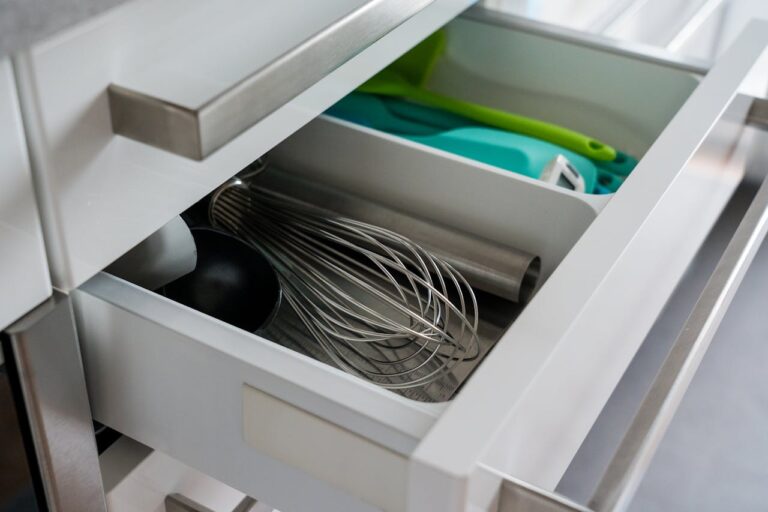
Deep kitchen drawers can store pots and pans more efficiently than shelves. Dividers keep items separated and prevent sliding during opening and closing.
Select adjustable peg dividers for flexible configuration. These allow repositioning as your cookware collection changes. Spring-loaded dividers require no installation and adjust to fit most drawer widths.
Place heavier pots toward the back of drawers. This prevents the drawer from becoming front-heavy and difficult to close. Store lids vertically in dedicated divider sections at the front or side of the drawer.
Line drawer bottoms with non-slip liners. This protects both the drawer and cookware finishes from friction damage.
Hang Pots on S-Hooks or Racks
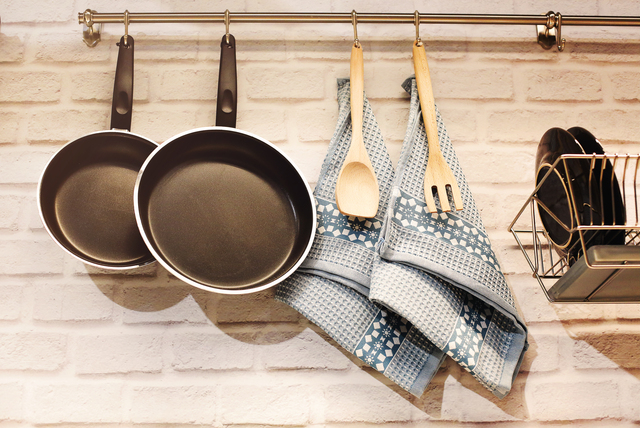
Wall and ceiling storage removes items from cabinets entirely. This solution works when cabinet space cannot accommodate your full cookware collection.
Install a wall-mounted rod or rail system on wall studs for safety. Drywall anchors can support small saucepans but may fail under the weight of cast iron or stockpots. Use a stud finder to locate secure mounting points.
Add S-hooks to the mounted rod for flexible pot placement. S-hooks allow you to adjust spacing based on pot handle sizes and remove hooks you don’t need. Choose hooks rated for at least 10-15 pounds to safely support most cookware.
Position hanging storage between 18 and 24 inches above countertops. This height allows easy access while keeping cookware clear of workspace. Leave 4-6 inches between S-hooks for adequate spacing and to prevent pots from touching.
Hang only clean, dry cookware. Moisture on hanging items can drip onto counters or create water stains. Ensure pot handles are fully seated on S-hooks to prevent sliding.
Consider Material-Specific Storage Needs
Non-stick cookware requires protective layers between pieces. Place paper towels, felt protectors, or soft cloth between nested non-stick pans. This prevents coating damage from metal-on-metal contact.
Cast iron pans need ventilation to prevent moisture buildup. Avoid storing cast iron in sealed or plastic-lined spaces. Position these pans where air can circulate around all surfaces.
Copper cookware scratches easily. Store copper pieces separately or use thick cloth dividers. Avoid stacking copper directly on stainless steel or other hard metals.
Stainless steel tolerates most storage methods. These pans can be stacked, nested, or stored vertically without special protection.
Related Post: 6 Fixes for Cabinets With Hard to Reach Corner Space
Maintain Organization by Limiting Cookware Quantity
Small cabinets cannot expand to accommodate unlimited items. Establish a maximum number of pieces based on your measured space.
Follow a one-in-one-out rule for new cookware purchases. When adding a new pan, remove an existing piece of similar size or function. This prevents gradual accumulation that exceeds storage capacity.
Evaluate cookware annually. Remove duplicate items or specialty pans used less than twice per year. Store seasonal or rare-use items outside the kitchen if possible.
Keep only cookware that fits your household cooking frequency. A two-person household typically functions well with 6-8 pots and pans total.
What Not to Do When Organizing Pots and Pans
Avoid storing pots and pans while wet. Trapped moisture causes rust on cast iron and can warp wooden handles. Dry all cookware completely before storage.
Do not force oversized items into small spaces. This damages both the cookware and cabinet interiors. Cookware that doesn’t fit comfortably should be stored elsewhere or replaced with appropriately sized alternatives.
Skip overcomplicated organization systems. Methods requiring multiple steps to retrieve a single pan reduce efficiency over time. The best system allows one-handed access to any item.
Do not stack cookware of different materials without protection. Metal-on-glass or metal-on-ceramic contact can cause chips and scratches.
Avoid placing heavy items on adhesive-mounted organizers. These systems work for lightweight lids but fail under the weight of cookware. Always verify weight limits before installation.
For more helpful tips, check out our organization section.