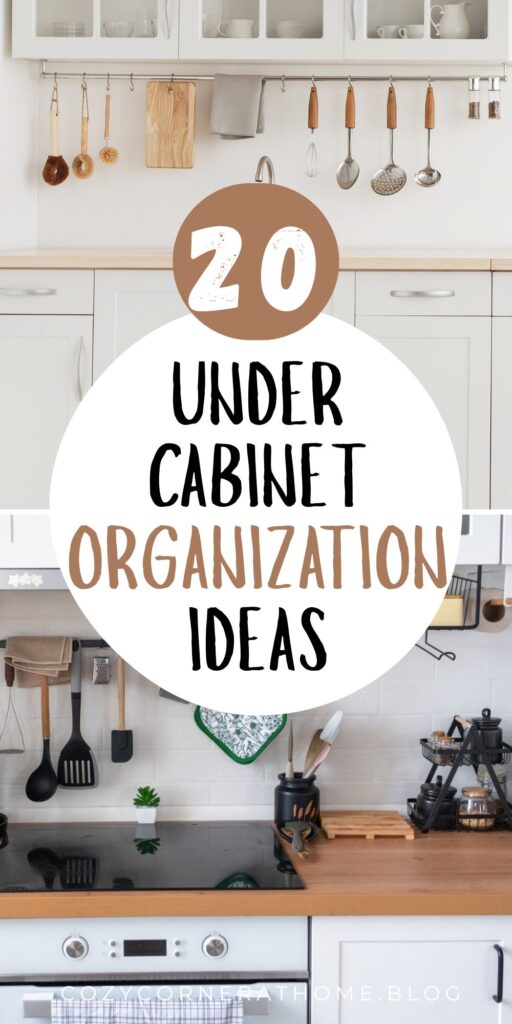
20 Under Cabinet Organization Ideas for Kitchen Storage
This site contains affiliate links, view the disclosure for more information.
Kitchen cabinets rarely provide enough usable storage space. Awkward corners, deep shelves, and low clearance make it difficult to access items stored at the back. Under cabinet organization addresses these gaps by using vertical space, door surfaces, and cabinet interiors more efficiently.
Most kitchens require more than one type of organization system. Spices, pots, cleaning supplies, and small appliances each have different weight, size, and access requirements. A single solution rarely works across all storage zones.
This guide covers wall-mounted rails, pull-out drawers, tension rod systems, over-the-door organizers, stackable bins, shelf risers, and hanging racks. It focuses on methods that work within standard cabinet dimensions and common weight limits.
Under Cabinet Knife Magnetic Strips for Wall-Mounted Tool Storage
Magnetic knife strips mount directly to the underside of upper cabinets. They hold knives, metal utensils, and small tools without drawer space. Most strips are made from stainless steel or wood and attach with screws.
Standard strips range from 12 to 24 inches in length. Longer models require two mounting points for adequate support. Magnetic strength varies by product and may not hold heavy cleavers or oversized tools.
Do not exceed the manufacturer’s stated weight capacity. Cabinet floor material affects screw hold strength, particularly with particleboard construction.
Under Cabinet Lighting with Integrated Shelf Rails
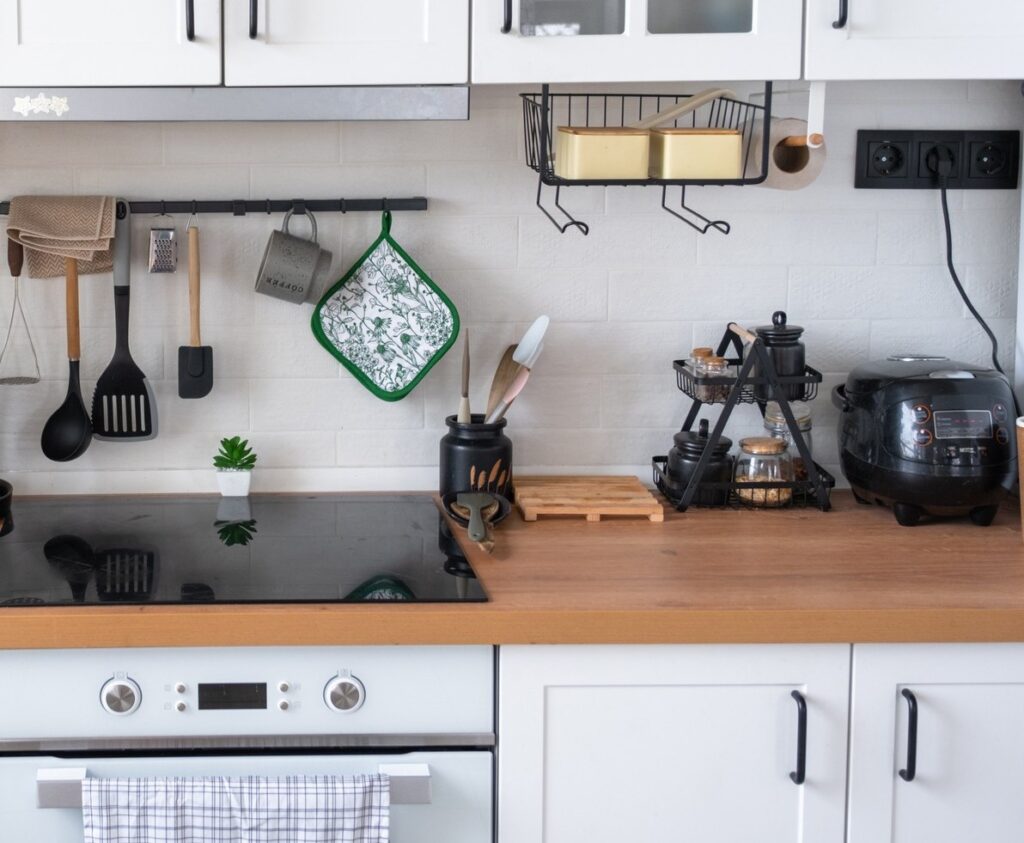
Some under cabinet rail systems combine task lighting with a hanging rail for hooks and small baskets. These dual-function units are hardwired or plug-in. They work best in kitchens with an outlet strip mounted beneath upper cabinets.
Rail depth is typically shallow, around 2 to 4 inches. This limits what can hang from them without blocking counter access. Items stored on hanging hooks should be lightweight, such as measuring cups or small colanders.
Plug-in versions require a visible power cord unless routed through the cabinet interior.
Pull-Out Cabinet Drawers for Deep Cabinet Access
Pull-out drawers install inside lower cabinets and extend fully when opened. They eliminate the need to reach into the back of a deep cabinet. Most are made from steel wire, coated steel, or solid wood.
Drawer Types
- Full-extension drawers allow complete access to the back of the cabinet
- Soft-close drawers include a damping mechanism that slows closure
- Stackable pull-outs allow two tiers within a single cabinet bay
Weight Limits
Standard pull-out drawers typically support 50 to 75 pounds. Heavy cast iron cookware may exceed this limit. Weight should be distributed evenly across the drawer surface.
These drawers require a minimum cabinet width of 9 inches and clearance for the mounting hardware. Cabinets with center stiles may not accommodate full-width pull-outs without modification.
Read More: 16 Bathroom Drawer Organization Ideas for Small Items
Under Cabinet Organization with Tension Rod Dividers
Tension rods install horizontally inside cabinet interiors without screws or adhesive. They create vertical dividers for baking sheets, cutting boards, and pan lids. Rod diameter and length must match the cabinet interior dimensions closely.
Rods work best in cabinets with smooth, parallel interior walls. Curved or angled cabinet interiors reduce rod stability. Spring pressure decreases over time, and rods may need periodic repositioning.
This method is not suitable for heavy items or cabinets with high humidity exposure.
Stackable Cabinet Bins for Dry Goods Storage
Stackable bins allow vertical layering of dry goods inside lower or upper cabinets. They are available in plastic, wire, and bamboo. Clear bins allow contents to be identified without removal.
Material Notes
- Plastic bins are lightweight but may warp under heat exposure near the stove
- Wire bins allow airflow but may not contain small loose items
- Bamboo bins are durable but heavier and not moisture-resistant
Bin dimensions vary widely. Measuring interior cabinet height before purchasing is necessary to avoid fit issues. Most stacking systems do not lock together, which means upper bins can shift when lower bins are pulled out.
Also Read: 18 Ways to Organize Under-Sink Bathroom Storage
Cabinet Door Spice Racks for Vertical Door Storage
Spice racks mount to the interior surface of cabinet doors. They use the otherwise unused vertical space on door panels. Most are made from wire or plastic and attach with screws or adhesive strips.
Standard door-mounted racks hold containers up to 4 inches tall. Deeper spice jars may prevent the door from closing fully. Cabinet hinge type and door thickness affect compatibility.
Door racks are typically limited to cabinets with a minimum clearance of 3 inches between the door and the nearest shelf edge.
Under Sink Cabinet Organizers for Cleaning Supply Storage
The area under the sink presents unique challenges. Plumbing takes up central space, and moisture is common. Organizers designed for this space typically include a cutout or adjustable shelf to work around the pipe configuration.
Two-tier expandable shelves are a common solution. They sit beside the plumbing and maximize floor-to-shelf height. Some models include a removable top shelf that can be repositioned as needed.
Do not store flammable or reactive cleaning chemicals in enclosed under-sink cabinets without adequate ventilation. Products should be kept in their original containers and stored upright.
Turntables for Corner Cabinet Organization
Turning tables are rotating circular trays that allow access to items stored in deep or corner cabinets. They are available as freestanding units or as hardware installed into the cabinet structure. Most are made from plastic, laminate, or stainless steel.
Freestanding turntables typically range from 9 to 18 inches in diameter. Cabinet turntables installed as hardware can span the full depth of a corner cabinet. Weight capacity ranges from 20 to 50 pounds depending on construction.
Items with narrow bases may tip on turntable surfaces, particularly during rotation. Taller bottles and jars are better suited to this type of organizer than small, irregular-shaped items.
Read More:
- 15 Pot Lid Storage Solutions for Standard Cabinets
- 18 Pantry Storage Ideas for Narrow Spaces That Feel Small
- 14 Ways to Organize Open Shelves in the Kitchen
- 21 Ways to Organize a Small Kitchen on a Budget
Shelf Risers for Double-Layer Cabinet Storage
Shelf risers elevate one row of items to create a second accessible layer beneath. They are commonly used for plates, mugs, canned goods, and spices. Most risers are made from coated wire, bamboo, or solid wood.
Standard risers range from 3 to 6 inches in height. They are freestanding and do not require installation. This makes them easy to reposition but also means they can shift when items are removed or placed.
Risers work best on flat cabinet shelves. Adjustable shelves with peg holes may cause instability if a riser leg falls over a hole.
Hanging Pot Racks for Under Cabinet Cookware Storage
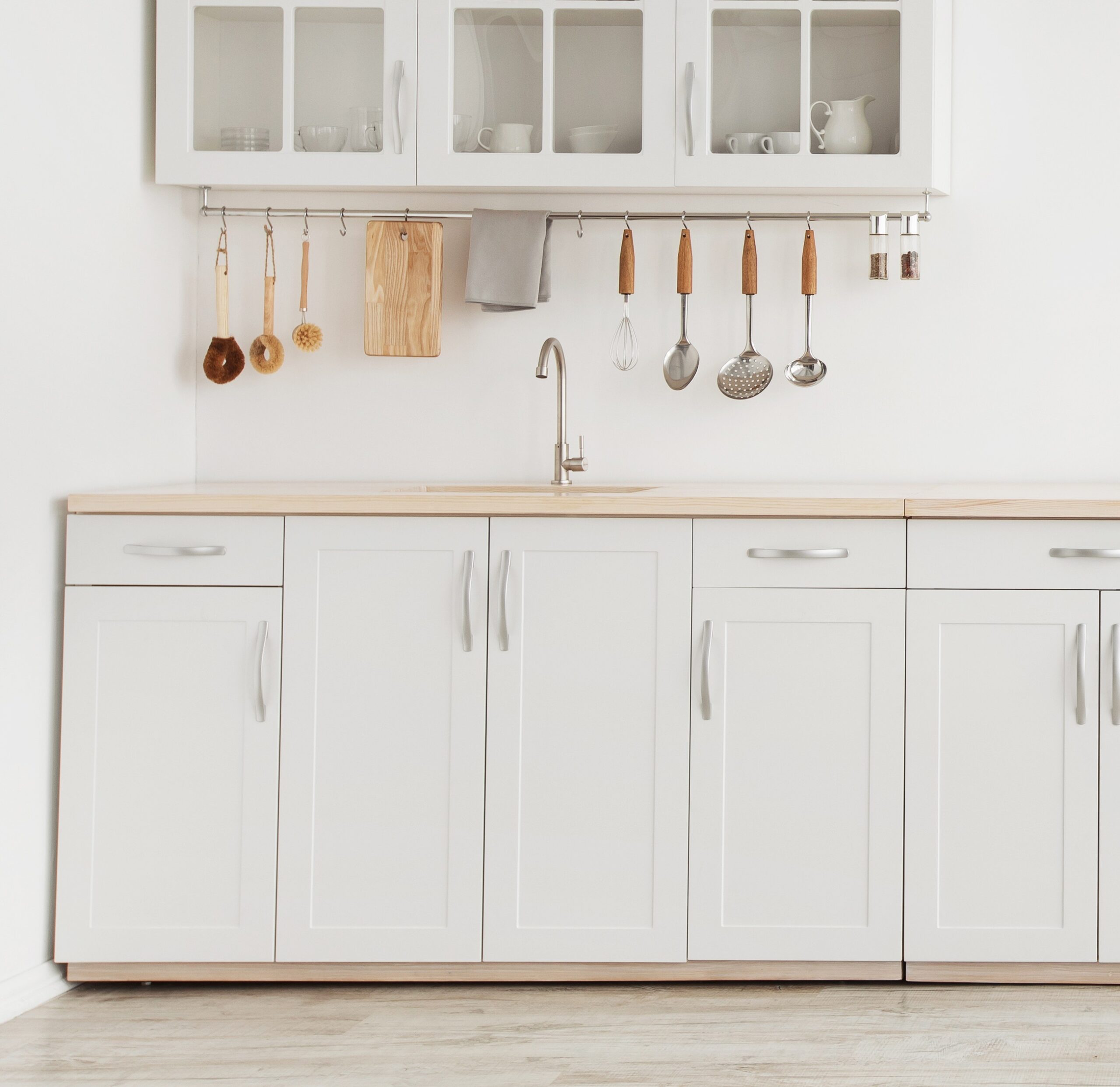
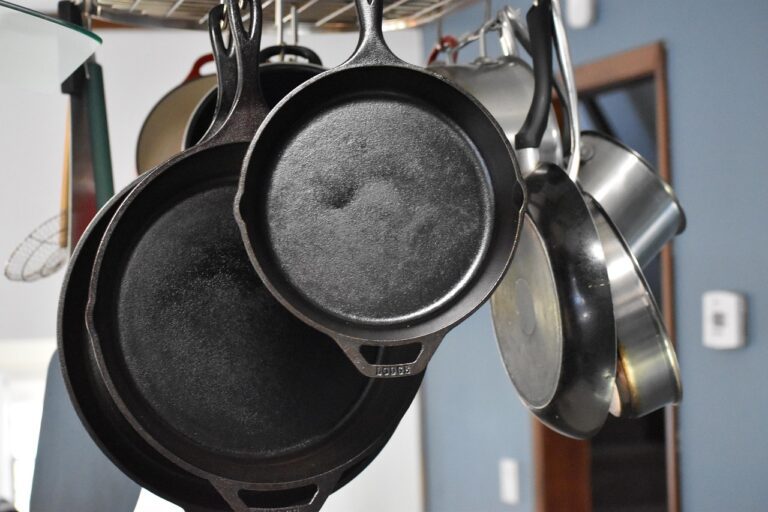
Hanging pot racks mount to the underside of upper cabinets or ceiling joists and hold cookware by hooks. Wall-mounted versions attach directly to the cabinet base using lag bolts or heavy-duty screws. This method frees significant drawer and lower cabinet space.
Capacity Limits
- Ceiling-mounted racks typically support 30 to 50 pounds total
- Wall-mounted under-cabinet racks are generally rated lower, around 20 to 30 pounds
- Hook spacing determines how many pieces can hang without contact
Cabinet mounting requires that screws anchor into solid wood, not just cabinet veneer or particleboard. Inadequate anchoring is a safety risk. Rental properties may have restrictions on ceiling or wall drilling.
Under Cabinet Organization Using Wire Baskets on Rails
Wire basket rail systems mount horizontally beneath upper cabinets. Baskets slide along the rail and can be repositioned or removed. They are commonly used for fruit, onions, or frequently accessed dry goods.
Rail systems typically require 6 to 10 inches of vertical clearance beneath the cabinet. Basket depth should not interfere with counter appliances or backsplash outlets. Most systems are rated for 10 to 15 pounds per basket.
Rail mounting screws must align with cabinet frame material for adequate support.
Pegboard Panels Inside Cabinet Interiors
Pegboard can be cut to fit inside a cabinet interior and mounted on standoffs to allow hooks to insert properly. This system is common in utility cabinets and pantry-style storage. It allows flexible reconfiguration without new hardware.
Standard pegboard requires 1/2 to 1 inch of clearance behind the panel for hooks to function. Cabinet depth must accommodate this offset without reducing usable storage significantly. Hooks and attachments sold for pegboard vary in load rating.
This method requires cutting the panel to size, which may not be practical for all users.
Related Post: How to Organize Kitchen Drawers Without Dividers
Over-the-Door Organizers for Cabinet Door Storage
Over-the-door organizers hang from the top edge of a cabinet door without requiring screws. They are available in wire, plastic, and fabric. Common uses include wraps, foils, lids, and cleaning supplies.
Compatibility Factors
- Door thickness must fall within the organizer’s specified range, typically 3/4 to 1.5 inches
- Organizer depth must not block interior shelf clearance when the door is closed
- Heavy loads can cause the organizer to shift or damage the door edge over time
These organizers are generally not recommended for items over 5 pounds total.
Pull-Out Trash and Recycling Cabinet Inserts
Trash and recycling cabinet inserts mount inside a lower cabinet and include one or more bins on a sliding track. They hide waste containers from view and keep them accessible. Most inserts require a minimum cabinet width of 12 inches for single-bin units.
Installation typically involves attaching a mounting bracket to the cabinet door and a base rail to the cabinet floor. The door and bin move together when the cabinet is opened. This requires precise alignment during installation.
Units designed for face-frame cabinets differ from those designed for frameless construction. Purchasing the wrong type results in poor fitment.
Adjustable Cabinet Shelf Pins and Replacement Shelves
Many cabinets include factory shelves that are positioned too far apart for efficient storage. Adding or repositioning shelves using existing pin holes can double the usable layers. Replacement shelves are available in glass, wood, and laminate.
Shelf pin hole spacing is not standardized across manufacturers. Pins must match both the hole diameter and the shelf thickness to hold securely. Glass shelves require specific support pins and should not exceed their stated weight rating.
Cabinets without pre-drilled pin holes require a shelf pin jig and drill to add new positions.
Under Cabinet Organization with Drawer Inserts and Dividers
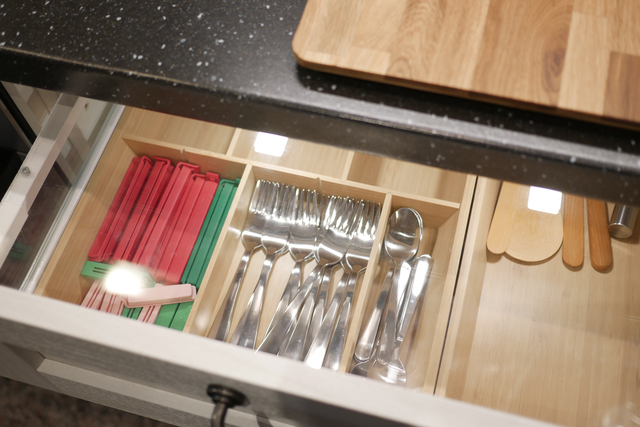
Drawer inserts add internal structure to cabinet drawers. They are used to separate utensils, cutlery, spice packets, or small tools. Most inserts are made from bamboo, plastic, or expandable rubber-grip materials.
Expandable inserts adjust to fit a range of drawer widths. Fixed inserts offer more rigid separation but require accurate measurement. Neither type is typically secured to the drawer base, which means contents can shift the insert over time.
Deep drawers may benefit from stacked insert trays, though this reduces individual compartment depth accordingly.
Read More: How to Organize Kitchen Drawers in Small Apartments
Cabinet Rollout Tray Organizers for Bakeware and Lids
Rollout tray organizers use vertical slots to store baking sheets, muffin tins, and pan lids upright. They mount inside lower cabinet bays on a fixed or pull-out base. Vertical storage reduces stacking and eliminates the need to remove multiple items to reach one piece.
Standard slot organizers include 5 to 8 vertical dividers spaced 1 to 2 inches apart. Divider spacing determines what sizes of items can be stored. Thin baking sheets may fall between widely spaced dividers.
These organizers require a cabinet opening of at least 9 inches in width and 12 inches in depth to function properly.
Stackable Can Organizers for Canned Goods Rotation
Stackable can organizers use gravity-fed or tiered rack designs to store canned goods in cabinets. Gravity-feed models allow cans to roll forward as front cans are removed. Tiered models stagger cans at different heights to keep labels visible.
Most units are designed for standard can diameters between 2.5 and 3.5 inches. Larger cans, such as 28-ounce tomato cans, may not fit in compact models. Rack width must be checked against cabinet interior width before purchasing.
Plastic gravity racks may flex under the weight of fully loaded shelves and should not be overfilled beyond stated capacity.
Cabinet Base Drawer Systems for Lower Kitchen Storage
Base cabinet drawer systems replace fixed shelving with a series of stacked pull-out drawers. They are a permanent modification installed during a kitchen renovation or remodel. Most are made from solid wood or plywood with full-extension soft-close hardware.
These systems require removal of existing shelves and installation of drawer slides into the cabinet box. Cabinet interior dimensions must accommodate the chosen drawer configuration. Standard three-drawer base systems work best in 15-inch or wider cabinet bays.
This modification is typically not reversible and alters the original cabinet structure permanently.
Under Cabinet Organization with Adhesive Hooks for Small Items
Adhesive hooks can mount to the interior or exterior of cabinet surfaces without drilling. They are suitable for hanging small, lightweight items such as measuring spoons, keys, or thin pot holders. Most use a foam or gel adhesive backing rated for smooth surfaces.
Weight and Surface Limits
- Standard adhesive hooks are rated for 1 to 5 pounds depending on size
- They perform poorly on textured, painted, or previously primed surfaces
- Humidity and heat near stoves can reduce adhesive effectiveness over time
Adhesive hooks are not suitable for painted cabinets where surface damage would be unacceptable, as removal often pulls paint.
Modular Cabinet Organizer Systems for Configurable Storage
Modular organizer systems use interchangeable components — bins, dividers, shelf clips, and rails — from a single product line. Components connect or stack to build a custom configuration within a cabinet. These systems are available from several home goods manufacturers in standard sizing increments.
Compatibility exists only within the same product line. Mixing components from different brands rarely produces stable assemblies. Module dimensions are designed around common cabinet sizes but may not fit older or non-standard cabinet proportions.
Maximum load capacity applies to the entire assembled configuration, not each component individually, and combined weight across modules must remain within the system’s total rated limit.
For more helpful tips, check out our organization section.