15 Spice Organization Ideas for Cabinets and Drawers
This site contains affiliate links, view the disclosure for more information.
Spice organization solves a specific kitchen storage problem: jars, tins, and packets of varying heights pile up in cabinets or drawers, making it hard to find what you need without pulling everything out. Most kitchens have at least one cabinet or drawer dedicated to spices, but without a system, that space fills quickly and stays disorganized. This guide focuses entirely on kitchen spice storage.
Multiple organization systems often work better than one because kitchens differ in layout and available space. A small apartment kitchen may rely on a single drawer insert, while a larger kitchen might use a cabinet shelf riser alongside a countertop rack. Spice collections also vary in size, so one method rarely fits every situation.
This guide covers methods for inside standard kitchen cabinets, deep or shallow drawers, pantry shelves, and wall-mounted spaces near the stove. Each method suits a different kitchen type or spice collection size.

Tiered Cabinet Shelf Risers for Spice Organization
Tiered shelf risers sit inside existing cabinets and raise back rows of jars so every label stays visible. Most risers come in two or three tiers and hold between twelve and thirty jars depending on size. They typically fit standard 12-inch and 24-inch cabinet depths.
Expandable versions accommodate different cabinet widths without leaving gaps. Bamboo and coated wire are the most common materials, and both hold up well in kitchen environments. Sets of two risers typically cover one full cabinet shelf.
However, tiered risers do not work well in cabinets shallower than 10 inches because jars on the back row become difficult to reach.
Drawer Inserts for Angled Spice Storage
Drawer spice inserts hold jars at a 30- to 45-degree angle so labels face up when the drawer opens. This method converts a standard kitchen drawer into a dedicated spice station without adding any wall or counter hardware. Angled bamboo drawer organizers are widely available in sets sized for full-width or half-width drawers.
Most inserts accommodate jars between 1.5 and 3 inches in diameter. Deeper drawers can hold two rows of angled jars side by side. Some models include adjustable dividers to fit different jar widths.
Additionally, wooden inserts can absorb moisture over time in drawers near a sink, so placement matters.
Pull-Out Cabinet Organizers for Deep Pantry Shelves
Pull-out spice organizers mount on cabinet or pantry shelves and slide forward to bring the back rows within reach. These typically use metal rails or soft-close drawer mechanisms to glide smoothly on shelves. Sliding pull-out shelf organizers suit pantry cabinets where depth exceeds 14 inches.
Because they pull fully forward, they eliminate the need to reach into the back of a deep cabinet. Most units hold two to three rows of standard jars. They install without tools in many cases, using a non-slip base or pressure mount.
Also Read: 21 Pantry Organization Ideas to Keep Groceries Easy to Find
Magnetic Spice Tins for Cabinet Doors
Magnetic spice tins attach to the inside face of metal cabinet doors and hold small quantities of frequently used spices. Each tin typically holds 2 to 4 ounces of spice and includes a clear lid for visual access. Sets of twelve to twenty-four tins are sold at most kitchen goods stores.
The tins work on any ferrous metal surface, including some refrigerator sides and range hoods. Because they mount vertically, they free up shelf and drawer space entirely. However, the magnetic bond weakens on textured or powder-coated surfaces.
Similarly, this system works well when paired with a label maker since the clear lids show contents but not names.
Spice Rack Inserts for Upper Cabinet Doors
Door-mounted spice rack inserts screw or tension-mount to the inside of upper cabinet doors and add one to three rows of spice storage without using shelf space. Wire or coated metal racks in standard heights fit most cabinet door interiors. Most models hold jars up to 3.5 inches tall.
When installed correctly, the rack swings open with the door and stays accessible without rearranging other items. Because the jars face outward, labels remain visible at a glance. Tension-mount versions require no drilling and suit renters or temporary kitchens.
However, these racks do not fit cabinet doors with center panels or decorative molding that reduces the flat surface area.
Stacking Spice Shelf Organizers for Pantry Use
Stackable spice shelves create vertical layers on flat pantry shelves and use otherwise wasted vertical space between shelves. Each unit typically adds 3 to 5 inches of usable height per tier. Plastic stackable organizer trays are sold in sets of two to four and fit most standard shelf widths.
Because they stack independently, you can add layers as a spice collection grows. The open front design allows easy grabbing without lifting surrounding jars. Most sets fit shelves between 8 and 18 inches wide.
Related Post: 16 Pantry Shelf Storage Ideas for Baking Mixes
Turning Trays Turntables for Corner Cabinets
A turning tray turntable installs inside corner cabinets and rotates to bring all stored jars within reach without moving others. Single-tier and double-tier versions accommodate cabinet corners with 12 to 24 inches of circular space. Turntable organizers for spices typically spin 360 degrees on a smooth bearing.
Because corner cabinets waste significant space, a turntable often doubles the usable capacity of that storage zone. Two-tier versions separate spices by category on each level. Most units fit without installation hardware and simply rest on the shelf surface.
However, they do not function well on uneven or warped shelves.
Uniform Spice Jars with Labels for Drawer or Shelf Systems

Switching to a set of uniform glass or plastic spice jars creates a consistent height profile that any drawer insert or shelf riser can organize efficiently. Standard jar heights of 3 to 4 inches fit most organizer systems sold today. Uniform jar sets typically include labels and come in sets of twenty-four to fifty.
Because all jars share the same height and diameter, tiered risers and angled drawer inserts work without gaps or tipping. Additionally, clear glass jars let you see fill levels without removing them from the organizer. However, transferring spices takes time upfront and requires relabeling each jar accurately.
Always label jars immediately after filling — mislabeled spice jars create a kitchen safety risk, particularly with similar-looking powders like cinnamon and cayenne.
Wall-Mounted Spice Racks Near the Stove
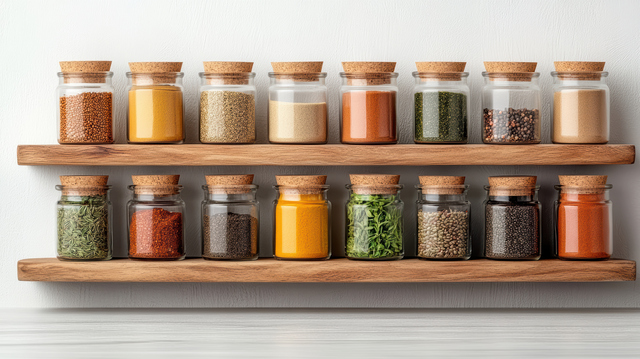
Wall-mounted spice racks attach to the wall beside or above a stove and keep the most-used spices within arm’s reach during cooking. Most wall racks use two to four horizontal rails and hold six to twenty jars depending on length. Floating wall shelf spice organizers in wood or metal suit most kitchen styles.
Because these racks stay on the wall, they free up every drawer and cabinet shelf they would otherwise occupy. However, heat and steam from cooking can degrade spice quality over time when the rack sits directly above the stove. A position to the side of the stove, at eye level, provides access without heat exposure.
Over-the-Door Spice Organizers for Pantry Doors
Over-the-door spice organizers hook over the top of a pantry or kitchen door frame and hold two to four rows of jars without drilling. Adjustable over-the-door organizer racks accommodate door widths from 24 to 36 inches. Most models hold between twenty and forty-eight standard spice jars.
Because they use vertical door space, they add significant storage without touching cabinet or shelf space. The racks typically hold jars in individual pockets or on tiered shelves. However, they add 2 to 4 inches of thickness behind the door, which can interfere with door clearance in tight kitchens.
Also Read: 17 Ways to Organize Spice Jars in Cabinets
Spice Organization in Deep Drawers with Dividers
Deep kitchen drawers — typically 6 to 10 inches deep — can store spices upright in rows using adjustable drawer dividers to keep jars separated. Expandable bamboo drawer dividers create lanes for single-file rows of jars and prevent shifting. Each divider section accommodates one column of same-height jars when configured correctly.
Because jars stand upright rather than lying flat, labels face straight up and stay readable without picking jars up. This method holds more jars per square inch than angled inserts in drawers deeper than 5 inches. However, tall bottles above 5 inches may not allow the drawer to close fully depending on cabinet height.
Floating Shelves Dedicated to Spice Storage
Floating shelves installed at eye level in a kitchen or pantry create a visible, accessible spice station using wall space that cabinets do not cover. Narrow floating shelves — typically 4 to 6 inches deep — hold one row of standard jars without wasted depth. Open shelving also makes inventory visible at a glance.
Because the shelves mount permanently, they suit only owned spaces. However, the installation requires only basic tools and wall anchors rated for kitchen use. Multiple shelves stacked vertically can hold fifty or more jars across a small wall section.
Spice Organization Clips and Hooks Inside Cabinet Doors
Adhesive clips or hooks inside cabinet doors hold lightweight spice packets, seasoning envelopes, and small tins that do not work in standard jar organizers. Heavy-duty adhesive hooks rated for kitchen use support individual items up to one pound each. These stick to the interior cabinet surface without drilling.
Because they work on packets and soft pouches rather than only rigid jars, they solve a gap most other systems leave. Clip strips sold in packs of six to twelve accommodate standard spice packet widths. However, adhesive bonds weaken over time in humid environments, so these suit drier cabinet interiors better than those near a dishwasher or sink.
Also Read: 17 Kitchen Counter Organization Ideas for Small Appliances
Spice Drawer Labels and Zoning Systems
Labeling each drawer zone or shelf section by cuisine type, frequency of use, or alphabetical order reduces search time and keeps a spice organization system functional over months. Printed label sets for spice jars are widely available online in standard round and rectangle sizes. Chalkboard labels allow rewriting when jar contents change.
Because organization without labeling tends to break down within weeks, the labeling step determines whether a system lasts. Alphabetical zones work best for large collections of fifty or more jars. Cuisine-based zones — baking, Mexican, Italian, Asian — suit collections of twenty to forty jars organized by how you actually cook.
Countertop Spice Racks for Daily-Use Spices
A countertop spice rack holds the six to twelve spices used most frequently and keeps them accessible without opening any cabinet or drawer. Rotating carousel spice racks typically hold twelve to twenty-four jars on a spinning base and occupy a 6- to 8-inch countertop footprint. These are widely available online and in home goods stores in tiered, carousel, and block formats.
Because they sit on the counter, they require no installation. However, they reduce available prep space and collect grease near a stove. Placing the rack on a small tray or mat protects the countertop and makes cleaning easier.

For more helpful tips, check out our organization section.