18 Kitchen Island Organization Ideas for Extra Storage
This site contains affiliate links, view the disclosure for more information.
Kitchen islands often accumulate clutter faster than other surfaces in the home. Pots, utensils, cutting boards, and small appliances tend to pile up when no dedicated storage system is in place. Poor kitchen island organization leads to wasted counter space and harder-to-clean surfaces.
Most kitchens require more than one type of storage solution to manage different categories of items. A single drawer or shelf rarely handles the variety of tools, food items, and equipment that collect near a working island. Combining multiple methods typically produces more functional, long-term results.
This guide covers 18 practical kitchen island organization methods. It includes built-in storage options, freestanding solutions, and accessory-based systems. Methods range from drawer organizers and open shelving to hanging racks and pull-out bins.
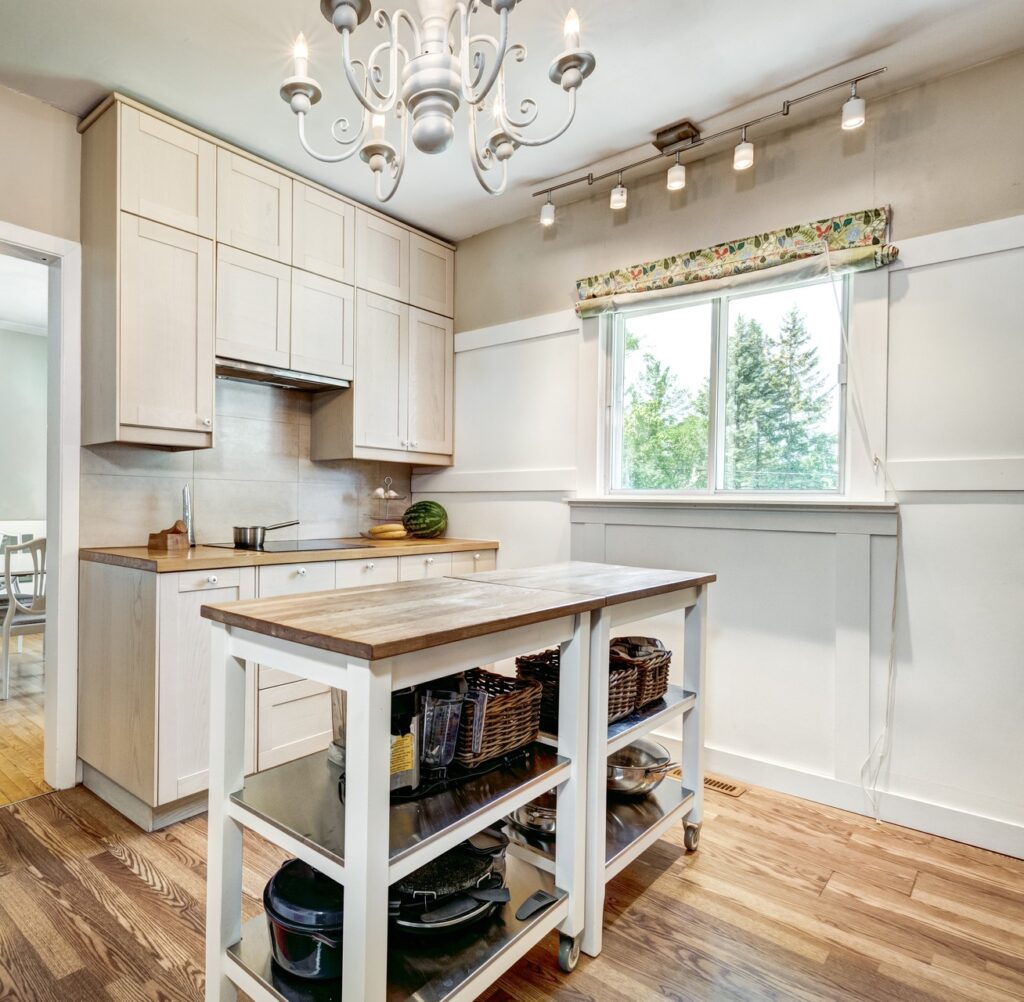
Pull-Out Drawers for Concealed Kitchen Island Organization
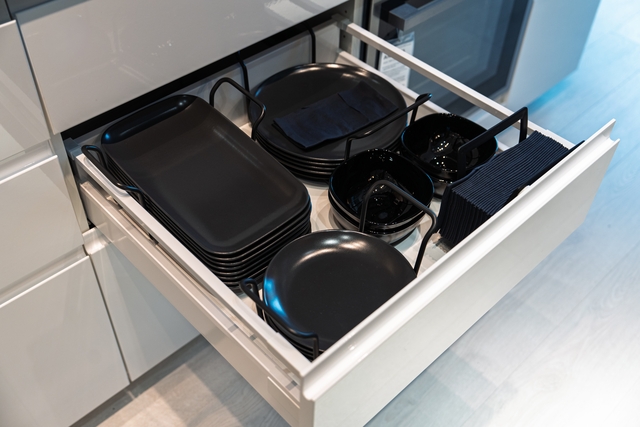
Pull-out drawers keep frequently used tools within reach without cluttering the countertop. They work well for utensils, dish towels, food wraps, and small gadgets. Drawer depth and width determine how much can realistically be stored.
Key features to look for:
- Soft-close mechanisms for quieter operation
- Full-extension slides for full drawer access
- Divider compatibility for organization within the drawer
Pull-out drawers require adequate cabinet depth, typically at least 18 inches, to function correctly. Islands with shallow frames may not accommodate standard drawer hardware.
Open Shelving on the Island Base
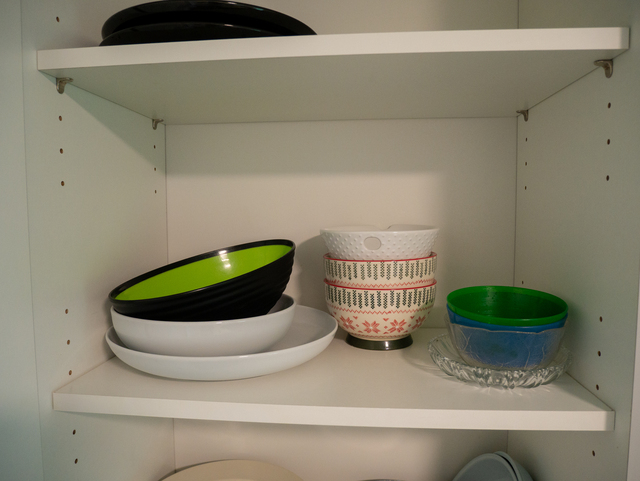
Open shelving on the lower portion of a kitchen island provides visible, accessible storage. Cookbooks, baskets, and frequently used bowls are common items stored here. Shelves work best when items are grouped by category.
This method offers no concealment. Dust and grease can accumulate on exposed items, particularly near cooking zones. Shelving suits dry goods, decorative objects, or frequently rotated items better than rarely used equipment.
Open shelves can be fixed or adjustable. Adjustable shelving allows for taller items such as pitchers or small appliances. Fixed shelves are typically more structurally stable under heavier loads.
Built-In Cabinet Doors for Hidden Storage
Cabinet doors on island bases provide enclosed storage suitable for larger items. Pots, pans, baking sheets, and mixing bowls fit well in closed cabinet spaces. Door hinges and opening clearance affect how practical the storage is day to day.
- Inset doors require more precision during installation
- Overlay doors are more common in standard cabinet construction
- Soft-close hinges reduce wear on door frames over time
Cabinet interiors can be further organized with shelf risers, pan dividers, or interior drawer inserts. Without internal organization, cabinet space can quickly become disorganized despite being enclosed. This method requires at least 12 to 15 inches of interior depth to be practical for most cookware.
Read More: 16 Bathroom Drawer Organization Ideas for Small Items
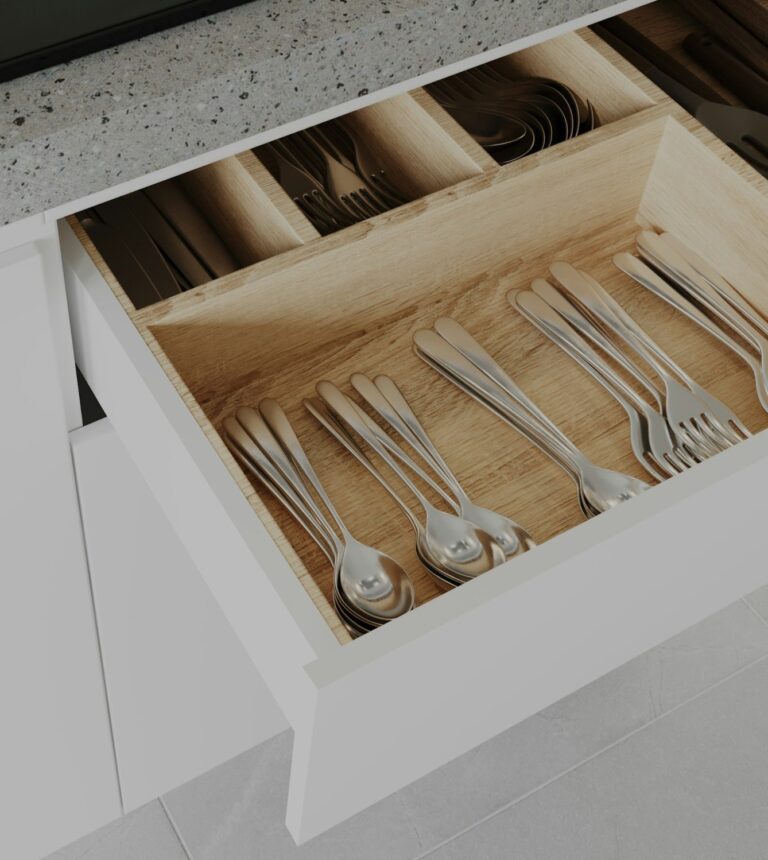
Drawer Dividers and Inserts for Utensil Control
Kitchen island organization at the drawer level often requires dividers to prevent mixing of items. Inserts can separate utensils, measuring spoons, peelers, and other small tools. Pre-cut and adjustable divider systems are both widely available.
Divider types include:
- Bamboo expandable trays
- Plastic modular inserts
- Custom-fit wood inserts
Drawer inserts must match the interior dimensions of the drawer to function correctly. An ill-fitting tray shifts during use and reduces organization effectiveness. Measure drawer interior width, depth, and height before purchasing any insert system.
Hanging Pot Rack Above the Island
A hanging pot rack mounted above the island keeps cookware accessible and frees cabinet space. Hooks hold pots, pans, ladles, and strainers. Ceiling height and joist location determine where and whether a rack can be installed.
The rack and all mounting hardware must be rated to support the combined weight of the items hung from it.
Pot racks come in grid, oval, and linear styles. Ceiling-mounted styles require structural support from joists or beams. Wall-mounted versions attached near the island are an alternative when ceiling mounting is not feasible.
This method is not suitable for low ceilings, typically under eight feet, where clearance becomes a safety concern.
Pull-Out Trash and Recycling Bins
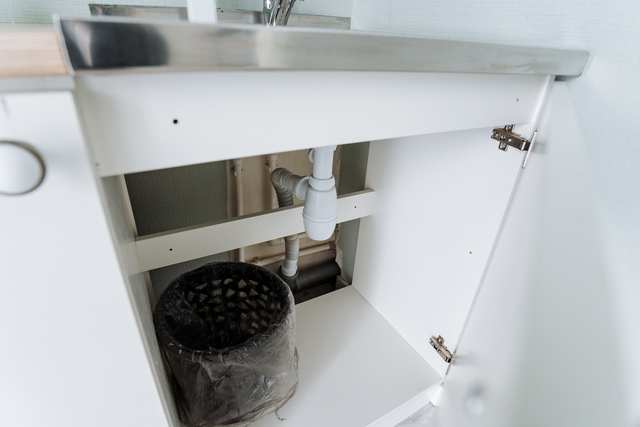
Pull-out bin systems built into the island base consolidate waste management near the food prep area. Units can include separate compartments for trash, recycling, and compost. The bin slides out on a track and closes flush with the cabinet face.
Key specifications to verify:
- Bin capacity in gallons relative to household needs
- Clearance required for the door swing or pull-out path
- Compatibility with standard bag sizes
Bin compartments must be cleaned regularly to prevent odor and bacterial buildup, particularly in warm kitchens.
These systems require a dedicated cabinet opening and cannot be retrofitted into every island configuration. Islands with existing fixed shelving may need modification before installation.
Also Read: 18 Ways to Organize Under-Sink Bathroom Storage
Kitchen Island Organization with Deep Pot Drawers
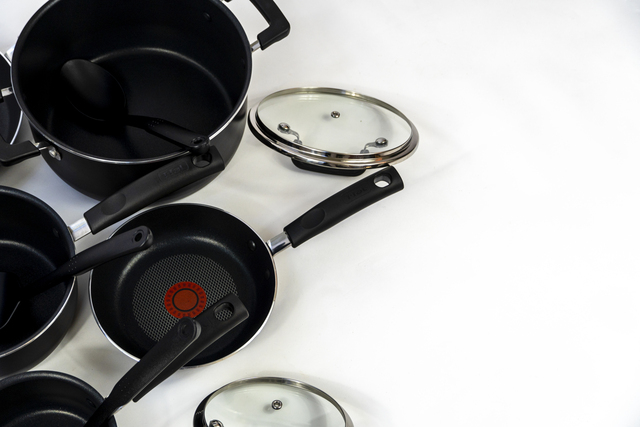
Deep drawers offer an alternative to traditional lower cabinets for pot and pan storage. Items can be stacked in a single layer with lids stored separately. This eliminates the need to remove multiple items to reach one buried in the back.
Deep drawers are typically 10 to 14 inches in height. They require taller cabinet bases than standard drawers. Not all island frame heights accommodate this configuration without custom construction.
Pan organizers and lid holders can be added inside deep drawers for further control. These accessories keep items from sliding and protect nonstick surfaces from scratching. Deep drawers are most effective when limited to one category of item per drawer.
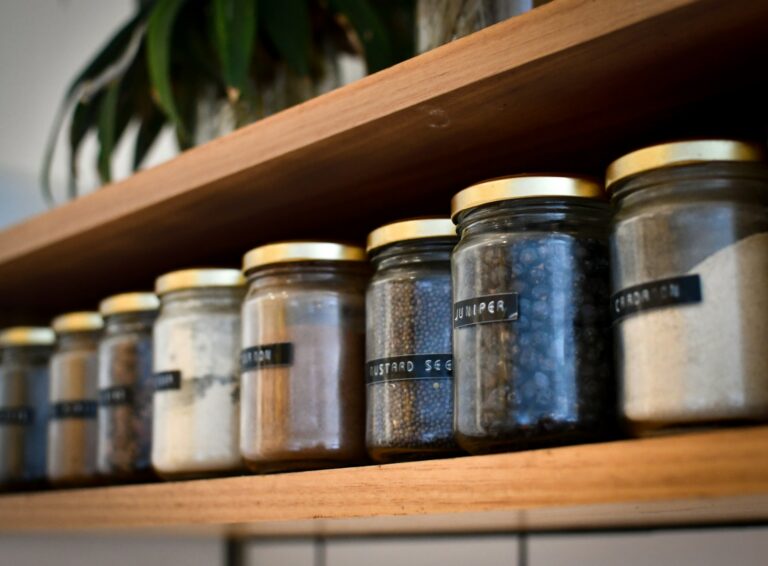
Spice Storage Drawer Inserts Near the Cook Zone
Spice drawers installed in or near the island keep seasonings organized and visible. Angled inserts display labels when the drawer is opened from above. Flat-bottom inserts work for standard-sized jars stored upright.
- Angled inserts typically fit containers up to 4 inches tall
- Flat inserts work for both short and tall jars depending on drawer height
- Divided sections prevent jars from rolling or tipping
Spice drawers placed near heat sources can reduce the shelf life of spice contents. Drawers located away from stovetops and ovens are more suitable for long-term storage. This method requires at least a 3- to 4-inch deep drawer to hold most standard spice containers.
End-Panel Hooks and Rails for Small Tools
Attaching hooks or a rail to the end panel of a kitchen island adds vertical storage without consuming counter or cabinet space. Towels, measuring cups, small colanders, and utensils can hang from S-hooks or rail pegs. The end panel must be solid enough to support the hardware and the items hung from it.
This method is typically limited to lightweight items under 5 pounds per hook. Heavier tools may pull hooks loose or damage the panel surface. Rail systems distribute weight more evenly than individual hooks mounted directly into the panel.
Read More:
- 15 Pot Lid Storage Solutions for Standard Cabinets
- 18 Pantry Storage Ideas for Narrow Spaces That Feel Small
- 14 Ways to Organize Open Shelves in the Kitchen
- 21 Ways to Organize a Small Kitchen on a Budget
Toe-Kick Drawers for Hidden Extra Storage
Toe-kick drawers are installed in the recessed space at the base of a kitchen island, below the lowest cabinet. This area is typically 3 to 4 inches tall and several inches deep, and is otherwise unused. Shallow drawers fitted into this space can hold flat items such as baking sheets, placemats, or serving trays.
Items well-suited for toe-kick storage:
- Flat baking pans and sheet trays
- Placemats and cloth napkins
- Cutting boards of thin profile
- Infrequently used serving platters
Toe-kick drawers are opened by pressing or pulling a recessed handle at floor level. Because the drawer sits low, this storage zone is best reserved for items used infrequently. Regular bending to access this space makes it impractical for daily-use items.
This method requires a minimum toe-kick depth of 3.5 inches for a functional drawer. Not all island bases have a recessed toe-kick frame capable of supporting drawer hardware. Custom or semi-custom cabinetry is more likely to accommodate this feature than standard pre-built islands.
Baking Supply Organization in Island Drawers
Kitchen island organization for baking supplies typically involves deep drawers or wide cabinet sections. Mixing bowls, measuring cups, baking mats, and pastry tools can be grouped together in one dedicated zone. Keeping baking supplies separate from everyday cooking tools reduces search time during use.
Items to consider organizing together:
- Dry measuring cups and spoons
- Rolling pins and pastry cutters
- Parchment paper and silicone mats
- Mixing bowls nested by size
This system works best when a full drawer or cabinet is reserved exclusively for baking items. Mixing baking and cooking tools in shared spaces typically reduces the effectiveness of both categories.
Appliance Garage or Enclosure on the Island Surface
An appliance garage is an enclosed cabinet section at counter height, often with a roll-up or hinged door. It keeps small appliances such as toasters, blenders, or coffee makers off the open counter while remaining accessible. The enclosure can be built directly into the island or added as a surface-mounted unit.
Appliances stored in enclosed spaces must have adequate ventilation to prevent heat buildup during operation.
Appliance garages require a dedicated footprint on the island counter. The door type affects how much surrounding clearance is needed. Roll-up doors require less swing clearance than hinged styles and are better suited for tight spaces.
Pegboard Panel on the Island Side or Back
A pegboard mounted to an accessible side of the kitchen island allows for flexible tool storage. Hooks, bins, and holders can be repositioned as storage needs change. This method requires a flat, sturdy surface and appropriate wall anchors or frame mounting.
Pegboard is available in wood, metal, and composite materials. Metal pegboard is more durable in kitchen environments where moisture and grease are present. Standard pegboard holes are spaced 1 inch apart, and accessories must match the hole spacing of the board used.
This option adds visual complexity to the island exterior. It is better suited for utility-focused kitchens than for minimalist or high-finish kitchen designs.
Related Post: How to Organize Kitchen Drawers Without Dividers
Under-Island Basket or Bin Storage
Open baskets or bins placed on lower island shelves provide flexible, visible storage. Wicker, wire, and fabric-lined baskets are common choices for grouping loose items. Categories that work well in baskets include produce, bread, onions, and cloth napkins.
Basket storage does not protect contents from kitchen moisture, steam, or odors. Items stored in open baskets near cooking zones may absorb ambient grease over time. This method is more suitable for islands located away from active cooking surfaces.
Basket dimensions must fit the available shelf opening. Oversized baskets may block access to adjacent shelf sections. Standard shelf openings in most island bases range from 12 to 18 inches in height.
Cutting Board and Tray Dividers Vertically Stored
Vertical dividers built into a cabinet section or drawer allow flat items to stand upright. Cutting boards, sheet pans, serving trays, and cooling racks can be stored this way. Vertical storage reduces stacking and makes individual items easier to retrieve.
Divider spacing should match the thickness of the items being stored. Dividers placed too far apart allow items to lean and fall. Standard divider spacing for cutting boards is typically 1.5 to 2 inches.
This method requires a dedicated cabinet section at least 15 inches tall to accommodate most cutting boards. Shorter openings limit which items can be stored vertically. Adjustable divider systems allow for changes as the collection of flat items changes over time.
Built-In Charging and Catch-All Drawer
Some kitchen islands include a shallow drawer designed for everyday non-kitchen items such as phones, keys, and mail. A built-in USB charging outlet or power strip can be integrated into the drawer or the side panel. This keeps electronic devices off the main counter surface.
All electrical installations within cabinetry must meet local building codes and be performed by a licensed electrician.
This type of drawer is not suitable for food storage. The drawer should be positioned away from water sources and sink areas. Drawer depth is typically kept shallow, around 3 to 4 inches, to prevent accumulation of unrelated items.
Read More: How to Organize Kitchen Drawers in Small Apartments
Kitchen Island Organization with Pull-Out Shelves
Pull-out shelves inside lower cabinets improve access to items stored at the back of deep cabinet spaces. They function similarly to drawers but sit within an existing cabinet opening rather than replacing it. Retrofit pull-out shelf kits are available for islands with existing fixed shelves.
Features to compare when selecting pull-out shelves:
- Weight capacity per shelf
- Slide extension length (full vs. partial extension)
- Compatibility with existing cabinet hinge positions
Pull-out shelves reduce total vertical storage height because the slide mechanism takes up space. Existing shelves may need to be removed before installation. This method is compatible with most standard cabinet widths between 9 and 36 inches.
Labeled Bin Systems for Dry Goods Storage
Labeled bins inside island cabinets or on open shelves create a consistent storage system for dry pantry goods. Flour, sugar, pasta, and grains can be transferred to uniform containers and labeled by category. Consistent container sizes simplify stacking and maximize available shelf space.
Bin materials commonly used:
- Clear acrylic for visibility
- Stainless steel for durability and moisture resistance
- BPA-free plastic for lightweight everyday use
Airtight seals are necessary for any bin used to store flour, sugar, or other fine dry goods to prevent pest access.
Container capacity must be matched to typical purchase quantities to avoid overfilling. Oversized containers take up more space than necessary when only partially filled. This system requires periodic relabeling if storage categories change over time.
For more helpful tips, check out our organization section.