18 Vertical Organization Ideas for Walls and Doors
This site contains affiliate links, view the disclosure for more information.
Small laundry rooms commonly lack floor space for freestanding storage. Countertops fill quickly with detergent, dryer sheets, and stain removers. Cabinets, when present, are often shallow, poorly positioned, or limited in number.
Vertical organization addresses what floor-level solutions cannot. A single wall-mounted shelf or door-mounted rack rarely covers all storage needs in a compact laundry space. Most functional laundry rooms rely on several systems working together across walls, doors, and cabinet interiors.
This guide covers wall-mounted shelving, pegboards, door racks, hanging organizers, magnetic systems, rod and basket combinations, and similar methods. Each is a standalone solution. None requires the others to function.
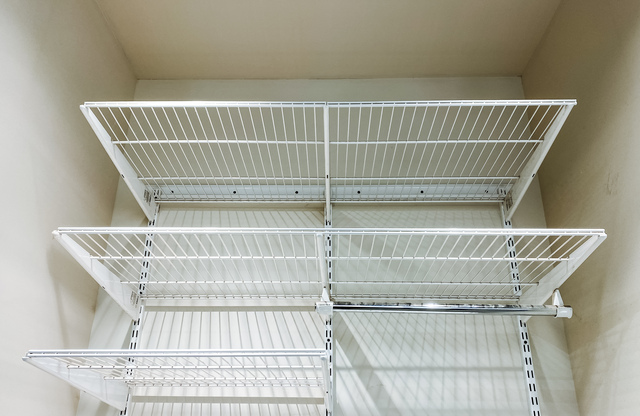
Floating Wall Shelves for Laundry Supplies
Floating shelves attach directly to wall studs or with wall anchors rated for the expected load. They work above the washer, dryer, or utility sink without consuming floor space. Shelf depth typically ranges from 8 to 12 inches for standard laundry products.
Standard laundry detergent bottles weigh between 5 and 10 pounds when full. Shelf brackets must be rated for the combined weight of all items placed on them.
- Melamine and MDF shelves can swell if exposed to consistent humidity
- Solid wood and metal shelves tolerate moisture better in poorly ventilated rooms
- Open shelves collect lint faster than enclosed cabinet shelving
Floating shelves are not suitable for storing items that roll, have rounded bases, or require containment.
Wall-Mounted Pegboards for Tools and Accessories
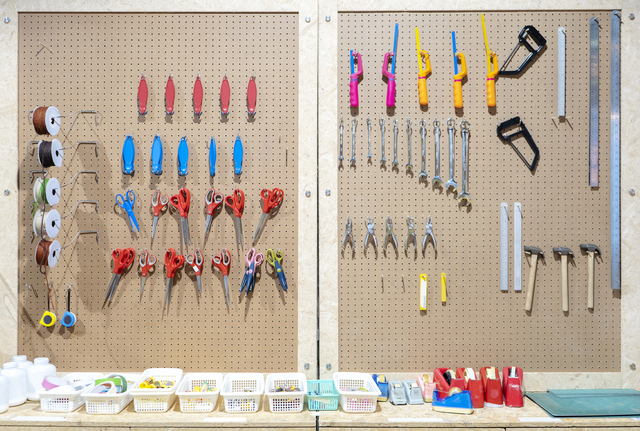
Vertical organization using pegboard panels allows flexible, reconfigurable storage. Hooks, bins, and shelves attach to the pegboard grid and can be repositioned without new hardware. Pegboard is commonly available in 1/8-inch and 1/4-inch thicknesses.
The 1/4-inch version handles heavier tools such as irons and hand steamers more reliably. Thinner panels may flex under concentrated loads.
Hook Types
- J-hooks hold irons, cords, and long-handled items
- Bin attachments store small supplies such as clothespins and lint rollers
- Shelf pegs support small baskets or folded fabric items
Pegboard requires a 1-inch standoff from the wall surface to allow hook insertion. This reduces usable space slightly in very narrow rooms.
Read More: 16 Bathroom Drawer Organization Ideas for Small Items
Over-Door Organizers for Cleaning Supplies
Over-door organizers hang from the top of a door without screws or wall anchors. They typically fit doors up to 1.5 inches thick. Most models use wire or plastic construction with multiple tiers.
These organizers work on laundry room entry doors, interior closet doors, and utility room doors. Capacity per tier is generally limited to 5–8 pounds depending on the frame design.
- Wire models allow visibility of contents without opening containers
- Plastic models with solid shelves retain small items more reliably
- Some versions include adjustable tier heights for taller bottles
Do not exceed the weight limit printed on the product label. Overloaded door organizers can pull away from the door and fall without warning.
Over-door units on hollow-core doors may shift or tilt if the door is opened and closed frequently at speed.
Magnetic Wall Strips for Metal Accessories
Magnetic strips mount horizontally on wall surfaces and hold metal tools through magnetic contact alone. They are commonly used in kitchens but function equally in laundry rooms for scissors, seam rippers, safety pins, and metal-capped containers.
Strip length ranges from 8 to 24 inches in standard retail sizes. Holding strength varies by magnet grade and is typically rated in total pounds per strip rather than per item.
Magnetic strips are not appropriate for storing liquids, heavy detergent bottles, or items with non-ferrous surfaces.
Wall-Mounted Drying Racks for Air-Dry Garments
Wall-mounted drying racks fold flat against the wall when not in use. They extend outward on hinges to create hanging or flat-drying space. Most models support between 30 and 60 pounds of wet laundry when fully extended.
These racks install with screws directly into studs. Drywall anchor installation is possible but reduces the rated load capacity significantly.
- Accordion-style racks extend horizontally and hold hanging garments
- Flat-panel mesh racks support knitwear and delicates that cannot hang
- Foldable bar models add linear drying length in narrow spaces
Wall-mounted drying racks require clear wall space of at least 24 inches in width and 18 inches of clearance in front when extended.
Also Read: 18 Ways to Organize Under-Sink Bathroom Storage
Vertical Organization with Tall Freestanding Shelving Units
Tall shelving units use ceiling height rather than floor area for storage. Units between 60 and 72 inches tall can hold detergents, folding supplies, and cleaning tools across multiple levels. Narrow units — typically 12 to 18 inches deep — fit alongside appliances without blocking access.
Stability Requirements
Tall shelving units must be anchored to a wall stud using an anti-tip strap or L-bracket. Units over 48 inches that are not secured to a wall present a tip-over hazard, particularly when upper shelves carry heavy loads.
- Wire shelving units allow airflow and reduce lint accumulation
- Laminate units have enclosed surfaces that resist dust better
- Metal utility shelving supports higher weight per shelf than most wood alternatives
Units deeper than 18 inches may block appliance doors or controls depending on room layout.
Cabinet Door Organizers for Interior Storage
Cabinet door organizers mount to the inside surface of cabinet doors using screws or adhesive strips. They use otherwise unused vertical space within existing cabinetry. Most are designed for shallow storage — typically 2 to 4 inches in depth.
These organizers work best for flat items, small spray bottles, cleaning cloths, and pouches. Deeper items will prevent the cabinet door from closing fully.
- Tension-mounted versions require no hardware and suit renters
- Screw-mounted versions handle heavier loads more reliably
- Wire versions allow faster visual identification of contents
Cabinet door organizers on particleboard doors may not hold screws reliably. Adhesive versions on particleboard surfaces can fail if the surface is unfinished or has a low-adhesion coating.
Wall-Mounted Broom and Mop Holders
Broom and mop holders use spring-loaded clips or rubber grips to hold long-handled tools vertically against the wall. They keep handles off the floor and prevent tools from leaning unsafely. Most holders accommodate handles between 3/4 inch and 1.5 inches in diameter.
Installation requires screws into studs or into drywall with appropriate anchors. One clip typically supports one tool. Most strips include four to six clips per unit.
Multi-tool holders are not designed for handles wider than 1.5 inches. Brooms with wide or irregular handles may not seat securely in standard clips.
Read More:
- 15 Pot Lid Storage Solutions for Standard Cabinets
- 18 Pantry Storage Ideas for Narrow Spaces That Feel Small
- 14 Ways to Organize Open Shelves in the Kitchen
- 21 Ways to Organize a Small Kitchen on a Budget
Tension Rod Shelving Between Walls or Cabinets
Tension rods install horizontally between two vertical surfaces without hardware. In laundry rooms, they create hanging storage inside cabinets, between wall sections, or under shelving. Standard tension rods support between 5 and 20 pounds depending on diameter and span length.
Multiple rods at staggered heights can hold spray bottles by their trigger loops, keeping them upright and accessible. This method keeps nozzles from leaning against surfaces and dripping.
- Rods slip in high-humidity environments if end caps lose grip
- Longer spans reduce load capacity significantly
- Rubber-tipped rods hold more reliably than smooth-ended versions
Tension rods are not suitable for supporting baskets, bins, or any item that applies downward point pressure rather than distributed horizontal load.
Sliding Door-Mounted Racks for Narrow Spaces
Door-mounted sliding racks attach to the wall beside a door and swing or slide outward for access. They function similarly to pantry pull-out systems but in a vertical, narrow format. These racks commonly measure 4 to 6 inches in depth.
This type of vertical storage is practical where wall space beside the door is 6 inches or wider. Installation requires wall anchors or stud attachment rated for the combined weight of the rack and its contents.
Most sliding door-mounted racks hold cleaning supplies, detergent pods, and small accessories. They are not designed for heavy appliances or bulky items.
Wall-Mounted Folding Tables with Integrated Storage
Wall-mounted fold-down tables attach to the wall and drop flat when not in use. Some models include built-in shelves or hooks on their underside that remain accessible even when the table is folded up. They are typically made from MDF, plywood, or metal framing.
Load Ratings
- Tabletop surfaces typically support 50 to 100 pounds when unfolded
- Integrated shelves are generally rated for lighter items only — usually under 15 pounds
- Fold-down brackets must be rated for the combined weight of the table and any items on it
These tables must be installed into wall studs. Drywall-only installation is insufficient for the lateral stress created when the table is in use.
Vertical Organization Using Slotted Wall Rails
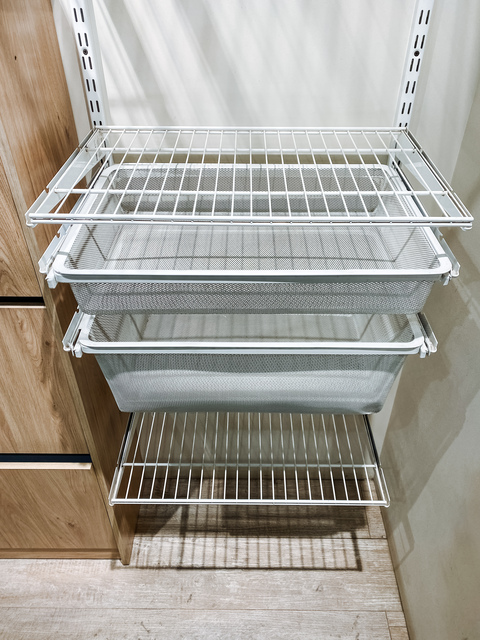
Slotted wall rail systems mount horizontally across a wall section and accept interchangeable brackets, shelves, and hooks. They allow storage configuration to change as needs shift. Most systems are made from steel or aluminum and sold in 24- to 48-inch lengths.
These systems originated in retail and garage storage before being adapted for home use. They can hold shelves for supplies, hooks for tools, and small bins for accessories — all within the same wall section.
- Rails must attach to studs at each end for full weight distribution
- Total load capacity depends on the number of mounting points, not rail length alone
- Not all bracket and rail brands are cross-compatible
Rails mounted only into drywall without stud contact are typically rated for decorative or very light loads only.
Related Post: How to Organize Kitchen Drawers Without Dividers
Wall-Mounted Baskets for Sorted Laundry Items
Wire wall-mounted baskets attach directly to wall studs or mounted rails. They hold fabric items, dryer balls, reusable bags, and other lightweight laundry accessories. Basket dimensions vary, but shallow versions — 4 to 6 inches deep — fit between appliances and walls with minimal space loss.
Most wall baskets are open-front designs that allow quick retrieval. Closed-top or lidded wall baskets are less common but reduce lint accumulation on stored items.
Wall baskets are not rated for liquid storage. Detergent containers placed in wall baskets should be fully sealed to prevent spills that can damage walls or floors below.
Hanging Fabric Organizers for Doors and Rods
Hanging fabric organizers suspend from a rod, hook, or door-mounted bar using loops or grommets. They include multiple pockets across their vertical length for storing flat or small items. Most are made from canvas, polyester, or non-woven fabric.
These organizers are lightweight and suited for items such as dryer sheets, mesh laundry bags, sewing kits, and small cleaning cloths. They are not appropriate for bottles, heavy tools, or sharp objects that can puncture pocket material.
- Canvas versions are more durable but harder to clean than polyester
- Clear-pocket versions allow visual inventory without handling items
- Grommet-hung versions require a rod or bar with the correct diameter
Fabric organizers in high-humidity laundry rooms can develop mold if items stored in pockets retain moisture.
Under-Shelf Baskets for Existing Shelving
Under-shelf baskets clip onto the underside of existing shelves and hang below them. They create an additional storage layer without adding new shelving hardware. Most versions slide onto wire shelving or clip to solid shelves up to 3/4 inch thick.
These baskets are suited for lightweight items including dryer sheets, lint rollers, small spray bottles, and microfiber cloths. They are not appropriate for detergent jugs or glass containers.
Clip-on baskets on solid-surface shelving may shift laterally if not secured with the tension mechanism tightened fully.
Read More: How to Organize Kitchen Drawers in Small Apartments
Rod and Basket Combinations for Laundry Room Walls
A wall-mounted rod paired with S-hooks and hanging baskets creates a modular vertical storage column. The rod attaches to the wall at a fixed height. Baskets of varying sizes hang from the rod using hooks, and can be repositioned or replaced individually.
This system works for storing cleaning cloths, supplies, and lightweight accessories. It is commonly installed above a utility sink or between two appliances.
- Rod diameter must match hook interior diameter for stability
- Baskets should have handles or loops rated for their filled weight
- Rods longer than 24 inches benefit from a center wall support
Do not use S-hooks with open ends wider than the rod diameter. Loose hooks can disengage under lateral movement and drop contents.
Vertical Organization with Narrow Rolling Carts
Narrow rolling carts fit into gaps between appliances or between an appliance and a wall. Standard slim carts measure 5 to 7 inches wide. They roll out for access and slide back flush when not in use.
Most carts include four to six tiers and hold detergent, fabric softener, stain removers, and similar supplies. Casters on most models are rated for smooth floors only. Textured or uneven flooring may prevent full range of motion.
Carts over 50 inches tall with upper tiers loaded can tip when extended. Carts should not be loaded heavier on upper tiers than on lower tiers.
Overhead Ceiling-Mounted Storage for Bulk Items
Ceiling-mounted storage units attach to ceiling joists and provide overhead shelving for bulky or seasonal laundry items. They are most practical in laundry rooms with ceiling heights of 8 feet or more. Standard units hold 100 to 250 pounds depending on joist spacing and bracket design.
These systems are designed for items used infrequently — extra detergent, fabric softener bulk supplies, or seasonal items. Retrieving items requires a step stool and clear floor access below the unit.
- Installation requires locating and attaching to ceiling joists, not drywall alone
- Units must be level to prevent items from sliding toward one edge
- Ceiling-mounted systems are not removable without patching
Ceiling storage is not appropriate in rooms with active moisture from unvented dryers, as humidity can accelerate corrosion on metal mounting hardware over time.
For more helpful tips, check out our organization section.