22 Storage Bin Organization Ideas for Closets and Garages
This site contains affiliate links, view the disclosure for more information.
Closets and garages accumulate clutter quickly. Items pile up without a clear system, making it difficult to locate what you need. Storage bin organization addresses this by creating defined zones for different categories of belongings.
Most spaces require more than one type of organization system. A single bin type rarely fits every item category, shelf depth, or wall configuration. Combining vertical storage, stackable containers, and door-mounted solutions typically produces better results than relying on one approach.
This guide covers 22 practical storage bin organization methods suited to closets, garages, utility rooms, and pantries. Methods range from freestanding shelving units with labeled bins to wall-mounted track systems and under-shelf solutions. Each method is evaluated for its structural requirements, weight limits, and surface compatibility.
Vertical Storage with Open-Bin Shelving
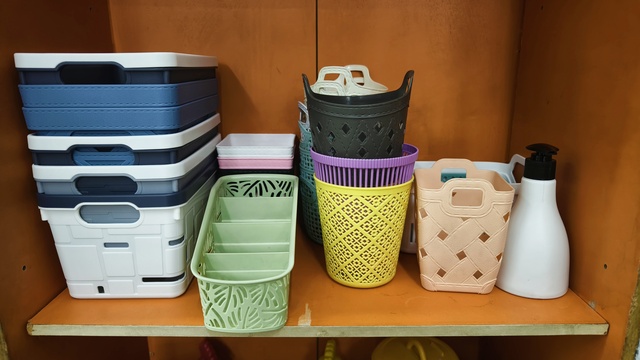
Storage bin organization on open shelving is one of the most common garage and closet approaches. Freestanding units typically accommodate bins ranging from 6 to 27 gallons. Shelf spacing determines which bin heights are compatible.
Wire, laminate, and metal shelving units each have different weight ratings per shelf. Most residential wire shelves support between 50 and 200 pounds per shelf depending on gauge and bracket spacing. Overloading shelves causes sagging and eventual structural failure.
Never exceed the manufacturer’s stated weight limit per shelf, even when bins appear stable.
Vertical units are typically limited to 72–84 inches in height before requiring wall anchoring for safety.
Stackable Storage Bins for Garage Floors
Stackable bins allow efficient use of floor-to-ceiling space without requiring shelving hardware. Most stackable bin systems interlock at the base to prevent sliding. They are commonly available in 12, 18, and 27-gallon sizes.
Material Considerations
- Polypropylene bins are UV-resistant and suitable for unheated garages
- Clear HDPE bins allow visual inventory without label reading
- Opaque bins provide better dust protection but require consistent labeling
Stacking height is limited by the bin manufacturer’s stacking capacity, typically three to five units before stability becomes a concern. Stacking beyond the rated limit increases the risk of toppling, particularly on uneven concrete floors.
Clear Labeled Bins for Closet Shelves
Clear bins with printed or handwritten labels reduce search time in closets. Labels should identify contents, not just general categories. Bins with lids keep contents dust-free on open shelves.
Label placement on the front face or lid improves visibility from standing height. Angled label holders are available for bins stored below eye level. Shelf-depth compatibility matters: bins deeper than the shelf overhang and create hazards.
Clear bins may yellow over time when exposed to direct sunlight or high-heat environments.
Pull-Out Bin Drawers for Cabinet Storage
Pull-out bins are commonly installed inside base cabinets in garages, laundry rooms, and kitchens. They slide on drawer slides rated for specific weights. Most residential pull-out bin systems support between 25 and 75 pounds per drawer.
Capacity Limits
- Standard 12-inch cabinet width accommodates one medium bin
- 24-inch cabinet width typically fits two side-by-side bins
- Full-extension slides are necessary for complete bin access
Pull-out systems require a minimum cabinet interior depth of 18 to 20 inches. Shallow cabinets cannot accommodate most standard pull-out bin frames.
Door-Mounted Bin Organizers for Closets
Over-the-door bin organizers attach to the back of closet or pantry doors. They are available in wire, plastic, and fabric versions. Wire versions typically support more weight and allow better visibility.
Most over-the-door organizers hang from the top of the door using adjustable hooks. Door clearance between the floor and door bottom must accommodate the unit’s total length. Organizers loaded beyond their rated capacity can damage door hinges over time.
These units are generally not compatible with hollow-core doors when weight exceeds 20–25 pounds.
Read More: 16 Bathroom Drawer Organization Ideas for Small Items
Pegboard with Bin Attachments for Garage Walls
Pegboard systems accommodate small plastic bins that clip directly onto standard ¼-inch peg holes. This approach is common in garages for hardware, tools, and small parts. Bin sizes range from 1-cup to 2-quart capacity.
Pegboard must be mounted with a ¾-inch standoff from the wall surface to allow hook insertion. Without standoff spacing, hooks cannot be installed or repositioned. Pegboard is typically available in 4×8-foot sheets and can be cut to fit irregular wall spaces.
Maximum load per peg is approximately 25–50 pounds depending on peg diameter and board thickness.
Storage Bin Organization with Wall-Mounted Track Systems
Wall-mounted track systems use horizontal rails to support bin brackets at adjustable heights. These are common in garages and utility rooms. Rail systems from brands such as Rubbermaid FastTrack and Gladiator support bins, shelves, and hooks interchangeably.
Track rails must be anchored into wall studs for full load capacity. Drywall anchors alone are insufficient for systems carrying more than 15–20 pounds. Failure to anchor into studs can result in the entire rail system pulling away from the wall.
Most residential rail systems are rated for 50–100 pounds per rail section depending on anchor type and spacing.
Under-Shelf Hanging Bins for Closets
Clip-on bins attach to the underside of existing fixed shelves. They create usable storage in the dead space beneath shelves. These are common in pantries, linen closets, and garage shelving units.
Tool Types
- Spring-clip versions require no hardware and attach by pressure
- Screw-mounted versions provide greater stability but require drilling
- Sliding-rail under-shelf systems allow lateral repositioning
Under-shelf bins are generally limited to lightweight contents such as small tools, kitchen wraps, or cleaning supplies. Most clip-on versions support 5–10 pounds before the clip connection becomes unreliable.
Corner Shelf Bins for Garage and Closet Corners
Corner shelf units make use of otherwise unused wall space. L-shaped corner shelves can accommodate standard rectangular bins at a slight angle or with corner-specific bin shapes. Freestanding corner units are available in metal and resin materials.
Corner units are typically narrower in depth than standard shelving, ranging from 10 to 14 inches per side. This limits the bin sizes that fit comfortably. Deep bins placed in corners may not be fully retrievable without moving adjacent items.
Also Read: 18 Ways to Organize Under-Sink Bathroom Storage
Modular Cube Storage with Fabric Bin Inserts
Cube shelving units accept fabric, wicker, or plastic bins cut to specific cube dimensions. Standard cube openings are typically 12×12 or 13×13 inches. Bins must match the cube dimension closely to avoid instability or tipping.
Fabric bins are not suitable for moist environments such as garages without climate control. Wicker inserts can absorb moisture and may develop mold in humid conditions. Plastic inserts are the most durable option for utility areas.
Cube units vary significantly in structural quality; particle board units are generally not suitable for heavy bin contents.
Storage Bin Organization on Rolling Utility Carts
Rolling utility carts with bin-compatible shelves allow portable organization in garages, workshops, and laundry rooms. Most carts include two to four shelves and can accept wire or plastic bins. Locking casters prevent movement during use.
Carts are particularly useful when storage needs to be repositioned seasonally or shared between areas. They are not appropriate as permanent solutions in high-traffic areas without locking casters engaged. Most residential carts support 100–300 pounds total depending on frame gauge.
Overhead Ceiling-Mounted Bin Storage for Garages
Ceiling-mounted storage platforms suspend from the garage ceiling joists. They hold large flat bins containing seasonal items. Platform systems are commonly available in 4×8 and 4×4-foot configurations.
All ceiling-mounted systems must be anchored into structural ceiling joists, not drywall or insulation.
Most residential ceiling storage platforms are rated for 250–600 pounds. Minimum clearance between the platform and garage door tracks must be verified before installation. Ceiling height below 8 feet may not allow functional overhead storage.
Labeled Bin Systems with Color Coding for Shared Spaces
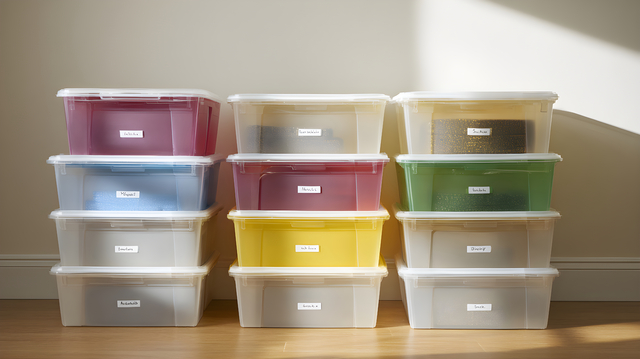
Color-coded bins assign a specific color to each household member or item category. This system is common in entryways, mudrooms, and shared garage areas. Color association reduces reliance on reading labels.
Consistent color coding requires purchasing replacement bins in the same color, which may not be available across all sizes or brands over time. Color fading occurs in bins exposed to UV light or high temperatures. This system becomes less effective when more than five or six color categories are used in the same space.
Read More:
- 15 Pot Lid Storage Solutions for Standard Cabinets
- 18 Pantry Storage Ideas for Narrow Spaces That Feel Small
- 14 Ways to Organize Open Shelves in the Kitchen
- 21 Ways to Organize a Small Kitchen on a Budget
Storage Bins in Built-In Closet Systems
Built-in closet systems include shelf configurations designed to hold specific bin sizes. Bin compatibility must be confirmed against shelf depth and spacing before purchase. Most built-in systems accommodate bins ranging from 6 to 13 inches in height.
Adjustable shelving allows bins of varying heights to be accommodated over time. Fixed-shelf built-ins cannot be reconfigured without hardware modification. Bins placed on laminate shelves may slide forward; non-slip shelf liners reduce this risk.
Outdoor-Rated Bins for Garage Storage Near Exterior Doors
Outdoor-rated storage bins are constructed from UV-stabilized resin or polyethylene. They are appropriate for unheated garages, mudrooms, or covered patios. Standard indoor bins degrade significantly faster in temperature-fluctuating environments.
Outdoor bins typically feature tighter-fitting lids to prevent pest entry. Bins used near exterior garage entries should have sealed lids if rodent activity is a concern in the area. Most outdoor-rated bins are available in 18- to 45-gallon capacities.
These bins are generally heavier than standard indoor versions and may require two people to lift when full.
Narrow Bin Storage for Small Closets and Hallways
Narrow bins ranging from 6 to 10 inches wide fit into shallow closets, pantry side walls, and between appliances. They are commonly used for cleaning supplies, gift wrap, or sports equipment. Slim rolling units with bins are available for pantry side-wall installation.
Narrow units must be confirmed against door swing radius before placement. A unit positioned too close to the door hinge side may block full door opening. Most narrow freestanding units are not suitable for heavy contents due to tip risk on their smaller base footprints.
Related Post: How to Organize Kitchen Drawers Without Dividers
Storage Bin Organization in Garage Cabinets with Sliding Doors
Sliding-door garage cabinet systems allow bin access without door clearance in front of the unit. This is particularly useful in tight garage layouts. Cabinet interior dimensions must match bin sizes to prevent wasted space or bins that cannot be retrieved.
Sliding door hardware requires regular maintenance to prevent sticking or jumping the track. Most sliding garage cabinet systems are available in steel or high-density resin. Weight capacity per shelf ranges from 50 to 150 pounds in residential models.
Tiered Bin Shelf Inserts for Deep Shelving
Tiered inserts elevate rear bins above front bins on deep shelves, creating visibility across all items. These are common in pantries and bathroom closets. Most tiered inserts are adjustable in height and width.
Tiered inserts are typically not load-bearing and should not hold bins exceeding 10–15 pounds per tier. They function best with identical-height bins for consistent sightlines. On very deep shelves exceeding 20 inches, even tiered inserts may not make rear bins fully visible without extending them fully forward.
Stackable Drawers and Bin Towers for Closet Floors
Freestanding stackable drawer towers hold bins within pull-out drawers rather than on open shelves. They are available in plastic, fabric-frame, and metal versions. Heights range from 2 to 8 drawer units in a single tower.
Plastic versions are generally limited to lightweight contents such as accessories, craft supplies, or small tools. Metal-frame versions support heavier loads but may require assembly tools. Drawer towers placed on carpeted floors may be unstable due to the soft surface compressing unevenly.
Read More: How to Organize Kitchen Drawers in Small Apartments
Magnetic Bin Systems for Metal Garage Walls and Cabinets
Magnetic bin systems attach small containers directly to metal garage cabinet doors, tool chests, or metal wall panels. They are commonly used for hardware, fasteners, and small hand tools. Bins range from 4 ounces to 2-quart capacity.
Magnetic strength varies by bin design. Most residential magnetic bins hold securely with up to 2–3 pounds of content. Heavier contents or vibration-prone environments can cause magnetic bins to detach, posing a hazard from falling containers.
These systems are limited to ferromagnetic metal surfaces and will not attach to aluminum, stainless steel, or painted drywall.
Hanging Fabric Bins for Wardrobe Rods
Fabric hanging organizers with multiple bin compartments suspend from closet rods using built-in loops or hooks. They are common in reach-in and walk-in closets for folded clothing, accessories, and small items. Most units offer 6 to 12 compartments across two to three tiers.
Fabric bins are not suitable for heavy or irregularly shaped items that distort the compartment structure. The rod must support the weight of the organizer plus contents without bowing. Most residential closet rods are rated for 20–35 pounds per linear foot.
Labeled Bin Wall Arrays for Garage Tool Storage
Wall-mounted bin arrays consist of rows of individual small bins attached to a back panel. They are common in garages, workshops, and hobby rooms. Individual bins are removable for carrying contents to a work area.
Capacity Limits
- Small bins (1–2 quarts) are rated for approximately 5–10 pounds
- Medium bins (1 gallon) support roughly 15 pounds
- Large bins (2+ gallons) on wall arrays may require additional bracket support
Back panels must be anchored into wall studs when arrays exceed 10–12 bins. Drywall-only mounting is generally insufficient for fully loaded large arrays. Back panels are typically available in 24-, 36-, and 48-inch widths.
Wall-mounted bin arrays require 1 to 2 inches of clearance between the array bottom edge and any countertop, floor obstruction, or outlet cover to allow lower bin removal without obstruction.
For more helpful tips, check out our organization section.