21 Small Laundry Room Organization Ideas for Supplies
This site contains affiliate links, view the disclosure for more information.
Small laundry rooms often lack adequate storage for detergent, dryer sheets, stain removers, and cleaning tools. Cabinets are frequently absent or undersized. Counter space is limited or nonexistent. Supplies end up on top of machines, on the floor, or crowded onto a single shelf.
A single organization method rarely solves every storage problem in a compact laundry space. Detergent containers have different shapes and sizes than folded items or cleaning brushes. Vertical space, door surfaces, and cabinet interiors often require separate systems to handle different supply types.
This guide covers 21 small laundry room organization methods for supplies, including wall-mounted options, over-door storage, stackable containers, pull-out systems, and cabinet-based solutions. Each method suits specific room configurations, supply volumes, and installation constraints.
Vertical Storage for Small Laundry Rooms
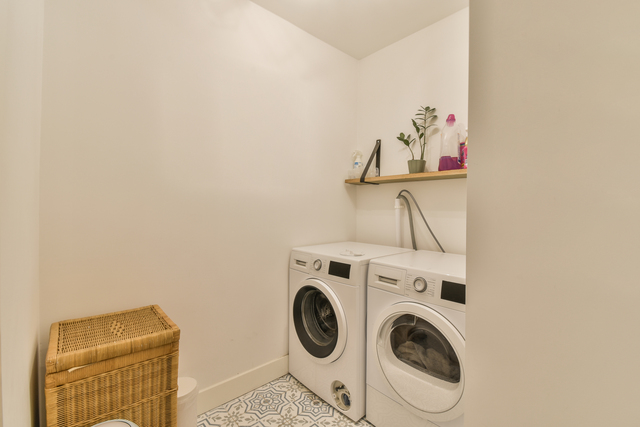
Floating Wall Shelves
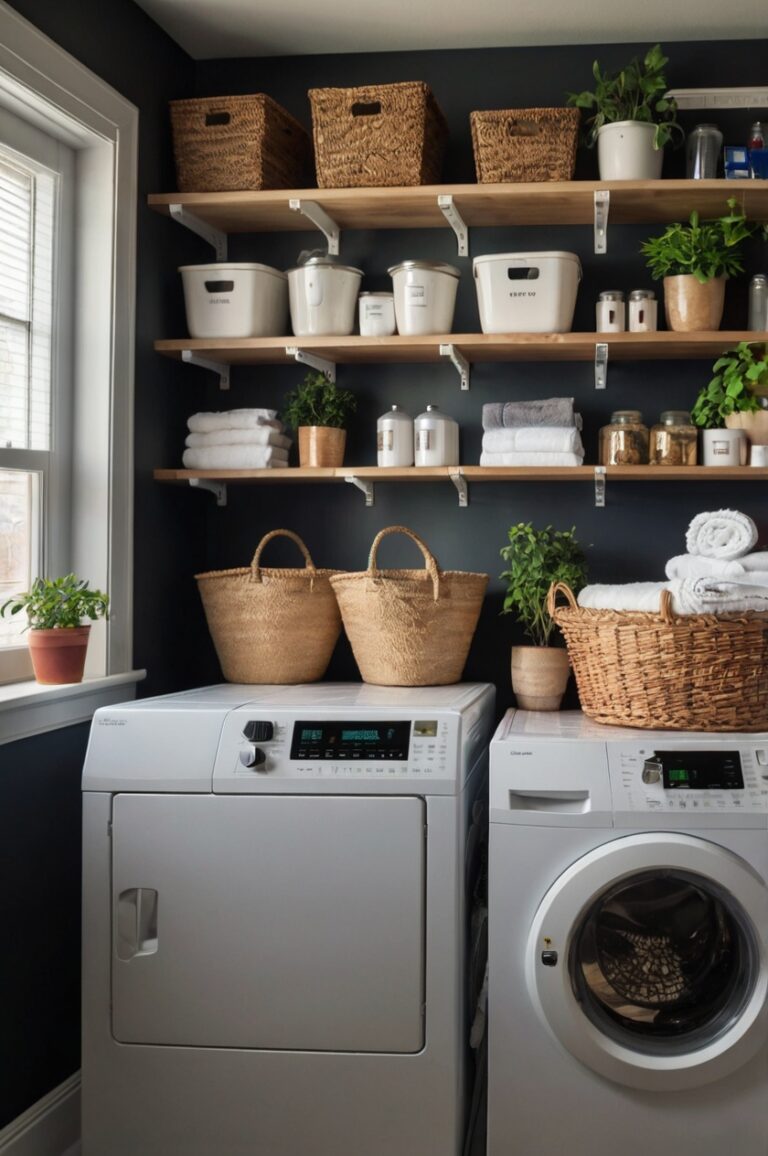
Floating shelves use wall space above machines or along empty walls. They can hold detergent bottles, fabric softener, and small bins. Standard shelves are typically installed 12 to 16 inches deep to accommodate most laundry supply containers.
Do not exceed the weight rating listed by the shelf manufacturer. Most basic floating shelves support between 15 and 50 pounds depending on bracket type and wall material. Hollow walls require anchor hardware rated for the intended load.
Wall-Mounted Cabinets for Laundry Supply Storage
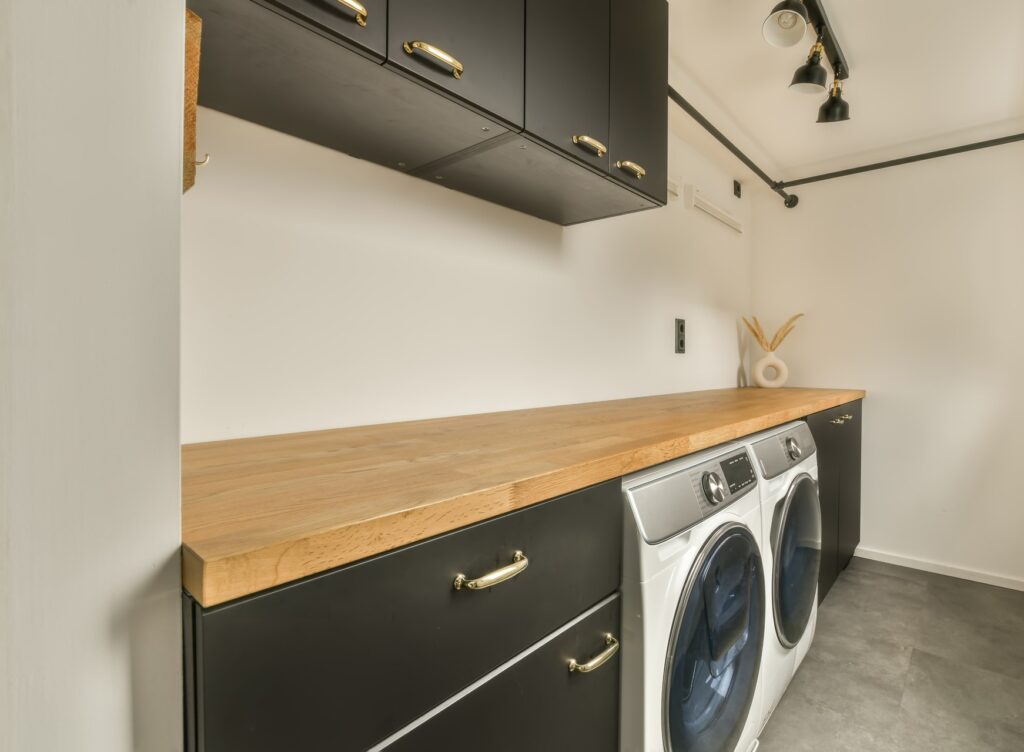
Wall-mounted cabinets enclose supplies behind doors, reducing visual clutter. They are available in widths from 12 to 36 inches. Depth is typically limited to 12 inches in laundry rooms to avoid obstructing machine access or door clearance.
Installation requires wall studs or toggle anchors rated for cabinet weight when loaded. Cabinet height placement must account for machine lid clearance on top-load washers. Front-hinged doors may not open fully in narrow rooms.
Over-Washer and Dryer Shelf Units
Freestanding shelf units designed to fit over side-by-side washers and dryers provide overhead storage without wall installation. These units typically span 54 to 60 inches wide and 15 to 18 inches deep. Most include one to three adjustable shelves.
These units rest on the machine surfaces or stand on rear legs positioned behind the machines. They are not compatible with top-load washer configurations that require unobstructed lid access. Weight capacity per shelf is usually 25 to 50 pounds.
Read More: 16 Bathroom Drawer Organization Ideas for Small Items
Stackable Storage Containers for Laundry Supplies
Clear Plastic Bins
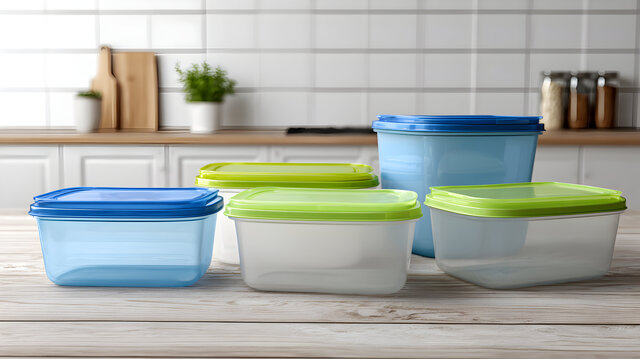
Clear stackable bins allow supply identification without opening containers. Standard sizes range from 0.5 to 6 quarts. Uniform bin sizes from the same product line stack more securely than mixed containers.
Lidded Containers for Powder Detergent
Powder detergent transfers well into lidded containers to reduce moisture exposure and shelf space. Containers with wide openings accommodate scoops. Not all airtight containers are rated for prolonged contact with concentrated detergents.
Stackable systems work best on flat, level shelves. Stacking more than three or four containers high creates instability, particularly with round or smooth-sided bins.
Pull-Out Organizers Inside Laundry Cabinets
Pull-out drawer organizers mount inside existing cabinet bases or lower shelves. They extend on slides to provide full access to items stored at the back. Standard pull-out widths range from 9 to 21 inches.
Full-extension slides allow complete drawer pull without tipping. Soft-close slides add resistance that prevents slamming. Cabinet interior depth must be at least 14 inches to accommodate standard pull-out hardware and functional drawer depth.
Small Laundry Room Organization with Over-Door Storage
Over-door organizers hang on the back of a laundry room door without drilling. They typically hold spray bottles, dryer sheets, lint rollers, and small accessories. Most over-door hooks and racks fit doors up to 1.75 inches thick.
Heavy over-door organizers can cause doors to sit unevenly or stress hinges over time. Maximum recommended weight for over-door systems is generally 10 to 15 pounds. Units with adjustable hooks accommodate hollow-core and solid-core doors differently.
Also Read: 18 Ways to Organize Under-Sink Bathroom Storage
Door-Mounted Shelves and Racks
Door-mounted shelving units attach directly to the back of a door using screws. They offer more capacity than hook-over organizers and can hold full detergent bottles. Installation requires a solid door core and hardware long enough to reach into wood framing.
These systems reduce door swing clearance by 3 to 6 inches depending on shelf depth. Rooms with limited floor space between the door and machines may not accommodate standard door-mounted shelf depth. Confirm door clearance before installation to avoid obstruction.
Tension Rod Organizers Under Shelves
Tension rods installed horizontally between cabinet walls or under shelves can hold spray bottles by their trigger handles. This frees shelf surface for other supplies. Rods are typically available in lengths from 16 to 48 inches.
Tension rods rely on pressure to stay in position and can slip under heavy loads. They are suitable for lightweight bottles under approximately 2 pounds each. Smooth or painted cabinet interiors may reduce grip more than textured surfaces.
Wire Shelf Inserts and Shelf Risers
Wire shelf inserts double usable shelf space by creating a second tier within an existing shelf bay. They are available in sizes from 6 to 12 inches in height. Risers work best with consistently sized supply containers.
Wire risers do not attach to shelves and can shift when items are removed. They are not appropriate for round or irregularly shaped bottles that tip easily. Shelf load capacity must account for the total weight on both the riser level and the shelf surface below it.
Pegboard Panels for Laundry Tool Storage
Pegboard mounted to a laundry room wall accepts hooks, bins, and shelves through a standardized hole pattern. It can hold brooms, dustpans, small baskets, and cleaning brushes. Standard pegboard is available in 1/8-inch and 1/4-inch thicknesses.
Pegboard requires a 1/2-inch to 3/4-inch standoff from the wall to allow hook insertion. It must be mounted to studs or with drywall anchors spaced appropriately for the board size. Fiberboard pegboard is not moisture-resistant and degrades in humid laundry environments.
Pegboard Hook Types
- Standard J-hooks hold lightweight items under 2 pounds
- Locking hooks secure items in high-vibration areas near machines
- Basket attachments hold irregular items that do not hang on single hooks
Rolling Carts for Laundry Supply Storage
Narrow rolling carts, often called slim or gap carts, fit into spaces as narrow as 4 inches between machines or between a machine and a wall. They typically offer three to five pull-out drawers or open shelves. Most handle widths up to 15 inches between machines.
Rolling carts with locking casters stay in position on vibrating floors near machines. Unlocked wheels allow carts to shift during machine spin cycles. Cart height should not exceed washer height to maintain top surface accessibility.
Gap Storage Between Washer and Dryer
Vertical gap organizers slide into the space between a washer and dryer. They provide narrow shelving for dryer sheets, small spray bottles, and lint rollers. Most are designed for gaps between 4 and 7 inches wide.
These organizers rest on the floor and lean against
machine sides. They do not attach to machines or walls. Wider gaps may not hold the organizer upright without additional bracing or a wall surface for support.
Read More:
- 15 Pot Lid Storage Solutions for Standard Cabinets
- 18 Pantry Storage Ideas for Narrow Spaces That Feel Small
- 14 Ways to Organize Open Shelves in the Kitchen
- 21 Ways to Organize a Small Kitchen on a Budget
Small Laundry Room Organization Using Cabinet Door Organizers
Cabinet door organizers mount inside existing cabinet doors using adhesive strips or screws. They hold small bottles, sponges, and cleaning cloths. Clear pocket organizers made from vinyl are common for this application.
Adhesive-mounted organizers have a maximum weight rating that decreases in humid environments. Screw-mounted organizers on hollow cabinet doors require backing material or specific hollow-door hardware. Organizer depth cannot exceed cabinet interior clearance when the door closes.
Magnetic Storage for Metal Surfaces
Magnetic containers and strips adhere to metal dryer and washer surfaces, as well as metal cabinet sides. They hold small items such as dryer sheets, safety pins, and clips. Neodymium magnets hold more reliably than standard ferrite magnets on painted metal surfaces.
Magnetic storage is only compatible with ferromagnetic metal surfaces. Stainless steel appliance surfaces are often non-magnetic. Do not place magnetic storage units near the electrical control panels of washing machines or dryers.
Over-the-Door Shoe Organizers Repurposed for Laundry Supplies
Clear-pocket shoe organizers mounted on the back of a laundry room door can hold spray bottles, cleaning cloths, dryer sheets, and small accessories. Each pocket typically holds items up to approximately 1 pound. Full-length shoe organizers provide 24 to 36 pockets across their surface.
Pockets made from nonwoven fabric are less durable with liquid bottles than vinyl or clear plastic pockets. The weight of a fully loaded shoe organizer can range from 8 to 15 pounds, which may stress over-door rod mounts. Solid-core doors support these loads better than hollow-core doors.
Recessed Wall Niches for Laundry Storage
Recessed niches built between wall studs create storage space without extending into the room. Standard stud spacing provides a niche approximately 14.5 inches wide. Depth is typically 3.5 inches in standard wood-framed walls.
Recessed niches cannot be placed on exterior walls without disrupting insulation. Load-bearing walls require structural assessment before any framing is modified. Finished niches with shelves typically hold small bottles, soap dispensers, and dryer sheets at a maximum depth of 3 to 3.5 inches.
Hanging Baskets and Fabric Bins on Wall Hooks
Wall hooks mounted on a rail system or individually can hold hanging wire baskets or fabric bins. This method accommodates irregular items that do not stack or sit flat. Wire baskets allow visibility of contents without removing bins from hooks.
Rail-mounted hook systems distribute weight across multiple anchor points. Individual hooks rated for 5 to 10 pounds each suit lightweight bins. Fabric bins are not suitable for wet or damp items unless made from waterproof or coated materials.
Related Post: How to Organize Kitchen Drawers Without Dividers
Stackable Washer-Dryer Units and Cabinet Surround Systems
Stacked washer-dryer configurations free floor space on both sides for narrow cabinet columns. Prefabricated surround systems designed for stacked units include side panels with built-in shelving and drawers. These systems are sized for specific appliance widths, most commonly 24 or 27 inches.
Surround cabinet systems require level floors and may need wall anchoring for stability. They are typically not adjustable for appliance widths outside their rated range. Drawer capacity in these units is generally limited to 25 to 40 pounds per drawer.
Mounted Hamper Frames and Sorting Systems
Wall-mounted hamper frames hold fabric or wire sorting bags off the floor. Two- or three-bag configurations allow sorting by wash type. Most frames mount with screws at two to four anchor points.
Mounted hamper systems require approximately 18 to 24 inches of horizontal wall space and 24 to 30 inches of vertical clearance for bag access. Maximum bag capacity is typically 1.5 to 2.5 cubic feet per bag. Frames mounted only into drywall without stud contact may fail under full hamper weight.
Utility Shelving Units with Adjustable Shelves
Freestanding wire or laminate utility shelving provides flexible storage for larger supply quantities. Adjustable shelves accommodate containers of different heights. Standard units range from 36 to 72 inches tall and 12 to 24 inches deep.
Wire shelving allows airflow and visibility but does not support small containers without liner inserts. Laminate shelving supports small containers but limits air circulation and adds more weight. Units taller than 48 inches should be anchored to a wall to prevent tipping.
Small Cabinet Solutions: Narrow Base Cabinets
Narrow base cabinets, typically 9 to 18 inches wide, fit into corners or unused wall spaces in small laundry rooms. They provide enclosed storage for bulk detergent, cleaning products, and folded items. Interior shelves are usually fixed or adjustable in 32mm increments.
Depth Considerations
- 12-inch-deep cabinets accommodate most standard detergent containers
- 24-inch-deep cabinets allow bulk storage but extend significantly into room space
- Cabinets shallower than 9 inches typically only accommodate spray bottles or rolled items
Narrow cabinets must be secured to wall framing if freestanding units exceed 48 inches in height. Doors require clear swing space equal to the cabinet width in front of the unit.
For more helpful tips, check out our organization section.