How to Organize a Small Kitchen with Limited Cabinets
This site contains affiliate links, view the disclosure for more information.
A small kitchen with limited cabinet space requires a deliberate storage strategy. Without a plan, countertops fill up quickly and cabinets become difficult to navigate. Learning how to organize a small kitchen starts with understanding what you have, what you use, and where things can realistically go.
Most small kitchens can gain significant functional space without renovation. The key is using vertical space, door space, and drawer depth more efficiently. This guide covers practical methods, specific tools, and material considerations to help you organize a small kitchen in a single session or across a weekend.
Results will vary depending on kitchen layout, cabinet depth, and item count. Adjust each method to your specific setup.
Safety and Preparation Before You Begin
Clear the kitchen before reorganizing. Trying to sort around existing items leads to poor decisions about placement.
Steps:
- Remove everything from all cabinets and drawers.
- Place items on a table or floor, grouped by category: cooking tools, bakeware, pantry items, cleaning supplies.
- Discard or donate anything unused in the past 12 months.
- Wipe cabinet interiors before returning anything.
Check for:
- Expired pantry items
- Duplicate tools that can be consolidated
- Oversized items that could be stored elsewhere (garage, closet)
Safety note: Keep cleaning supplies in a separate, clearly labeled cabinet away from food items. This is a food-safety requirement, not just an organizational preference.
Quick, Low-Risk Methods to Free Up Cabinet Space
These methods work in most kitchens without purchasing specialized hardware.
Nest and Stack Similar Items
Nesting reduces volume. Bowls, pots, and food storage containers take up far less space when stacked inside each other.
- Nest mixing bowls by size.
- Stack pots with the largest on the bottom.
- Store pot lids separately using a vertical lid organizer or a tension rod placed upright in a cabinet.
Relocate Non-Kitchen Items
Many people store non-cooking items in kitchen cabinets by default.
- Move batteries, tools, and random supplies to a utility drawer or closet.
- Relocate rarely used appliances (fondue sets, waffle irons) to a pantry or shelf elsewhere.
- Store bulk pantry overflow outside the kitchen if space allows.
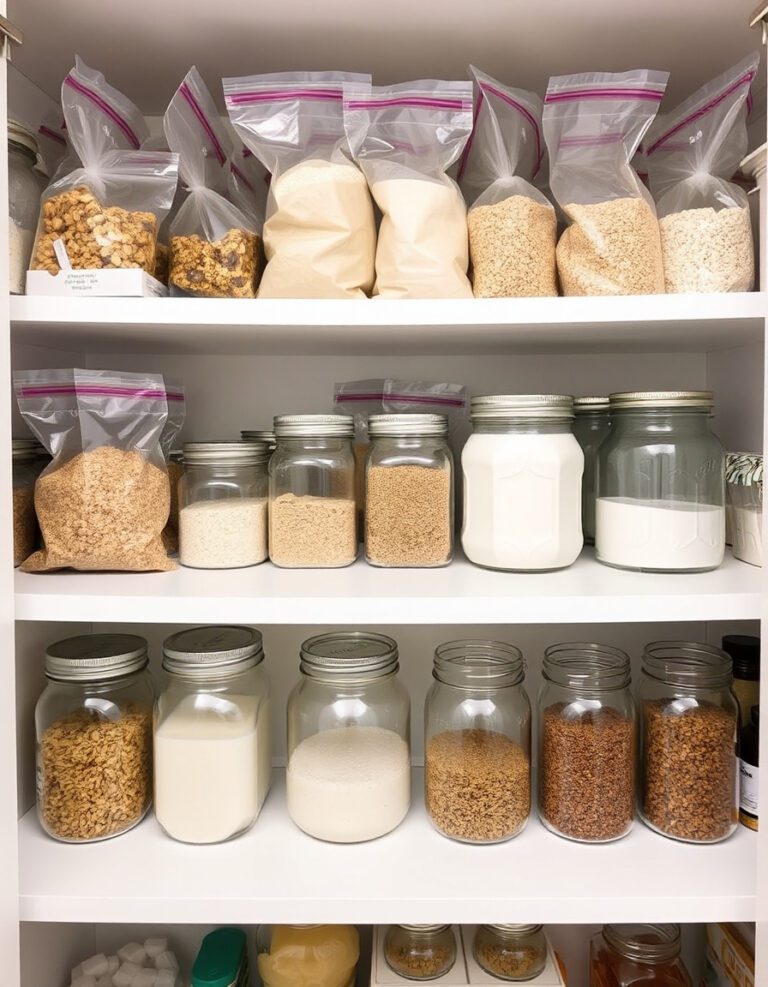
Decant Bulk Items into Uniform Containers
Irregular packaging wastes shelf space. Transferring dry goods into uniform containers can increase shelf capacity by 20–30% in most cases.
- Use rectangular or square containers rather than round ones. They align flush with no wasted gaps.
- Label each container with contents and date.
- Keep original packaging nearby or photograph it for cooking instructions.
Tool-Specific Methods for Cabinet Organization
Specific organizers make a measurable difference in usable cabinet space.
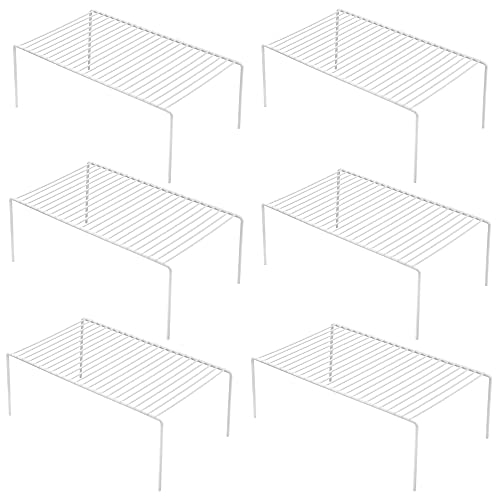
Shelf Risers and Stackable Shelves
Shelf risers create a second level inside a single cabinet shelf.
Use them for:
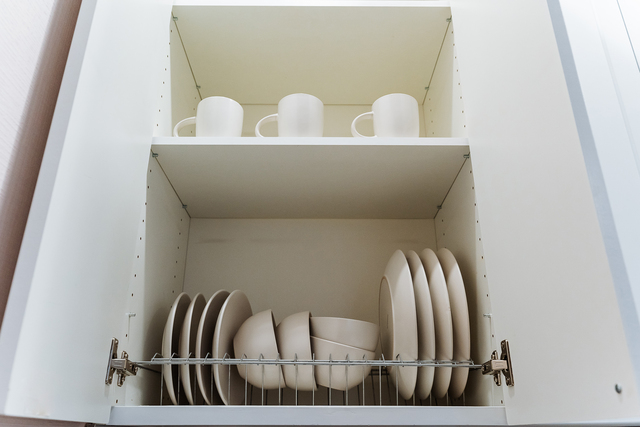
- Plates and bowls (stack two layers)
- Canned goods (front row and back row visible)
- Mugs and glasses
Most risers are available in metal, bamboo, or coated wire. Metal risers typically support more weight. Check the weight limit before stacking heavy items.

Tension Rods
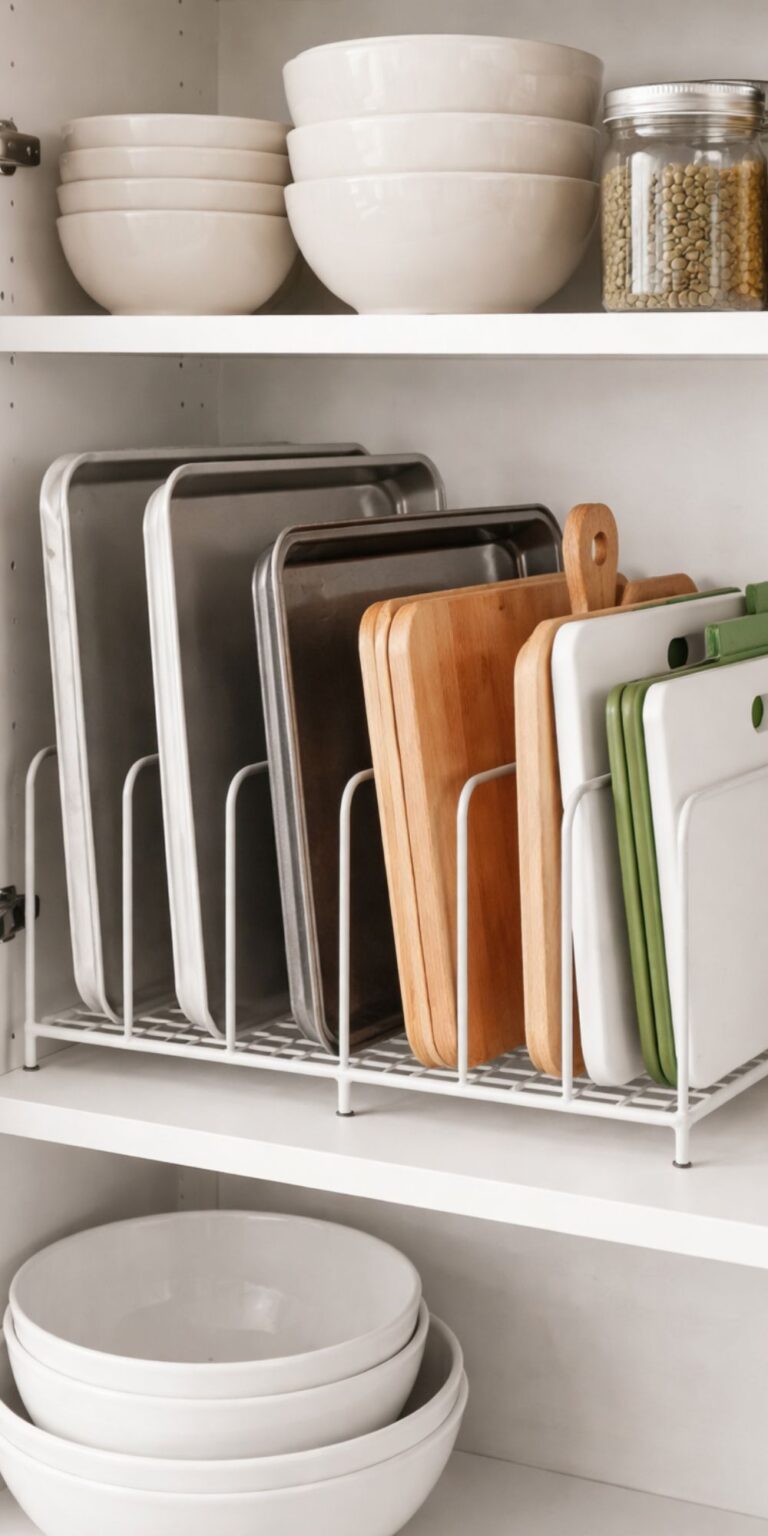
A tension rod installed vertically inside a cabinet creates individual slots for baking sheets, cutting boards, and trays.
- Install one or two rods to divide a lower cabinet into upright compartments.
- Items slide in and out without lifting stacks.

Door-Mounted Organizers
Cabinet doors are often unused storage surfaces.
- Mount a shallow over-door rack on the inside of pantry or lower cabinet doors.
- Use door-mounted organizers for spices, foil, plastic wrap, or cleaning spray bottles.
- Check door clearance before mounting. A rack that is too deep will prevent the door from closing fully.

Drawer Dividers
Deep drawers become difficult to navigate without dividers.
- Use adjustable bamboo or plastic dividers to create sections for utensils, tools, and gadgets.
- Store items vertically in deep drawers where possible (e.g., stand whisks and spatulas upright in a small bin inside the drawer).

Pull-Out Cabinet Organizers
Sliding pull-out shelves attach inside existing cabinets and allow full access to the back of deep cabinets.
- Available in full-extension and partial-extension styles.
- Full-extension pull-outs provide access to 100% of cabinet depth.
- Most require basic tools to install: a drill, screws, and a level.

Vertical and Wall Space as Storage
When cabinet space is fully used, vertical surfaces become the next option.
Wall-Mounted Magnetic Strips
A magnetic strip mounts to the wall and keeps knives accessible without taking drawer or counter space.
- Mount at eye level or above the counter.
- Keep away from areas where children can reach.
- Works for metal tools as well: scissors, vegetable peelers, and small metal utensils.
Read More: 15 Pot Lid Storage Solutions for Standard Cabinets
Pegboards
A pegboard system mounted on one wall can hold a significant number of tools.
- Use hooks, shelves, and bins designed for pegboard systems.
- Arrange by frequency of use: daily tools at eye level, occasional tools higher up.
- Pegboard requires wall anchors if not mounted into studs. Check wall material before drilling.

Over-Cabinet-Door Hooks
Small over-door hooks require no installation and hold lightweight items.
- Hang measuring cups, oven mitts, or dish towels on cabinet door tops.
- Weight limit is typically low (1–3 lbs per hook). Do not overload.
Floating Shelves
Open floating shelves add storage without cabinet bulk.
- Mount above existing counters or along an empty wall section.
- Use for everyday dishes, glasses, or frequently accessed pantry items.
- Mount into wall studs or use appropriate anchors for the wall type. Shelves loaded with dishes can exceed 30 lbs.
Read More:
- 21 Ways to Organize a Small Kitchen on a Budget
- How to Organize Kitchen Drawers Without Dividers
- 15 Under-Sink Organization Tips for Pipes That Block Storage
Material-Specific Cautions for Storage Tools
Different materials have different durability and weight tolerances.
Wire Organizers
Wire shelf risers and pull-outs are durable but can scratch delicate surfaces.
- Place a shelf liner under wire organizers to protect cabinet surfaces.
- Wire can rust in humid conditions. Choose coated or stainless steel options for kitchens near a sink.
Bamboo and Wood Organizers
Bamboo is lightweight and eco-friendly but not moisture-resistant.
- Avoid placing bamboo organizers under the sink or near areas with frequent water exposure.
- Wipe dry immediately if exposed to moisture.
Plastic Organizers
Plastic is easy to clean and moisture-resistant.
- Check that plastic organizers are food-safe if storing pantry items directly in them.
- Lower-grade plastics can warp over time in warm cabinet environments (near the oven or dishwasher).
Read More: 8 Storage Solutions Ideas for Small Bathrooms
Pantry and Food Storage Organization
Organizing pantry items reduces visual clutter and prevents food waste.
Zone by Category
Assign a fixed zone to each food category.
- Canned goods in one section.
- Dry goods (pasta, rice, flour) in another.
- Snacks, oils, and condiments each in their own zones.
Consistent zones reduce search time and make it easier to identify when items are running low.
FIFO Stocking Method
FIFO (First In, First Out) is a standard food-storage practice.
- Place newer items behind older ones.
- Use the front item first.
- This reduces expired food and cabinet clutter from forgotten items.
Spice Storage Options
Spices are a common source of cabinet disorganization.
- Option 1: Drawer insert tray — spices lay flat with labels facing up.
- Option 2: Tiered spice rack on a shelf — two or three tiers visible at once.
- Option 3: Door-mounted spice rack — keeps spices out of main cabinet space entirely.
- Alphabetical organization works for large collections. Frequency-of-use organization works better for smaller sets.

Final Placement, Reassembly, and Limits
Once storage tools are in place, return items to cabinets using a frequency-based system.
Placement guide:
- Most-used items: between knee height and eye level, easiest access.
- Occasionally used items: above eye level or in lower cabinets requiring bending.
- Rarely used items: highest shelves, back of deep cabinets, or stored outside the kitchen.
Keep countertops clear except for items used daily. A toaster used every morning stays out. A blender used weekly can go in a cabinet.
Limits to recognize:
- A small kitchen has a fixed storage ceiling. If items still don’t fit after reorganizing, some must be relocated or removed.
- Adding too many organizers can itself create clutter if the cabinet is already near capacity.
- Reorganizing without decluttering first typically produces minimal results.
Revisit the organization system every 3–6 months. Kitchen habits change, and storage setups often need adjustment as item counts shift.
For more helpful tips, check out our organization section.