19 Open Shelf Organization Ideas for a Balanced Look
This site contains affiliate links, view the disclosure for more information.
Open shelf organization presents a consistent challenge in homes where storage space is limited and items vary widely in size, shape, and frequency of use. Shelves that lack structure tend to accumulate clutter quickly, making spaces feel disorganized even when items are technically stored. Without a deliberate approach, open shelving can reduce the visual calm it is meant to create.
Multiple organization systems are often necessary because no single method handles every item type effectively. Folded textiles, small containers, tall bottles, and decorative objects each require different support structures. Mixing methods allows each shelf zone to function independently while contributing to a cohesive overall look.
This guide covers 19 practical open shelf organization ideas, grouped by category. Methods include container-based solutions, vertical dividers, basket systems, label strategies, and spacing techniques. Each approach is suitable for shelving in kitchens, laundry rooms, bathrooms, living spaces, or home offices.
Grouped Basket Systems for Open Shelf Organization
Wire or woven baskets group similar items into defined zones on open shelves. Each basket functions as a contained unit, keeping loose items from spreading across the shelf surface. This method works well for items that are accessed frequently but do not stack neatly on their own.
Baskets are available in natural fiber, wire mesh, fabric, and solid plastic. Natural fiber baskets are not moisture-resistant and are unsuitable for laundry rooms or areas with humidity. Wire versions offer visibility without full enclosure.
Basket depth should not exceed shelf depth by more than one inch. Overhang creates instability, particularly on floating shelves with weight limits.
Clear Bin Containers for Visible Open Shelf Storage
Clear bins allow contents to be identified without removing the container from the shelf. This reduces the time spent searching and helps maintain organization over time. Rectangular bins use shelf space more efficiently than round containers.
Bins with lids prevent dust accumulation on infrequently used items. Lidless bins provide faster access for everyday use. Stackable versions can double vertical capacity within a single shelf opening.
Most residential shelving supports between 20 and 50 pounds per linear foot depending on bracket type and wall anchor material. Stacked bin arrangements should stay within the manufacturer’s stated weight capacity for the shelving unit.
Vertical Shelf Dividers for Folded Items
Vertical dividers keep stacks of folded textiles, cutting boards, or baking sheets upright and separated. Without dividers, stacks collapse sideways and become difficult to access. Dividers are available in metal, acrylic, and coated wire.
Metal dividers typically clamp onto shelf edges and do not require tools for installation. Acrylic versions offer a lower visual profile. Coated wire dividers provide ventilation, which reduces moisture buildup in laundry contexts.
Dividers are most effective when shelf compartments are between 10 and 16 inches wide. Wider gaps allow stacks to lean before reaching the divider, reducing their effectiveness.
Divider Material Considerations
- Metal: Durable, heavy-duty, suitable for items over 5 lbs per stack
- Acrylic: Low visual weight, best for lighter folded items
- Coated wire: Ventilated, resistant to rust if coating remains intact
- Bamboo: Not recommended in high-moisture environments
Label Systems for Open Shelf Organization Categories
Labels create consistent visual boundaries between shelf zones. They communicate where items belong, which helps multiple household members maintain organization. Labels are most effective when categories are broad enough to accommodate item variation.
Label formats include printed adhesive tags, hanging tags, chalkboard labels, and clip-on signs. Chalkboard labels allow categories to be updated as storage needs change. Printed adhesive labels offer a cleaner look but are not easily repositioned.
Label placement on baskets or bin fronts is more practical than labeling shelf surfaces directly. Surface labels are often obscured when shelves are full.
Matching Container Sets for a Uniform Open Shelf Look
Using containers from the same product line creates visual consistency across open shelves. Uniform shapes, colors, and materials reduce visual noise. This approach is commonly used in kitchens, pantries, and bathroom shelving.
Container sets are available in ceramic, glass, acrylic, and matte plastic. Glass containers are heavier and may not be appropriate for high shelves without lip guards. Matte plastic sets are lightweight and resist shattering.
Matching sets require upfront planning around the number and size of containers needed. Adding containers from different product lines later can disrupt the visual balance the approach is intended to create.
Read More: 16 Bathroom Drawer Organization Ideas for Small Items
Riser Inserts for Layered Open Shelf Display
Shelf risers create a second level within a single shelf opening, increasing usable surface area. They are commonly used for spices, small jars, and decorative objects. Risers allow items at the back of a shelf to remain visible.
Riser materials include bamboo, metal, acrylic, and coated MDF. Risers should be placed on stable, level shelf surfaces only. Tilted or bowed shelves can cause risers to slide forward under load. Riser height typically ranges from two to five inches.
Risers are not suitable for heavy items such as canned goods in large quantities. Most residential risers have a stated capacity of five to ten pounds per tier.
Tension Rod Dividers for Shelf Compartmentalization
Tension rods installed vertically between shelves create narrow compartments for items such as baking sheets, pot lids, or cutting boards. No drilling is required for installation. The rod pressure holds the divider in place against the shelf surfaces above and below.
Tension rods are available in metal, plastic, and rubber-coated finishes. Rubber-coated versions provide additional grip on smooth shelf surfaces. Standard rod diameter ranges from 5/8 to 1 inch.
This method requires a minimum shelf height of approximately 10 inches to allow the rod to generate sufficient tension. Rods installed in shelf openings shorter than this may not hold securely under the weight of heavy items.
Pegboard Backing for Adjustable Open Shelf Organization
Pegboard installed at the back of a shelving unit creates a secondary storage layer for hanging items. Hooks, baskets, and small shelving accessories attach directly to the pegboard grid. This is commonly used in garages, craft rooms, and laundry areas.
Standard pegboard uses a 1-inch hole spacing pattern. Hooks and accessories must match the pegboard hole diameter, which is typically 3/16 or 1/4 inch. Load limits for individual pegboard hooks typically range from 1 to 5 pounds depending on hook gauge and anchor depth.
Pegboard requires a minimum 1/2-inch clearance behind it to allow hook insertion. It cannot be mounted flush against a solid back panel without a spacer frame.
Common Pegboard Hook Types
- Single hooks: For lightweight tools, measuring cups, or bags
- Double hooks: For heavier items or wider handles
- Shelf brackets: For adding small horizontal shelves within the grid
- Bin clips: For holding small containers or spray bottles
Turntables for Corner Open Shelf Access
Turntables placed on open shelves improve access to items stored at the back or in corner positions. Rotating the tray brings rear items forward without removing front items. This method is common in kitchen pantry shelving and bathroom shelving.
Turntables are available in single-tier and double-tier formats. Single-tier models accommodate taller bottles and jars. Double-tier versions increase capacity but reduce the maximum item height per level.
Turntable diameter must be two to three inches smaller than shelf depth to allow rotation without items striking the shelf wall or adjacent objects. Oversized turntables that extend past the shelf edge create a tipping hazard.
Also Read: 18 Ways to Organize Under-Sink Bathroom Storage
Color-Coded Storage Zones on Open Shelves
Assigning specific colors to storage containers within defined shelf zones creates visual organization without requiring labels. Each household member or category receives a distinct color. This is often used in family mudrooms, shared laundry rooms, or children’s spaces.
Color coding requires commitment to a consistent purchasing scheme over time. Replacing containers with mismatched colors disrupts the system visually. Neutral base shelving — white, natural wood, or gray — provides the clearest background for color differentiation.
This method is most effective when the number of categories is between three and six. More than six colors on a single shelving unit can produce visual clutter rather than clarity.
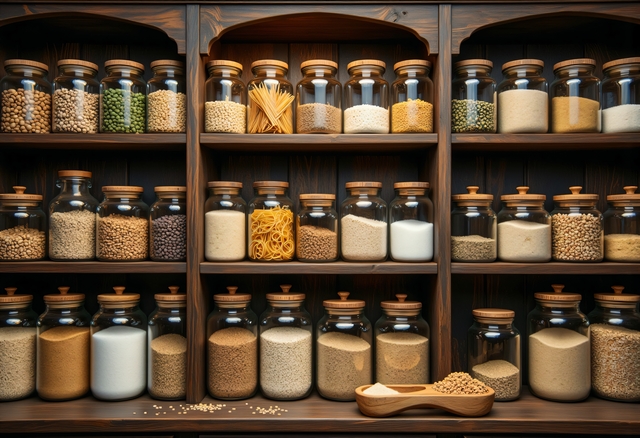
Open Shelf Organization with Uniform Jar Storage
Uniform jars or canisters standardize the size and shape of stored items on open shelves. This method is most commonly applied to pantry staples, bathroom products, or craft supplies. Decanting items into matching jars eliminates packaging variation.
Mason jars, clip-top glass jars, and wide-mouth canisters are the most common formats. Glass jars are heavier than plastic and increase the cumulative shelf load. Shelves holding full glass jars should be rated for at least 30 pounds per linear foot.
Decanting requires regular restocking and cleaning of containers. Items with short shelf lives or frequent rotation are less practical to decant than long-term pantry staples.
Floating Shelf Spacing for Visual Balance
The vertical gap between open shelves affects both function and visual proportion. Shelves spaced too closely together limit item height and create a crowded appearance. Shelves spaced too far apart waste vertical wall space.
A standard spacing of 12 inches accommodates most everyday items including folded towels, books, and medium-height containers. Shelves intended for tall bottles or appliances may require 15 to 18 inches. Shelves used exclusively for small items can be spaced at 8 to 10 inches.
Shelf spacing should be planned before installation, as repositioning bracket holes after the fact leaves visible anchor damage on walls. Adjustable shelving systems allow spacing changes without re-drilling.
Read More:
- 15 Pot Lid Storage Solutions for Standard Cabinets
- 18 Pantry Storage Ideas for Narrow Spaces That Feel Small
- 14 Ways to Organize Open Shelves in the Kitchen
- 21 Ways to Organize a Small Kitchen on a Budget
Drawer Inserts Within Open Shelf Frames
Some open shelving units accept pull-out drawer inserts that slide into existing shelf openings. These allow concealed storage within an otherwise open framework. This method is common in modular shelving systems such as cube-format units.
Drawer inserts are typically made of fabric-covered cardboard, woven material, or solid wood. Fabric inserts are lightweight but not rigid and may sag under heavy loads. Wood inserts are durable but add significant weight to the unit.
Insert dimensions must match the exact interior dimensions of the shelf opening. Gaps larger than 1/4 inch on any side reduce stability and allow the insert to tilt when extended.
Capacity Limits by Insert Material
- Fabric/cardboard inserts: Maximum 5–8 lbs recommended
- Woven inserts: 8–12 lbs depending on frame rigidity
- Solid wood inserts: 15–25 lbs depending on drawer slide rating
Bookend Brackets for Lateral Open Shelf Containment
Bookend brackets prevent items from falling sideways on open shelves, particularly for books, binders, or vertically stored flat items. They create defined lateral boundaries within a shelf zone. Metal bookends are the most durable and widely available format.
Weighted bookends function without attachment to the shelf surface. Clip-on bookends attach to the shelf edge and require a shelf thickness of 3/4 inch or greater. Decorative bookends in stone or cast iron are significantly heavier and increase shelf load.
Bookends do not contain items frontward. They are not suitable as the sole restraint for shelves in earthquake-prone regions or for shelves mounted in high-traffic areas where vibration is common.
Shelf Liner for Non-Slip Open Shelf Surfaces
Shelf liner prevents containers and items from sliding on smooth shelf surfaces. It also protects wooden shelving from moisture damage caused by wet containers. Non-adhesive liner is repositionable and does not leave residue.
Liner materials include foam, rubber, vinyl mesh, and cork. Rubber and foam liners provide the highest friction coefficient. Vinyl mesh liners allow airflow beneath containers, which reduces moisture buildup.
Liner thickness affects container stability. Liners thicker than 1/8 inch can cause taller containers to become unstable on shelves with low clearance. Liner should be cut precisely to shelf dimensions to prevent curling at edges.
Minimal Negative Space for Visual Balance on Open Shelves
Deliberately leaving 20 to 30 percent of shelf surface empty creates visual breathing room and prevents a cluttered appearance. This principle applies particularly to open shelves in living areas and kitchens. Fully loaded shelves, even when organized, can appear heavy and unbalanced.
Negative space is most effective when distributed evenly across shelves rather than concentrated on a single shelf. Alternating between object groupings and open areas creates visual rhythm. Shelf styling guides often recommend pairing a maximum of three to five items per visual grouping.
This approach reduces total storage capacity by design. Spaces with high storage demands may not be compatible with this method without supplemental closed storage nearby.
Related Post: How to Organize Kitchen Drawers Without Dividers
Modular Cube Shelving for Configurable Open Shelf Organization
Modular cube shelving units allow shelf configuration to be adjusted as storage needs change. Individual cubes can be stacked, spread horizontally, or combined with insert accessories. This format is common in living rooms, home offices, and children’s rooms.
Standard cube dimensions are typically 10.5 inches, 13 inches, or 15.5 inches per side. Insert accessories, including doors, baskets, and drawers, are sized to match these standard cube dimensions. Freestanding cube units must be anchored to the wall to prevent tipping, particularly in households with children.
Units taller than two cube rows require wall anchoring regardless of the manufacturer’s stated stability. Floor load capacity should be considered when stacking heavy cubes on upper-level floors with older construction.
Wire Grid Panels as Open Shelf Organization Backdrops
Wire grid panels mounted to a wall create a fully customizable surface for hanging storage accessories. S-hooks, baskets, shelves, and holders attach directly to the grid without tools. This system is adjustable and expandable without additional drilling.
Grid panels are typically made from coated steel wire in black, white, or chrome finishes. Panel size ranges from small desktop formats to full wall-height installations. Accessories must be compatible with the specific grid wire spacing, which varies by manufacturer.
Wall-mounted grid panels require anchor points rated for the combined weight of the panel and all attached accessories. Drywall anchors alone are not sufficient for panels holding more than 15 to 20 pounds. Stud mounting is recommended for heavier configurations.
Read More: How to Organize Kitchen Drawers in Small Apartments
Open Shelf Organization Using the Zone Method
The zone method divides a shelving unit into distinct functional areas, each dedicated to one category of items. Zones are determined by use frequency, item type, or user. Items within each zone are stored consistently in the same location.
High-frequency items are placed in zones at eye level or below. Low-frequency or seasonal items occupy upper zones. Zones are typically separated by visible gaps, changes in container type, or shelf liner color.
Zone boundaries require maintenance over time. Without consistent restocking habits, items from one zone migrate into adjacent zones, reducing the method’s effectiveness. The zone method does not self-correct and depends on household participation to remain functional.
Staggered Height Arrangements for Open Shelf Visual Balance
Varying the height of items within a shelf grouping prevents a flat, monotonous visual line. Taller items placed at one end of a grouping and shorter items at the other create a gradual height transition. This is a common approach in styled pantry and living room shelving.
Height variation works best with items that have natural differences in scale, such as a tall vase, medium-height books, and small containers. Artificially creating height with risers under items of similar height can appear contrived. A maximum of three distinct height levels within one grouping is generally sufficient.
This method is primarily aesthetic and does not increase storage capacity. Shelves arranged for visual balance alone may sacrifice some functional density compared to uniform-height storage arrangements.
Magnetic Strip Mounting Below Open Shelf Edges
Magnetic strips mounted to the underside of open shelves hold metal tools, utensils, or small containers without occupying shelf surface area. This method is common in kitchens for knife storage and in craft rooms for metal tool organization. It converts unused vertical shelf space into active storage.
Magnetic strips are available in wood-covered and bare metal formats. Knife magnetic strips must be rated for the combined weight of all attached blades. Residential strips typically support between 5 and 15 pounds depending on magnet strength and mounting method.
Mounting screws must penetrate solid shelf material, not veneer or hollow-core panels. Magnetic strips installed on hollow or composite shelf undersides may detach under load. Minimum shelf material thickness for safe mounting is typically 3/4 inch.
For more helpful tips, check out our organization section.