16 Entryway Shelf Organization Ideas for Daily Essentials
This site contains affiliate links, view the disclosure for more information.
Entryway shelf organization determines how smoothly a household runs each morning. Shelves near the front door collect keys, bags, mail, shoes, and seasonal gear simultaneously. Without a clear system, these surfaces become cluttered within days.
Most entryways require more than one storage approach. A single shelf rarely handles the full range of items that pass through a front door daily. Combining vertical storage, labeled zones, and dedicated containers typically produces more stable, long-term organization.
This guide covers shelf-based organization methods suited to real entryway conditions. It includes floating shelves, cubby systems, wall-mounted hooks with shelving, and modular storage units. Methods apply to narrow entryways, standard foyers, and mudroom-adjacent spaces.
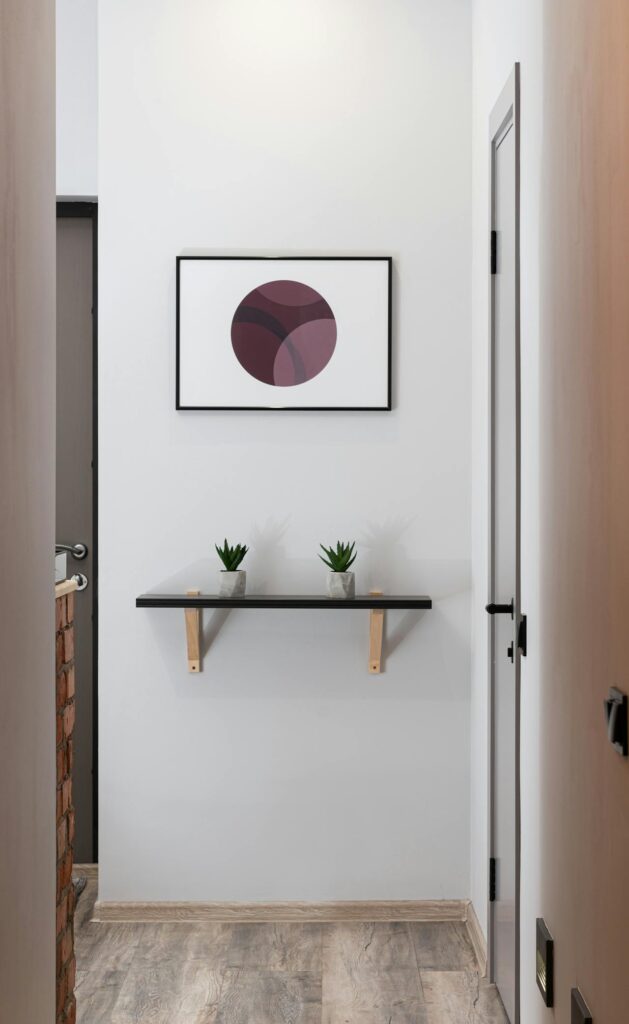
Floating Shelves for Entryway Organization
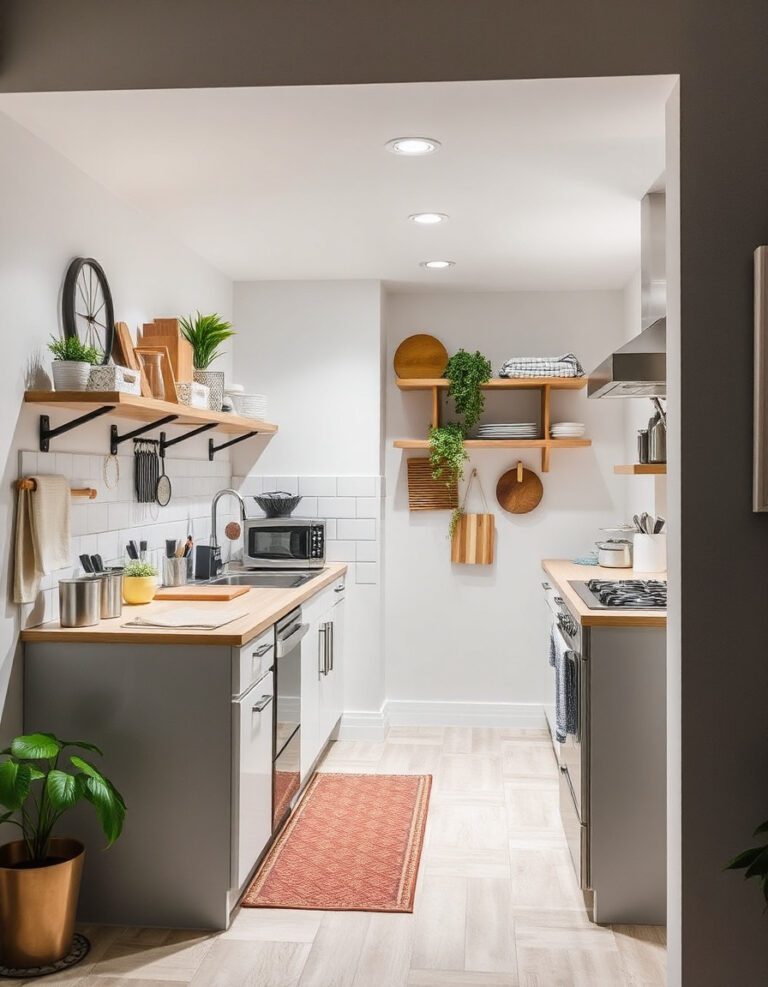
Floating shelves mount directly to wall studs and leave floor space fully open. They work well in narrow entryways where freestanding furniture creates a bottleneck. Standard depths range from 6 to 12 inches, which is sufficient for most daily essentials.
Key points:
- Requires stud or anchor installation for safe load-bearing
- Works best at eye level for frequently accessed items
- Can hold baskets, trays, or small bins for category sorting
Maximum weight capacity varies by bracket type and wall material — always confirm load limits before mounting.
Floating shelves are not suitable for heavy footwear or large bags without reinforced brackets.
Cubby Shelf Units for Shoes and Bags
Cubby units divide shelf space into fixed compartments. Each cubby can hold one category of item — one pair of shoes, one bag, or one set of accessories. This prevents items from spreading across shared surfaces.
Freestanding cubby units typically require no installation. Wall-mounted versions need secure fastening to prevent tipping. Units with 12-inch-square cubbies accommodate most adult footwear.
Key points:
- Open cubbies allow fast visual access
- Closed cubbies with doors reduce visual clutter
- Depth under 14 inches may not fit larger boots or backpacks
Cubby units with more than four vertical rows can become difficult to access at the top without a step.
Entryway Shelf Organization with Labeled Baskets
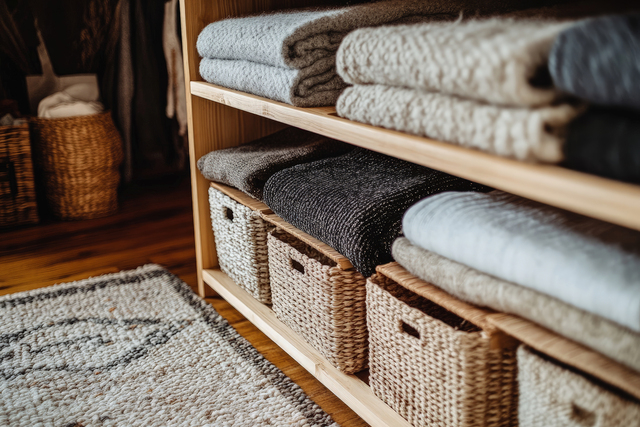
Labeled baskets on shelves assign fixed homes to frequently misplaced items. Labels remove the decision-making step when returning items to storage. Wicker, fabric, and wire baskets all function in this role depending on item type.
Categories commonly assigned to baskets include mail, sunglasses, chargers, pet leashes, and seasonal accessories. Baskets sized to shelf depth prevent items from being pushed to the back and forgotten. Uniform basket sizing across shelves creates visual consistency.
Key points:
- Wire baskets allow contents to be seen without removing the basket
- Fabric bins conceal contents and reduce visual noise
- Labels can be handwritten, printed, or adhesive
Overfilling baskets reduces the effectiveness of the labeling system over time.
Read More: 16 Bathroom Drawer Organization Ideas for Small Items
Wall-Mounted Hook Panels with a Shelf Above
Hook panels with an integrated shelf above combine vertical and horizontal storage in one unit. The shelf holds flat items like mail trays or small boxes. The hooks below handle bags, coats, and umbrellas.
This combination is one of the more space-efficient entryway shelf organization formats available. Standard hook panels mount between 60 and 72 inches from the floor. The shelf above should remain accessible without a step stool.
Key points:
- Hook spacing of 6–8 inches accommodates most bag handles
- Shelves under 8 inches deep may not hold standard mail trays
- Units with five or more hooks can handle multi-person households
Hooks rated for fewer than 10 pounds should not hold heavy winter coats or loaded backpacks.
Modular Shelf Systems for Entryway Customization
Modular systems use interchangeable components that can be reconfigured over time. Shelves, drawers, and cabinet sections attach to a shared rail or frame. This allows the layout to adjust as household needs change.
Modular entryway units often include both open shelving and enclosed storage. The combination handles items that benefit from visibility alongside items that do not. Most systems are freestanding, though wall-anchoring is recommended for tall configurations.
Key points:
- Component compatibility varies by brand — mixing brands often fails
- Enclosed sections add assembly complexity
- Freestanding units over 60 inches tall should be anchored to the wall
Modular systems typically cost more than fixed-shelf alternatives.
Also Read: 18 Ways to Organize Under-Sink Bathroom Storage
Narrow Entryway Shelf Organization Solutions
Entryways under 36 inches wide require shallow-profile storage. Shelves 4 to 6 inches deep can hold keys, sunglasses, wallets, and small trays without reducing walkway clearance. Wall space above eye level is often underused in narrow entryways.
Vertical shelf stacks use height instead of width to increase storage capacity. A column of three to four small shelves can replace a wider single-shelf unit in tight spaces. Items stored here should be lightweight and frequently used.
Key points:
- Clearance of at least 28 inches must remain for comfortable passage
- Deep items stored on narrow shelves create a tripping hazard if they overhang
- Corner shelves can recover otherwise unused wall space
Narrow shelves do not accommodate shoes, bags, or bulky accessories without additional hooks or floor-level storage nearby.
Over-Door Shelving for Small Entryways
Over-door shelf units hang from the top edge of an interior door. They require no drilling and can be removed without leaving marks. Standard units hold three to five shelves in the space behind the door.
This format suits rental properties or entryways with no available wall space. Weight limits are generally low — typically 5 to 10 pounds per shelf. Items must be lightweight and have a low center of gravity to prevent unit instability.
Key points:
- Door clearance required between the door and frame varies — measure before purchasing
- Units shift on hollow-core doors more easily than on solid-core doors
- Shelves are typically too shallow for shoes or bags
Over-door units are not a replacement for wall-mounted entryway shelf organization but can supplement existing systems.
Bench with Built-In Shelving Underneath
Entryway benches with open shelving below provide seating and storage simultaneously. The lower shelf typically holds shoes. The bench surface can hold bags or be kept clear for sitting.
Units with two shelf rows below the seat can hold four to six pairs of shoes depending on size. Bench height of 17 to 19 inches is standard for comfortable seating. Benches should be stable enough to support an adult’s full weight without shifting.
Key points:
- Open lower shelves accumulate dust more quickly than closed cabinets
- Bench depth of 12–16 inches is standard — verify it fits the entryway width
- Cushioned tops reduce noise but may shift during use
Benches with shelving do not typically include upper storage, requiring supplemental wall-mounted solutions for bags and coats.
Read More:
- 15 Pot Lid Storage Solutions for Standard Cabinets
- 18 Pantry Storage Ideas for Narrow Spaces That Feel Small
- 14 Ways to Organize Open Shelves in the Kitchen
- 21 Ways to Organize a Small Kitchen on a Budget
Entryway Shelf Organization Using Trays and Dividers
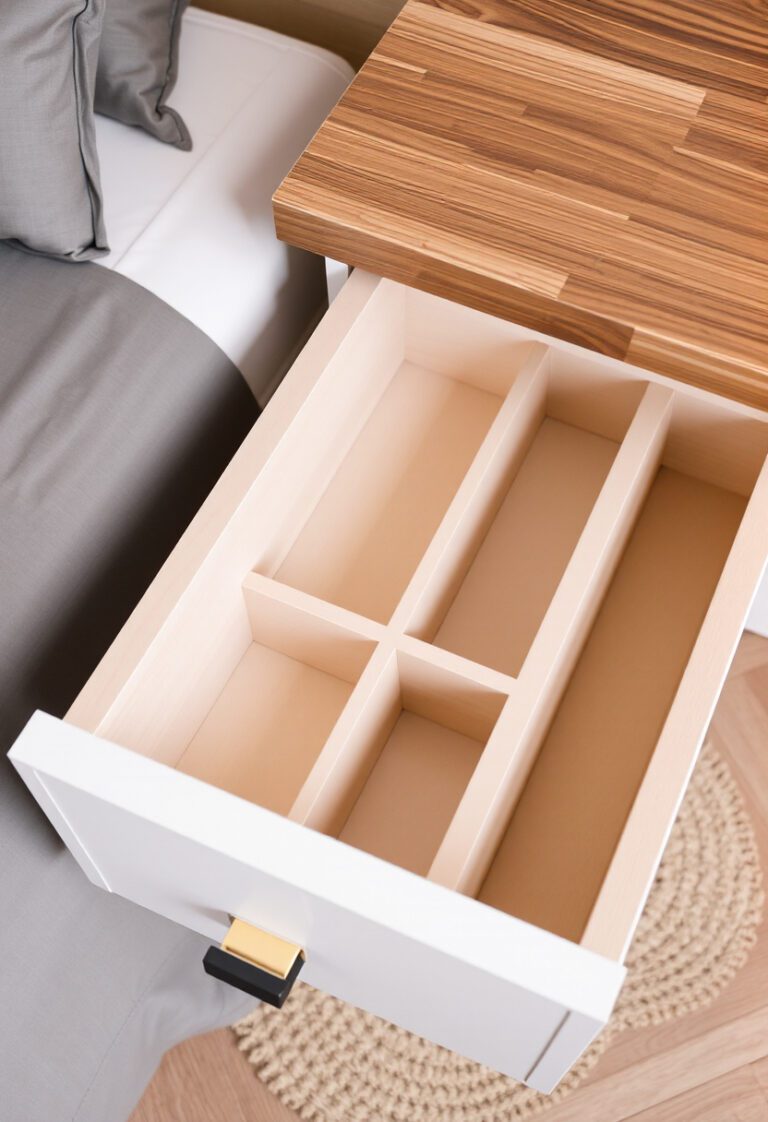
Trays on shelves contain small items that would otherwise scatter. A single tray can hold keys, coins, a wallet, and a phone in one controlled zone. Dividers within trays further separate categories without adding bulk.
Trays work best on flat, stable shelf surfaces. Non-slip tray bases prevent movement on smooth shelves. Standard tray dimensions of 9 by 12 inches fit most shelf depths without overhanging.
Key points:
- Trays with raised edges contain items more reliably than flat ones
- Acrylic, wood, and metal trays each handle daily contact use
- Multiple small trays can replace a single large tray for more precise sorting
Trays do not add capacity — they only improve organization within existing shelf space.
Key and Mail Organization on Entryway Shelves
Keys and mail are among the most commonly misplaced items near the front door. Dedicated hooks for keys and a slotted mail organizer on the shelf address both simultaneously. Wall-mounted units that combine a key hook strip with a small shelf are widely available.
Mail organizers with two to three slots separate incoming, outgoing, and pending mail without requiring sorting immediately. Key hooks work most reliably when each household member has an assigned hook. Consistency in use determines whether the system functions.
Key points:
- Magnetic key holders work on metal doors but not on shelves
- Mail left unsorted in organizers for more than a week typically overflows
- Units combining keys and mail in one frame reduce wall space usage
This setup requires daily habit reinforcement to remain functional — the shelf alone does not maintain organization.
Freestanding Entryway Shelf Units
Freestanding shelf units require no installation and can be repositioned as needed. They are suitable for renters, temporary setups, or households that rearrange frequently. Standard units range from 36 to 72 inches tall with three to five shelf tiers.
Load capacity varies significantly between lightweight and reinforced units. Wire shelving units allow airflow and visibility. Wood and laminate units offer a cleaner aesthetic but add weight.
Key points:
- Units should be leveled on uneven floors to prevent instability
- Wire units may not hold small items without a liner
- Taller units are more prone to tipping without wall anchoring
Freestanding units over 48 inches tall should be secured to the wall, particularly in homes with children.
Related Post: How to Organize Kitchen Drawers Without Dividers
Corner Shelf Units for Entryway Dead Space
Corner shelves use wall space that standard units cannot occupy. L-shaped or triangular corner shelves fit flush into 90-degree corners. They are available in both floating and freestanding configurations.
Corner shelves are typically limited in depth — 8 to 10 inches is common. This restricts use to smaller items such as keys, decorative containers, or small baskets. Wall-mounted corner units require two separate studs or toggle anchors.
Key points:
- Floating corner shelves require precise leveling on both walls
- Corner freestanding units often have a smaller footprint than they appear
- Multiple corner shelves stacked vertically increase capacity without floor impact
Corner shelf space is often supplemental rather than primary storage in a functional entryway system.
Pegboard Shelf Systems for Entryway Walls
Pegboard panels mount to the wall and accept interchangeable hooks, small shelves, and bins. The layout can be adjusted without repainting or patching. Pegboard is commonly used in garages but functions equally well in mudroom-style entryways.
Standard pegboard hole spacing is 1 inch. Accessories designed for ¼-inch holes are the most widely available. A 2-by-4-foot panel provides substantial storage in a compact footprint.
Key points:
- Pegboard requires a gap of at least ½ inch behind the panel for hooks to insert properly
- Painted pegboard can reduce hook grip if paint fills holes
- Heavy items require reinforced hooks rated for the specific load
Pegboard is not suitable for polished or formal entryway aesthetics without framing or cabinet-style integration.
Shelf Risers for Entryway Shelf Organization
Shelf risers create a second level within a single shelf tier. They double usable surface area without adding a full shelf unit. Risers typically hold smaller items on the upper level while larger items sit on the main shelf below.
Standard riser heights range from 3 to 6 inches. Metal and bamboo risers are the most stable options for daily use. Risers should not exceed half the clearance height between shelves to allow easy access.
Key points:
- Non-slip feet prevent risers from shifting
- Risers rated for kitchen use are generally sufficient for entryway loads
- Overcrowding a shelf with a riser reduces the benefit of the added level
Shelf risers work best as a supplemental tool rather than a primary entryway shelf organization solution.
Read More: How to Organize Kitchen Drawers in Small Apartments
Built-In Entryway Shelving
Built-in shelving is constructed as part of the wall or fitted into an alcove. It offers the most customized use of available space. Depth, height, and shelf spacing can all be specified for the household’s exact needs.
Built-in units are not repositionable and represent a permanent or semi-permanent modification. Installation typically requires carpentry work and may involve permits depending on jurisdiction. Costs are substantially higher than freestanding or floating alternatives.
Key points:
- Alcove installations use dead wall space more efficiently than any other method
- Painted built-ins can match trim work for a seamless look
- Shelves can be designed to hold bins, shoes, and bags at customized heights
Built-in shelving is not a practical option for renters or households that expect to move within a few years.
Entryway Shelf Organization with Clear Bins
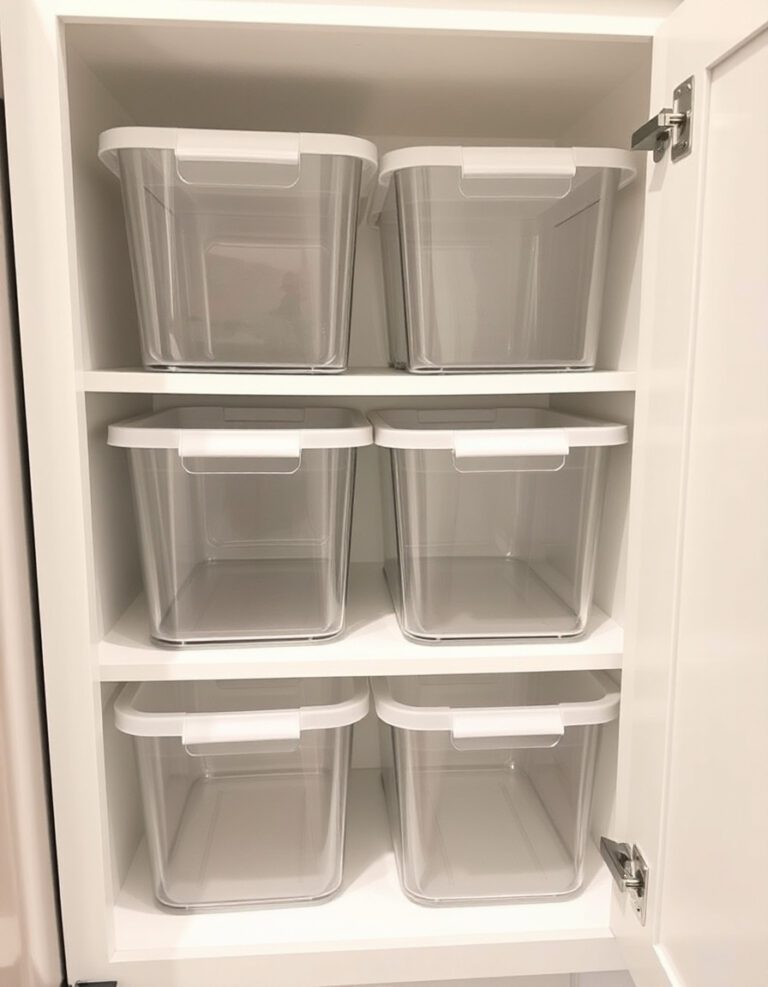
Clear bins on shelves allow contents to be identified without removing or labeling each container. They work well for items that are added and removed frequently. Standard rectangular bins in uniform sizes stack and align more efficiently than mixed containers.
Bins with lids contain items more securely but require an extra step to access. Open-top bins suit daily-use items. Clear acrylic bins are the most visually consistent option across mixed shelf configurations.
Key points:
- Bin depth should not exceed shelf depth to prevent overhang
- Stackable bins extend vertical capacity on deeper shelves
- Clear bins require periodic cleaning to maintain visibility
Bins do not create organization on their own — consistent category assignment determines their long-term effectiveness.
For more helpful tips, check out our organization section.