15 Attic Organization Ideas for Long-Term Storage
This site contains affiliate links, view the disclosure for more information.
Attic spaces are frequently underused because they lack built-in structure. Items get stacked without a system, making retrieval difficult and space inefficient. Without deliberate organization, attics become a cycle of clutter that compounds over time.
Multiple attic organization ideas are necessary because no single system works for every item type. Seasonal decorations, archived documents, clothing, and furniture each require different storage conditions and access levels. A combination of methods keeps items protected, accessible, and space-efficient.
This guide covers 15 practical storage methods across vertical systems, modular shelving, container solutions, flooring options, and category-based organization. Each method applies to standard residential attics with typical ceiling heights and load tolerances.
Freestanding Shelving Units for Attic Wall Space
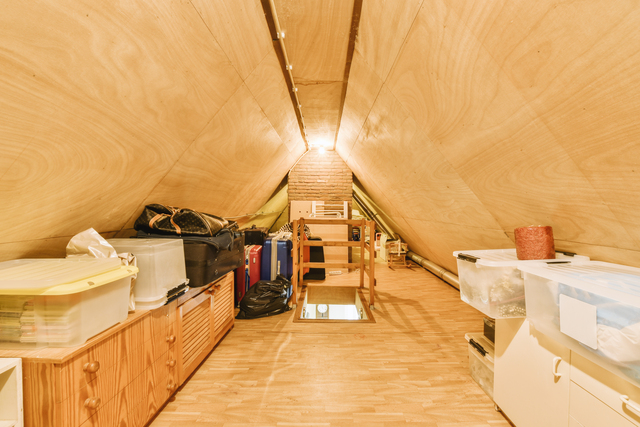
Freestanding shelves use vertical wall space without requiring permanent installation. They are available in metal, wire, and wood configurations to match attic conditions and weight requirements.
Wire shelving allows airflow, which reduces moisture buildup around stored items. Metal shelving supports heavier loads and resists humidity better than untreated wood.
Load Capacity Notes
- Light-duty units: typically 100–150 lbs per shelf
- Heavy-duty steel units: often rated 250–350 lbs per shelf
- Shelves placed near the eaves must stay within the attic’s structural load rating
Freestanding units are limited by floor levelness and available headroom along the attic walls.
Built-In Shelving Along Knee Walls
Knee walls — the short vertical walls found in finished attics — are natural anchor points for built-in shelving. Shelves mounted here use otherwise dead space without consuming floor area.
Built-in units require secure attachment to wall studs. Shelving depth should not exceed the knee wall height to avoid blocking access.
Knee wall shelving is not suitable for attics without finished walls or structural framing behind the drywall.
Attic Organization Ideas Using Labeled Plastic Bins
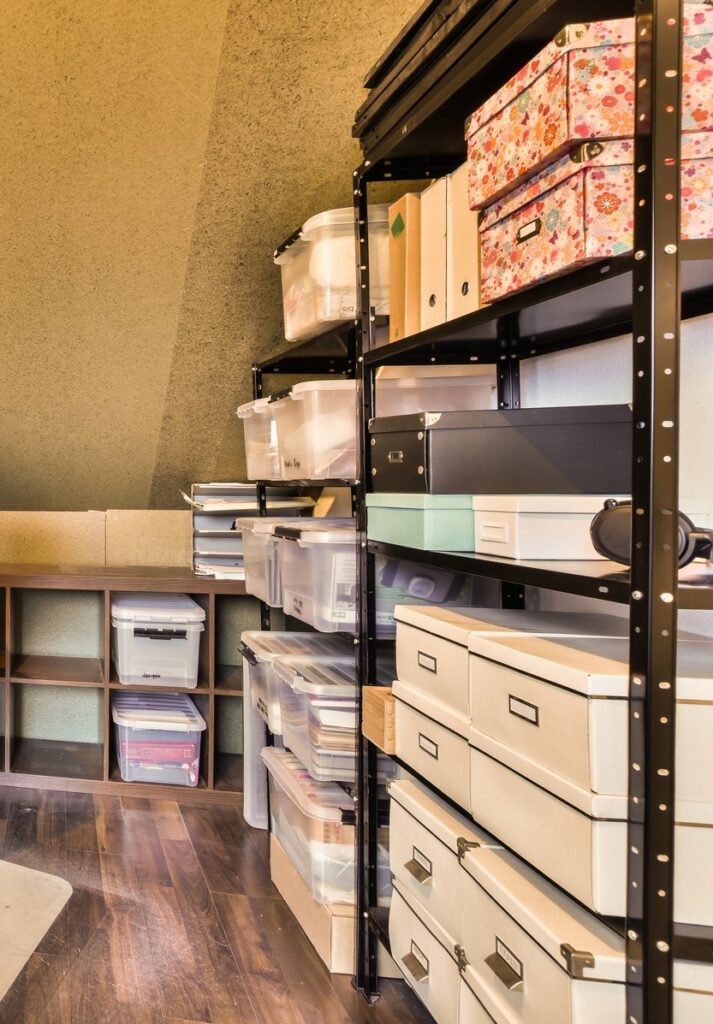
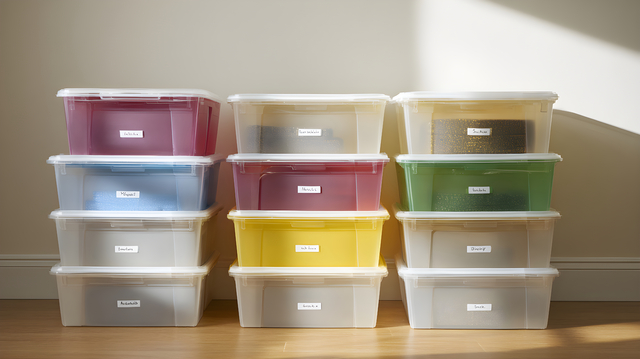
Clear plastic bins are a standard solution for long-term attic storage. They protect contents from dust, pests, and minor moisture exposure.
Lids that snap or lock create a tighter seal than loose-fitting covers. Clear-sided bins allow visual identification without opening each container.
Size Guidelines
- Small bins (6–12 qt): shoes, accessories, documents
- Medium bins (18–32 qt): clothing, linens, small décor
- Large bins (50–66 qt): bulky items, holiday decorations
Bins must never be stacked higher than stable, and weight distribution must stay even to prevent collapse. Standard residential attic floors typically support 10–20 lbs per square foot; confirm your attic’s rating before stacking multiple full bins.
Also Read: 18 Pantry Storage Ideas for Narrow Spaces That Feel Small
Ceiling-Mounted Overhead Storage Platforms
Overhead platforms attach to ceiling joists and suspend above the attic floor. They work well for rarely accessed items such as archive boxes or off-season gear.
Platform kits are rated by weight capacity and joist spacing compatibility. Most residential kits support 250–600 lbs depending on the model and joist configuration.
Overhead platforms require a minimum ceiling height of 7.5 to 8 feet for safe use beneath the platform. Items stored overhead must be lightweight enough to retrieve without risk of falling.
Modular Cube Storage Systems
Modular cube units can be configured in multiple layouts to match irregular attic floor plans. They are available in open and closed configurations.
Open cubes work for accessible bins and baskets. Closed cubes with doors protect contents from light and dust.
Modular systems are limited by floor stability and cannot be stacked beyond manufacturer height limits, typically four to six cubes tall.
Attic Flooring Panels for Usable Storage Space
Many attics have exposed joists with no subfloor. Interlocking attic flooring panels can be installed directly over joists to create a stable walking and storage surface.
Panels are typically made from OSB or engineered wood and sized to fit standard 16-inch or 24-inch joist spacing. They create a flat surface that supports bins, shelving, and furniture.
Flooring panels must not be installed over insulation without appropriate risers, as compressing insulation reduces its thermal effectiveness. Attic flooring does not increase the structural load rating of the joists beneath.
Hanging Storage Bags for Seasonal Clothing
Fabric hanging storage bags attach to ceiling hooks or exposed rafters. They are designed for garments, linens, and soft goods that should not be folded flat for long periods.
Most bags are made from non-woven polypropylene or canvas. They are not airtight and offer limited protection against humidity.
Hanging bags are suitable only for attics with stable temperature and humidity conditions. They are not appropriate for damp or uninsulated attic spaces.
Read More:
- 21 Ways to Organize a Small Kitchen on a Budget
- How to Organize Kitchen Drawers Without Dividers
- 15 Under-Sink Organization Tips for Pipes That Block Storage
Pegboard Panels for Small Item Access
Pegboard installs against a flat wall surface and holds hooks, bins, and brackets. It organizes small tools, cords, craft supplies, and hardware.
Standard hardboard pegboard requires a 1-inch offset from the wall for hooks to insert properly. Metal pegboard is more durable and supports heavier loads.
Pegboard is limited to items that can hang safely from hooks. It is not a sealed storage solution and does not protect contents from dust.
Rolling Carts for Flexible Storage Zones
Rolling carts allow stored items to be repositioned without lifting. They work well in attics with finished floors or installed flooring panels.
Carts with locking wheels prevent movement on sloped surfaces. Mesh or open-shelf carts are better suited to attics than enclosed carts without ventilation.
Rolling carts are not usable on uneven joist surfaces without subfloor installation.
Vacuum Storage Bags for Bulky Soft Goods
Vacuum storage bags compress blankets, pillows, comforters, and clothing to a fraction of their original volume. They are sealed using a standard vacuum cleaner hose.
Compression reduces storage footprint significantly for soft items. Most bags are made from multi-layer polyethylene and resist moisture when properly sealed.
Material Considerations
- Not suitable for down or feather-filled items stored long-term
- Wool and cashmere can be damaged by extended compression
- Bags must be fully sealed or they will re-expand
Vacuum bags are single-use or limited-use products. Seals degrade over time and must be inspected before relying on compression for seasonal storage.
Dedicated Zones by Storage Category
Attic organization ideas often work best when the space is divided into distinct zones by item category. Common zones include holiday décor, archived documents, seasonal clothing, and furniture pieces.
Zones reduce search time and prevent mixing of items with different storage requirements. Clear floor markings or tape lines can define zones on a finished attic floor.
Zone-based organization requires enough floor space to create functional separations. It is not practical in attics with less than 150 to 200 square feet of usable floor area.
Read More: 7 Deep Drawer Organization Ideas to Reduce clutter
Wall-Mounted Hook Systems for Equipment Storage
Heavy-duty wall hooks support bicycles, ladders, sports equipment, and other large items. They attach to wall studs and keep floor space clear.
Hooks are typically rated by individual weight capacity, ranging from 25 lbs to over 100 lbs depending on construction. Wall-mounted hook systems require locating studs accurately before installation.
Heavy items mounted on hooks must be secured with straps or locks to prevent falling during settling or vibration. Hook systems are not rated for use on drywall without stud backing.
Shelving Risers Over Insulation
In attics without subfloor, shelf risers elevate storage platforms above the insulation layer. Risers preserve insulation integrity while creating a usable storage surface above.
Riser systems are typically made from metal or structural plastic. They are designed to span across joists at set intervals.
Risers are sized for specific joist spacings and may not be compatible with non-standard framing. Load capacity varies by product and must be matched to the weight of stored items.
Stackable Storage Drawers for Layered Access
Stackable drawer units allow individual drawers to be pulled out without disturbing stacked items above. They are useful for storing multiple categories within a single vertical footprint.
Drawer units made from ABS plastic or powder-coated steel hold their shape longer in attic temperature fluctuations than standard polypropylene. Most units interlock to prevent toppling.
Stackable drawers are typically limited to four to six units high and must sit on a flat, stable surface to function correctly.
Attic Organization Ideas for Archive and Document Storage
Paper documents require protection from humidity, pests, and temperature extremes. Archival-quality cardboard boxes or sealed plastic file boxes are the appropriate containers for long-term document storage.
Metal file cabinets provide additional protection and can anchor to the floor in finished attic spaces. Standard cardboard banker boxes are not rated for attic conditions in climates with high summer heat or humidity fluctuation.
Archival plastic file boxes with gasketed lids offer the highest protection level for documents stored in unconditioned attic spaces. These boxes should not be stacked more than four high, as the lower boxes can deform under sustained weight.
For more helpful tips, check out our organization section.