17 Kitchen Counter Organization Ideas for Small Appliances
This site contains affiliate links, view the disclosure for more information.
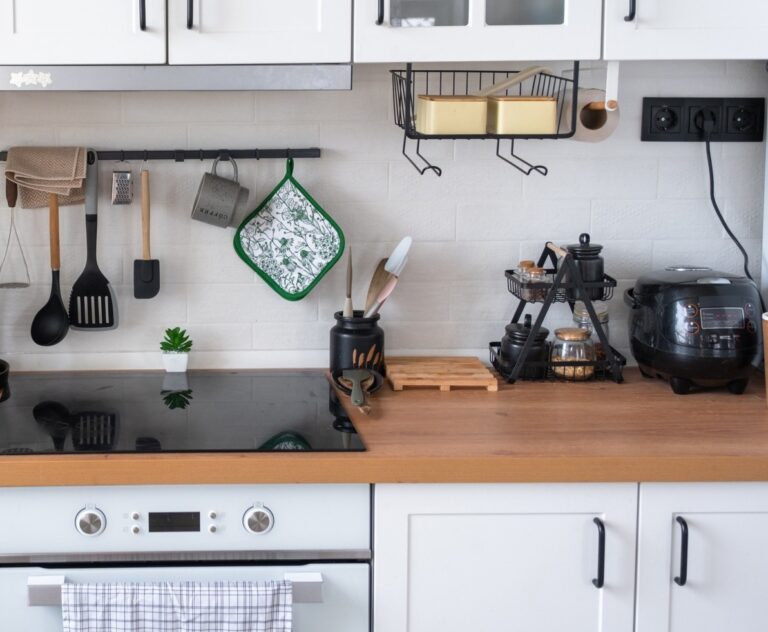
Kitchen counter organization is one of the most common challenges in small kitchens. Counter space disappears quickly when small appliances — toasters, coffee makers, air fryers, blenders — compete for the same surface area. Most kitchens have more appliances than usable counter real estate.
No single system solves every counter clutter problem. Appliances vary in size, weight, frequency of use, and power cord length. A combination of vertical storage, dedicated zones, and off-counter solutions is typically required to manage a full set of appliances.
This guide covers 17 practical kitchen counter organization methods for small appliances. It includes appliance garages, under-cabinet shelving, rolling carts, shelf bridges, pull-out trays, pegboard panels, stackable platforms, and dedicated use zones. All methods are based on standard kitchen layouts and widely available storage products.
Appliance Garage Cabinets for Counter Clutter
An appliance garage is a dedicated cabinet built or mounted at counter level. It conceals appliances behind a door while keeping them plugged in and accessible. Most appliance garages are designed with an interior outlet strip.
Standard appliance garages measure 24 to 36 inches wide and 18 inches tall. They fit toasters, stand mixers, and coffee makers without requiring the appliances to be moved for use.
- Interior depth: typically 12–18 inches
- Door types: tambour roll-up, bi-fold, or barn style
- Outlet requirement: must be on a GFCI circuit near the installation point
Do not install an appliance garage without a properly grounded interior outlet. This is a wiring safety requirement, not a preference. Units without interior power access offer storage only, not functional concealment.
Under-Cabinet Shelving for Small Appliance Storage
Under-cabinet shelves attach to the bottom of upper cabinets. They create a secondary surface layer without consuming counter space. Toasters, coffee pod holders, and small electric kettles are common candidates.
Most under-cabinet shelf systems use either a tension rod mount or a screw-in bracket. Weight limits typically range from 10 to 25 pounds depending on the mounting method and cabinet material.
Weight Limits by Mount Type
- Tension rod mounts: 10–15 lbs maximum
- Screw-in brackets into solid wood: up to 25 lbs
- Screw-in brackets into particleboard: 10–15 lbs max
Appliances must clear counter items below them by at least 2 inches for safe removal and use. This system does not work in kitchens with less than 18 inches of clearance between the counter surface and the bottom of upper cabinets.
Read More: 16 Bathroom Drawer Organization Ideas for Small Items
Vertical Appliance Risers and Tiered Shelves
Kitchen counter organization often benefits from vertical layering. Tiered risers elevate smaller appliances, allowing larger ones to sit on the counter below or beside them. This method works best along kitchen walls or backsplash areas.
Standard two-tier risers add 6 to 9 inches of vertical clearance. Three-tier units can reach 14 to 18 inches high and require stable surface contact across the full base.
- Material options: bamboo, powder-coated steel, acrylic, melamine
- Base footprint: typically 12 × 16 inches to 18 × 24 inches
- Top tier weight limits: 10–20 lbs depending on material
Risers with narrow legs on smooth countertops can shift under load. Non-slip pads on all feet are necessary for stability when the riser holds a working appliance.
Dedicated Appliance Zones on Kitchen Counters
Kitchen counter organization improves when appliances are grouped by function rather than placed wherever space opens up. A coffee station groups the maker, grinder, pods, and mugs in one defined area. A toaster zone includes the toaster and a crumb tray below it.
Each zone should be no wider than 24 inches. This keeps the footprint contained and prevents zone creep across the counter.
Zones can be physically defined using thin wood strips, a small cutting board as a visual boundary, or a mat. Appliances used less than once a week typically don’t belong in a counter zone.
Also Read: 18 Ways to Organize Under-Sink Bathroom Storage
Stackable Appliance Platforms with Slide-Out Trays
Stackable platforms are purpose-built risers that allow two appliances to occupy one counter footprint. The lower appliance sits on a slide-out tray. The upper appliance rests on the elevated platform surface.
Most slide-out tray systems accommodate a lower appliance footprint of up to 14 × 12 inches. The tray extends outward 10 to 14 inches to bring the lower appliance forward for use.
- Platform height: typically 8–12 inches
- Tray slide distance: 10–14 inches
- Combined load limit: typically 40–60 lbs for both levels
This system requires that the lower appliance not vent heat upward during operation. Toaster ovens and air fryers are not compatible with overhead stacking without verified clearance.
Rolling Kitchen Carts as Appliance Storage
A rolling cart moves appliance storage off the primary counter entirely. Carts with a solid top surface can hold a stand mixer, air fryer, or large blender. Lower shelves store accessories or small appliances used less frequently.
Standard kitchen carts measure 24 to 36 inches wide and 32 to 36 inches tall. Carts with locking casters hold firm during appliance use. Carts without locking casters can shift when operating heavy appliances.
Cart Material Considerations
- Butcher block tops: can support up to 250 lbs but require sealing near heat appliances
- Stainless steel tops: heat-resistant, easy to sanitize, prone to surface scratching
- Laminate tops: lowest weight tolerance, typically 75–100 lbs
Cart width must allow for full kitchen aisle clearance when positioned for use. Most building codes require a minimum 36-inch clearance in kitchen aisles.
Pull-Out Cabinet Trays for Heavy Appliances
Pull-out trays retrofit into existing base cabinets and allow heavy appliances to slide forward for use without lifting. Stand mixers, blenders, and bread machines are the most common candidates. The appliance remains stored inside the cabinet and rolls out on the tray when needed.
Pull-out tray systems mount to the interior cabinet floor using screws. Most trays support 50 to 100 lbs and extend 18 to 24 inches outward.
- Cabinet interior width required: minimum 15 inches for most trays
- Extension range: 18–24 inches on standard full-extension slides
- Height clearance needed: appliance must clear cabinet door opening by at least 1 inch
Pull-out trays are not compatible with face-frame cabinets unless a frame adapter is used. Standard frameless cabinets allow direct tray installation.
Over-the-Counter Shelf Bridges for Appliances
A shelf bridge spans across the counter and sits over an appliance. The appliance lives beneath the bridge; additional items sit on top. This method is common in small kitchens where a single counter section must serve multiple purposes.
Standard bridge shelves span 12 to 24 inches and sit 12 to 18 inches above the counter. They must be wide enough to clear the appliance body on both sides by at least 1 inch.
Never place a bridge shelf over an appliance that vents heat from the top. Air fryers, toaster ovens, and rice cookers require open clearance above them. Check manufacturer ventilation requirements before positioning any overhead structure.
Read More:
- 15 Pot Lid Storage Solutions for Standard Cabinets
- 18 Pantry Storage Ideas for Narrow Spaces That Feel Small
- 14 Ways to Organize Open Shelves in the Kitchen
- 21 Ways to Organize a Small Kitchen on a Budget
Shelf Inserts Inside Kitchen Cabinets for Appliances
Cabinet shelf inserts create a secondary storage level inside existing cabinetry. They divide tall cabinet interiors into two usable levels. This allows smaller appliances to be stored inside cabinets rather than on the counter.
Shelf inserts sit inside cabinets without hardware. They rely on tension or adjustable legs to stay in place. Most inserts fit cabinet widths from 11 to 30 inches.
- Vertical clearance required per level: minimum 8–10 inches for small appliances
- Materials: wire, wood, or coated steel
- Load capacity: typically 20–30 lbs per shelf
Insert legs that press against cabinet floors with excessive weight can scratch or dent the cabinet interior. Non-marking rubber tips are required on all contact points.
Pegboard Wall Panels for Appliance Accessories
Pegboard mounted to the kitchen wall stores appliance accessories rather than the appliances themselves. Attachments, cords, cleaning tools, and measuring cups hang in defined spots. This clears drawer space and keeps items near their associated appliance.
Standard pegboard panels come in 24 × 24 inch or 24 × 48 inch sections. They require furring strips to create a gap between the board and the wall for hook depth.
- Hook weight limits: 5–10 lbs per hook depending on board material
- Finish options: painted, powder-coated metal, or perforated hardboard
- Spacing: 1-inch standard perforation is required for compatibility with most hooks
Pegboard mounted directly to tile requires masonry anchors. Standard wood screws will not hold in tile or concrete backsplash surfaces.
Magnetic Wall Strips for Metal Appliance Accessories
Magnetic wall strips mount horizontally along the backsplash and hold metal accessories in place. Knife blocks, metal canisters, and small tools with ferrous components attach directly to the strip surface. This keeps accessories near the appliance without taking up counter or drawer space.
Standard magnetic strips range from 12 to 24 inches in length. Mounting requires two screws into wall studs or appropriate wall anchors.
- Magnet pull strength: typically 5–10 lbs per item for quality strips
- Compatible materials: carbon steel, cast iron, some stainless steel grades
- Not compatible: aluminum, copper, most non-ferrous metals
Magnetic strips should not be mounted near microwave vents or heat exhaust sources. Sustained heat can reduce magnet strength over time.
Over-Door Cabinet Organizers for Small Appliances
Over-door organizers mount on the interior face of pantry or base cabinet doors. They hold lightweight small appliances, accessories, or storage containers. This converts unused door space into functional storage without requiring screws or permanent installation.
Most over-door systems use a hook bracket that rests on the top edge of the door. Weight limits are determined by the door material and hinge capacity, typically 10 to 20 lbs.
- Compatible door thickness: typically 3/4 inch to 1-3/8 inch
- Organizer depth: typically 3–5 inches, which affects door clearance when closing
- Weight limit: never exceed the hinge manufacturer’s door weight rating
Over-door organizers on doors that swing into an aisle may reduce usable clearance below 36 inches when open. Measure the full swing arc before installation.
Tension Rod Dividers Inside Cabinets
Vertical tension rods installed inside cabinets create individual slots for flat appliances. Panini presses, griddle plates, cutting boards, and baking sheets stand upright in the slots. This separates items and prevents them from stacking flat and becoming difficult to retrieve.
Tension rods mount horizontally at the front and back of a cabinet shelf, then items lean vertically between them. Rods are adjustable and require no tools or hardware.
- Rod diameter: 5/8 to 1 inch is standard for appliance dividers
- Minimum cabinet depth: 12 inches for stable vertical storage
- Slot width: determined by rod spacing, typically 2–4 inches per slot
Tension rods in cabinets with shelves under 3/4-inch thickness may bow under lateral pressure. Solid wood or plywood shelves are required for stable installation.
Corner Shelf Units for Small Appliance Placement
Kitchen counter corners are often underused. Corner shelf units place appliances in the corner and leave linear counter space open. Lazy susan-style corner shelves rotate to make back-corner items accessible.
Rotating corner shelves fit inside a 24-inch corner radius. Fixed corner shelves extend into the corner and remain stationary. Both types require a flat, level counter surface to function correctly.
Corner units work well for stand mixers, juicers, and bread machines — appliances that are large, rarely moved, and have dedicated counter positions. They are not effective for appliances that need to be relocated for use.
Related Post: How to Organize Kitchen Drawers Without Dividers
Drawer Appliance Storage for Small Items
Deep kitchen drawers can store small appliances when the drawer depth is at least 5 inches. Electric can openers, hand mixers, milk frothers, and single-serve blenders fit in standard deep drawers. Cords must be wrapped and secured before storage.
Drawer dividers keep small appliances from shifting. Custom-cut foam inserts protect appliance bodies from scratching during drawer movement.
- Minimum drawer depth for hand mixer storage: 5–6 inches
- Minimum drawer depth for small blender base: 7–9 inches
- Cord management: hook-and-loop straps are standard; rubber bands degrade and are not recommended
Drawers rated below 50 lbs should not store heavy appliances. Check manufacturer drawer weight specifications before use.
Wall-Mounted Shelving for Countertop Appliance Overflow
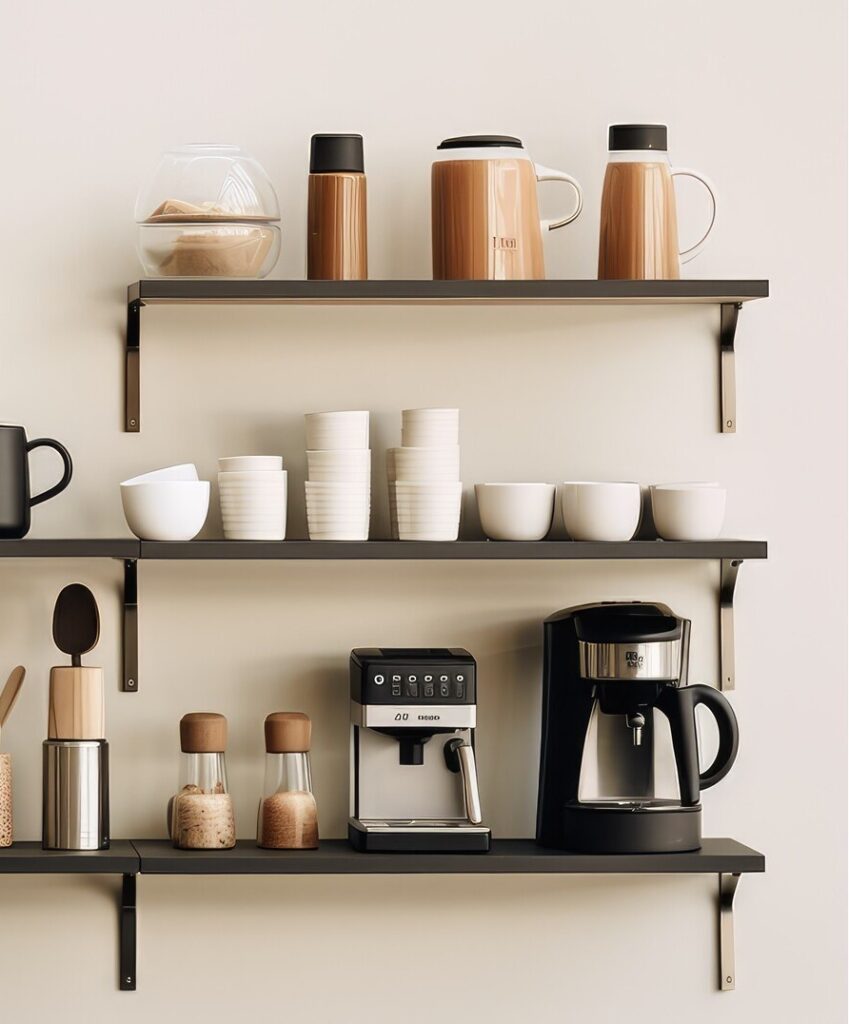
Wall-mounted shelves relocate appliances from the counter to a vertical wall surface. Floating shelves, bracket-mounted shelves, and rail systems are the three common types. Each requires wall anchor points appropriate to the wall material.
A single floating shelf in standard 3/4-inch plywood can hold 20–25 lbs when mounted into studs. Drywall anchors alone are not rated for appliance loads.
Wall Material Requirements
- Wood stud walls: lag screws into studs required for loads over 20 lbs
- Concrete or masonry walls: masonry anchors rated for the load weight
- Tile walls: pilot holes through tile required; standard anchors will not grip
Shelves must be mounted level within 1/8 inch. Unlevel shelves cause small appliances with a high center of gravity to tip or slide over time.
Freestanding Hutch Units for Appliance Storage
A freestanding hutch adds closed and open storage without any installation. The lower cabinet section stores bulkier appliances. The upper open shelving displays or provides quick access to smaller items.
Most kitchen hutches range from 36 to 54 inches wide and 72 to 84 inches tall. They require a minimum of 14 inches of floor depth and must be positioned against a flat wall.
Freestanding hutches over 60 inches tall must be secured to a wall stud using an anti-tip strap. This is a safety requirement regardless of the appliance load. Unsecured tall furniture poses a tip-over hazard in kitchens with high foot traffic.
For more helpful tips, check out our organization section.