15 Ways to Stop Pantry Shelves From Getting Messy
This site contains affiliate links, view the disclosure for more information.
Pantry shelves accumulate clutter quickly without a clear system in place. Items shift, spill, and pile up over time. Learning how to stop pantry shelves from getting messy requires consistent habits and the right organizational tools.
This guide covers 15 methods to keep pantry shelves organized. Each method addresses a specific cause of clutter or disorganization. You can apply these strategies immediately with minimal setup.
The techniques below focus on prevention, containment, and maintenance. They work for wire shelving, wood shelves, and adjustable pantry systems.
Use Clear Bins to Contain Loose Items
Clear bins group similar items together and prevent them from spreading across shelves. They also make it easy to see contents without opening lids.
Choose bins with straight sides for efficient stacking. Label each bin on the front and top edge. Place smaller items like seasoning packets, snack bars, or baking supplies inside.
Bins should fit the depth of your shelf. Leave 1–2 inches of clearance at the back for air circulation and easy removal.
Label Every Shelf and Container
Labels create visual boundaries and reduce decision fatigue. When every item has a designated spot, it returns to the same place after use.
Use a label maker or printable adhesive labels. Place labels at eye level on bins, baskets, and shelf edges. Include category names like “Breakfast,” “Baking,” or “Snacks.”
Update labels when categories change. Remove old labels completely to avoid confusion.
Store Items in Single Layers When Possible
Stacking items more than two layers deep makes lower items invisible and hard to reach. Single-layer storage improves visibility and reduces the chance of expired goods hiding in the back.
Use shallow bins or risers to create single-layer zones. Arrange cans, jars, and boxes so labels face forward. Group duplicates side by side rather than stacking them.
If you must stack, place heavier items on the bottom. Limit stacks to two or three items maximum.
Dedicate One Shelf to Overflow and Bulk Items
A designated overflow shelf prevents bulk purchases from crowding everyday items. This shelf holds backup stock, large bags, and items bought in multipacks.
Place the overflow shelf at the top or bottom of the pantry. Move items to main shelves as you deplete the active supply. Check this shelf weekly to rotate stock.
Keep a running list of what’s in overflow to avoid overbuying.
Read More:
- How to Organize Kitchen Wooden Spoons and Spatulas
- How to Organize Kitchen Cabinets in Small Spaces
- How to Organize Kitchen Utensils in a Messy Drawer
Use Turning Trays for Corner and Deep Shelves
Turning trays rotate to bring back items forward without removing everything in front. They work well for oils, vinegars, sauces, and condiments.
Choose turntables with raised edges to prevent items from sliding off. Place them in corners or on deep shelves where reach is limited. Group similar items on each turntable.
Wipe down turntables monthly to remove drips and spills.
Install Shelf Risers to Maximize Vertical Space
Shelf risers create two usable levels on a single shelf. They double visible storage and reduce stacking.
Select risers that match your shelf depth. Place shorter items like spice jars or small cans on the riser. Store taller items underneath or beside the riser.
Wire risers allow air circulation. Plastic or bamboo risers offer a solid base for lightweight items.
Group Items by Use Frequency
Placing frequently used items at eye level reduces clutter caused by digging through shelves. Items used weekly or daily should occupy the most accessible spots.
Store everyday staples like cereal, coffee, and cooking oils between waist and eye height. Place occasional-use items like holiday baking supplies on upper or lower shelves. Reserve the lowest shelf for heavy items like bottled water or large bags of flour.
Reassess placement every few months as habits change.
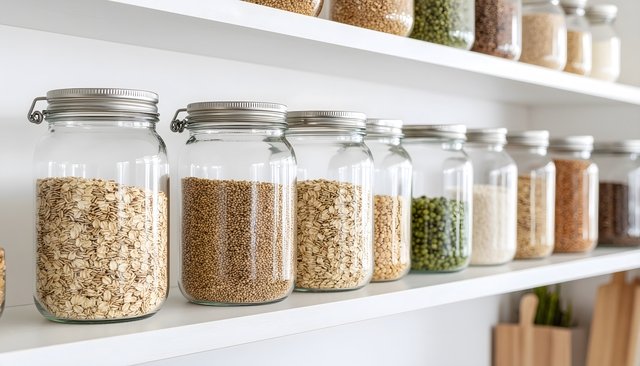
Decant Dry Goods Into Airtight Containers
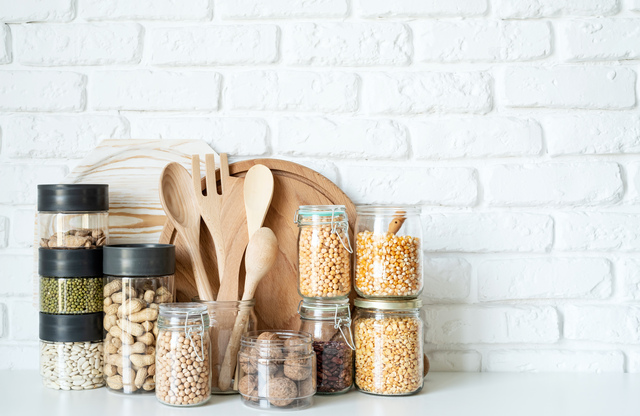
Transferring dry goods from bulky packaging into uniform containers reduces visual clutter and keeps items fresh. Airtight containers also prevent spills and pest issues.
Use rectangular or square containers for efficient shelf use. Label each container with the contents and expiration date. Choose containers with wide openings for easy scooping.
Keep original packaging with cooking instructions if needed. Store it in a drawer or clip it to the container.
Related Post: 6 Fixes for Cabinets With Hard to Reach Corner Space
Assign Zones by Meal Type or Category
Zoning organizes the pantry by function rather than randomness. It stops pantry shelves from getting messy by ensuring every item has a logical home.
Create zones for breakfast, baking, snacks, canned goods, and grains. Use one shelf or section per zone. Mark zones with labels or dividers.
Place related tools near their zones. Store measuring cups near baking ingredients and can openers near canned goods.
Use Door Racks for Small, Lightweight Items
Door-mounted racks free up shelf space and keep small items visible. They work well for spice jars, seasoning packets, and snack-sized items.
Install over-the-door organizers or adhesive racks. Distribute weight evenly to prevent sagging. Avoid storing heavy jars or cans on door racks.
Check door clearance before installing. The rack should not interfere with closing the pantry door.
Keep a Donation Box for Unwanted Items
A small box or bag inside the pantry collects items you no longer use. This habit prevents expired or unwanted goods from taking up space.
Place the box on a lower shelf or floor. Add items as you notice them during cooking or restocking. Empty the box monthly.
Donate unopened, unexpired items. Discard expired goods.
Implement a First-In, First-Out System
Rotating stock ensures older items get used before new purchases. This method prevents expiration and reduces waste-related clutter.
Place new items behind existing stock. Pull older items forward when restocking. Check expiration dates during rotation.
Use tape or markers to note purchase dates on undated items.
Limit Pantry Inventory to Available Space
Overbuying creates overflow that spills onto counters or floors. Setting a maximum inventory level stops pantry shelves from getting messy by matching supply to storage capacity.
Count shelf space before shopping. Buy multiples only if you have room to store them. Avoid stockpiling items that expire quickly.
If shelves are full, use one item before buying a replacement.
Also Read: 7 Fixes for Kitchen Drawers That Overfill Too Easily
Install Adjustable Shelving for Custom Heights
Fixed shelves often waste vertical space with large gaps between shelves. Adjustable shelving allows you to customize height based on item size.
Measure your tallest items before adjusting. Set shelves 1–2 inches higher than the tallest item in each zone. Leave enough clearance to remove items easily.
Readjust shelves as your pantry contents change.
Conduct Weekly Resets
A brief weekly reset prevents small messes from accumulating. It takes less time than a full reorganization and maintains order long-term.
Return misplaced items to their zones. Wipe up spills. Straighten containers and labels.
Schedule resets on the same day each week to build consistency.

For more helpful tips, check out our organization section.