21 Pantry Organization Ideas to Keep Groceries Easy to Find
This site contains affiliate links, view the disclosure for more information.
A disorganized pantry creates a specific set of problems. Items get buried behind other products, expiration dates go unnoticed, and duplicate purchases pile up. Pantry organization directly affects how efficiently a household runs on a daily basis.
Most pantries contain a mix of can goods, dry goods, snacks, baking supplies, and small appliances. Each category has different storage requirements. Additionally, pantry sizes vary widely — from a single cabinet to a full walk-in closet — so one organizational system rarely handles every need.
This guide covers 21 practical pantry organization methods. It addresses shelf systems, container solutions, door storage, labeling strategies, and zone-based layouts. Each method works independently or in combination with others.

Clear Bin Storage for Pantry Shelves
Clear bins group similar items into visible, retrievable clusters. A shopper can identify the contents of a bin without removing it from the shelf. Typically, bins work best for snacks, packets, seasoning pouches, and other loose items that lack uniform shape.
Bins come in stackable and non-stackable versions. Stackable bins maximize vertical space on deep shelves. However, standard bin heights may not align with all shelf spacing configurations.
- Works well for: snacks, packets, sauce pouches, tea bags
- Common materials: acrylic, polypropylene, wire-coated steel
- Limitation: bins wider than 12 inches become difficult to pull out on deep shelves
Turntables for Corner Pantry Shelves
A turntable rotates 360 degrees and brings back-of-shelf items to the front. Corner shelves and deep cabinets benefit most from this solution. Users can access every item without shifting surrounding products.
Turntables come in single-tier and double-tier designs. Double-tier models hold more items but require adequate vertical clearance above the shelf. Typically, a minimum of 10 to 12 inches of clearance accommodates a double-tier unit.
- Best for: oils, spices, canned goods
- Materials: BPA-free plastic, bamboo, stainless steel
- Limitation: round footprint leaves unused rectangular space at shelf corners
Pantry Organization with Shelf Risers
Shelf risers create a second level within a single shelf space. They allow users to see items on both levels simultaneously. As a result, shorter items like spice jars no longer disappear behind taller cans.
Wire and bamboo risers typically support up to 15 pounds per tier. They do not require installation and simply rest on the shelf surface. However, risers reduce the total vertical clearance available for taller items on the same shelf.
- Best for: spice jars, small cans, condiment bottles
- Typical load capacity: 10–20 lbs depending on material
- Limitation: not suitable for shelves with significant warping or unevenness
Over-the-Door Organizers for Pantry Doors
Over-the-door organizers mount on the interior side of a pantry door using hooks or brackets. They convert unused door space into active storage. Typically, they accommodate spices, condiments, snack bags, and small canned goods.
Most models hang without drilling and fit doors between 1.25 and 2.25 inches thick. Wire-pocket designs allow visibility, while pocket-style fabric units hold irregular shapes more securely. The combined weight of fully loaded units can strain hollow-core doors over time.
- Best for: spices, small bottles, foil rolls, snack pouches
- Fitting range: typically 1.25–2.25 inch door thickness
- Weight limit: do not exceed manufacturer weight ratings; overloading damages door hinges
Labeled Container Systems for Dry Goods
Uniform containers with labels create a consistent visual system for dry goods. They prevent the clutter of mismatched packaging from manufacturers. Also, airtight containers extend the shelf life of flour, rice, pasta, and cereal by limiting moisture and air exposure.
Container sets come in square and round configurations. Square containers pack more efficiently because they eliminate gaps between units. Labels can use handwritten tags, printed stickers, or label-maker tape — each has similar functional effectiveness.
- Best for: flour, sugar, rice, pasta, oats, cereal, coffee
- Common materials: borosilicate glass, BPA-free plastic, stainless steel
- Limitation: requires initial time investment to transfer and label all contents
Read More: 19 Open Shelf Organization Ideas for a Balanced Look
Pantry Organization Using a FIFO Rotation System
FIFO stands for “first in, first out.” This system places newer items at the back and pulls older items to the front. Therefore, older products reach the user first and expiration waste decreases.
FIFO applies to canned goods, boxed items, and packaged snacks. Dedicated can dispensers automate this process mechanically, loading from the top and dispensing from the bottom. Standard dispensers hold between 6 and 24 cans per unit depending on the model.
- Best for: canned goods, boxed items, beverages
- Compatible storage: adjustable shelves, can dispensers, bin organizers
- Limitation: requires consistent restocking discipline to maintain the system
Stackable Can Organizers for Canned Goods
Stackable can organizers arrange cans in tiered rows with a slight forward incline. The incline causes cans to roll forward automatically when the front unit moves. Additionally, stacking units vertically consolidates a large can collection into a compact footprint.
Most organizers accommodate standard 15-ounce cans and also fit smaller 8-ounce and larger 28-ounce sizes. Plastic rail organizers typically hold 20 to 36 cans per unit. Wire versions offer more flexibility but may allow smaller cans to tip sideways.
- Best for: canned vegetables, beans, soups, tomato products
- Typical capacity: 20–36 cans per unit
- Limitation: oversized or irregularly shaped cans may not roll or stack correctly
Pull-Out Drawers and Sliding Shelf Inserts
Pull-out drawers install inside existing cabinet spaces and slide forward on a track. They eliminate the need to reach deep into a shelf to retrieve back-row items. As a result, every item in a deep cabinet becomes fully accessible.
Most sliding inserts mount to the shelf floor using screws or adhesive strips. Screw-mounted versions provide more stability for heavier loads. However, adhesive-mounted versions work only on smooth, clean shelf surfaces and support lighter weight.
- Best for: deep pantry cabinets, lower shelves, canned goods, appliances
- Mounting options: screw-in rails, pressure-fit tracks, adhesive
- Load limits: check manufacturer specifications before loading with heavy canned goods or appliances
Hanging Fruit and Vegetable Baskets
Hanging basket systems suspend from ceiling hooks or mounted rails and hold produce that requires air circulation. Items like onions, garlic, potatoes, and citrus fruit stay fresher in open-air baskets than in sealed containers. Similarly, hanging placement frees shelf space for packaged goods.
Tiered hanging baskets typically come in two- and three-basket configurations. Each basket holds approximately 5 to 10 pounds depending on construction. However, hanging systems require a secure ceiling or wall anchor capable of supporting the total loaded weight.
- Best for: onions, garlic, potatoes, citrus, avocados
- Typical capacity: 5–10 lbs per basket tier
- Limitation: not suitable for produce that bruises easily or requires refrigeration
Also Read: 20 Under Cabinet Organization Ideas for Kitchen Storage
Zone-Based Pantry Organization Layout
Zone-based organization assigns a fixed area to each food category. For example, baking supplies occupy one shelf, canned goods another, and snacks a third. Because zones reduce search time, users locate items faster during meal preparation.
Effective zones align with usage frequency. Items used daily — cooking oils, salt, and spices — belong at eye level. In contrast, seasonal items, bulk backstock, and rarely used appliances work well on high or low shelves. Zone boundaries should match the household’s specific eating and cooking habits.
- Common zones: baking, canned goods, snacks, breakfast, beverages, condiments, bulk
- Best placement: eye-level for daily items, lower shelves for heavy items, upper shelves for backup stock
- Limitation: zones require periodic reassessment as household grocery habits change
Tension Rod Dividers for Pantry Shelves
Tension rods install horizontally between shelf walls without drilling. They create vertical dividers that hold cutting boards, baking sheets, pot lids, and flat items upright. Additionally, tension rods work as shelf barriers to keep lightweight items from tipping sideways.
Standard tension rods extend from 11 to 30 inches and apply spring pressure against both shelf walls. The surface contact points can leave minor indentations on soft wood shelving over time. Also, tension rods do not support weight from above and function only as vertical dividers or lateral barriers.
- Best for: baking sheets, cutting boards, muffin tins, pot lids, foil rolls
- Typical span: 11–30 inches
- Limitation: pressure-fit only; not suitable for items heavier than approximately 5 lbs
Wire Basket Shelving for Walk-In Pantry Organization
Wire basket shelving systems attach to wall studs and create a customizable open-shelf structure. They allow airflow around stored items and make contents visible from multiple angles. For walk-in pantries specifically, wire systems offer more flexibility than fixed wood shelving.
Wire shelving comes in standard widths of 12, 16, and 20 inches. Bracket systems allow height adjustment in 1-inch increments on compatible wall tracks. However, wire surfaces cause round items like cans and jars to wobble slightly without a flat liner.
- Best for: walk-in pantries, large collections, variable shelf height needs
- Standard depths: 12″, 16″, 20″
- Limitation: requires wall stud anchoring; round items need shelf liners for stability
Magnetic Spice Jars for Pantry Doors or Walls
Magnetic spice jars attach to magnetic surfaces using a strong base magnet. They mount on refrigerator surfaces, magnetic wall panels, or metal cabinet doors. Consequently, spice storage moves off the shelf entirely and frees that space for other items.
Standard magnetic jars hold 1 to 3 ounces of spice. Most feature a clear lid or clear body for visual identification. However, strong magnetic force is necessary — weak magnets fail when the jar contains a full load of dense spice.
- Best for: spices, dried herbs, salt, baking powder, small dried ingredients
- Mounting surfaces: magnetic paint, steel sheet panels, metal doors
- Limitation: requires a ferrous metal surface; does not adhere to aluminum, stainless steel, or painted wood
Read More: 17 Kitchen Counter Organization Ideas for Small Appliances
Pantry Organization with Stackable Storage Boxes
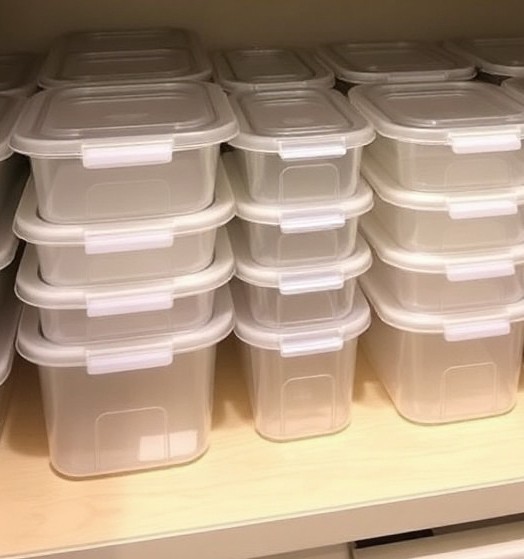
Stackable storage boxes consolidate bulk items and create uniform columns on shelves. Uniform columns use vertical space efficiently and present a visually organized appearance. Also, labeled boxes allow users to identify contents without opening each unit.
Cardboard, fabric, and plastic versions each suit different needs. Plastic bins with lids protect against moisture and pests. Fabric bins work for lighter items but do not protect against humidity or insects in humid environments.
- Best for: backup stock, bulk dry goods, packaged snacks, paper goods
- Materials: polypropylene plastic (best moisture resistance), fabric (lighter loads), cardboard (temporary use only)
- Pest prevention: sealed plastic containers provide the only reliable barrier against pantry moths and weevils
Adjustable Shelf Brackets for Customizable Pantry Shelving
Adjustable bracket systems allow shelf height changes without removing and reinstalling fixed shelving. They attach to vertical rail tracks mounted on pantry walls. Therefore, users can reconfigure shelf spacing to match the actual height of their stored items.
Rail tracks require wall stud anchoring at a minimum of every 32 inches. Shelf brackets typically accept shelves between 8 and 16 inches deep. However, overloading unsupported shelf spans beyond 36 inches without a center bracket can cause shelving to bow over time.
- Best for: pantries with changing inventory, mixed-height items, household reorganization
- Rail spacing: typically 1-inch adjustment increments
- Structural note: spans over 36 inches require a center support bracket to prevent bowing under load
Under-Shelf Basket Clips for Extra Pantry Storage
Under-shelf baskets clip onto existing shelf edges and hang below the shelf surface. They create additional storage in the space between two shelves without adding a new shelf. For example, a clip-on basket below a shelf can hold foil boxes, plastic wrap rolls, or flat snack bags.
Most clip-on baskets fit shelves between 0.5 and 1.25 inches thick. Wire versions allow easy visual inspection of contents. Because baskets hang from the shelf lip alone, they work best with items weighing under 5 pounds.
- Best for: foil, plastic wrap, snack bags, flat boxes, spice packets
- Compatible shelf thickness: typically 0.5–1.25 inches
- Limitation: not suitable for glass jars, heavy cans, or items exceeding 5 lbs
Tiered Shelf Organizers for Canned Goods Visibility
Tiered shelf organizers arrange items on a staircase-style incline so every row remains visible at once. Unlike flat-shelf arrangements where back rows disappear, tiered units expose all items simultaneously. As a result, users can complete a full inventory scan in seconds.
Freestanding tiered organizers require no installation. They typically hold 2 to 4 rows of cans or jars and span 12 to 20 inches in width. However, fixed-tier models cannot adjust row height to fit taller items like tall sauce jars or 28-ounce cans.
- Best for: canned goods, condiment jars, spice bottles, small beverage cans
- Common configurations: 2-tier, 3-tier, 4-tier
- Limitation: fixed-tier models do not accommodate items taller than the predetermined tier height
Baking Supply Organization with Dedicated Drawer Inserts
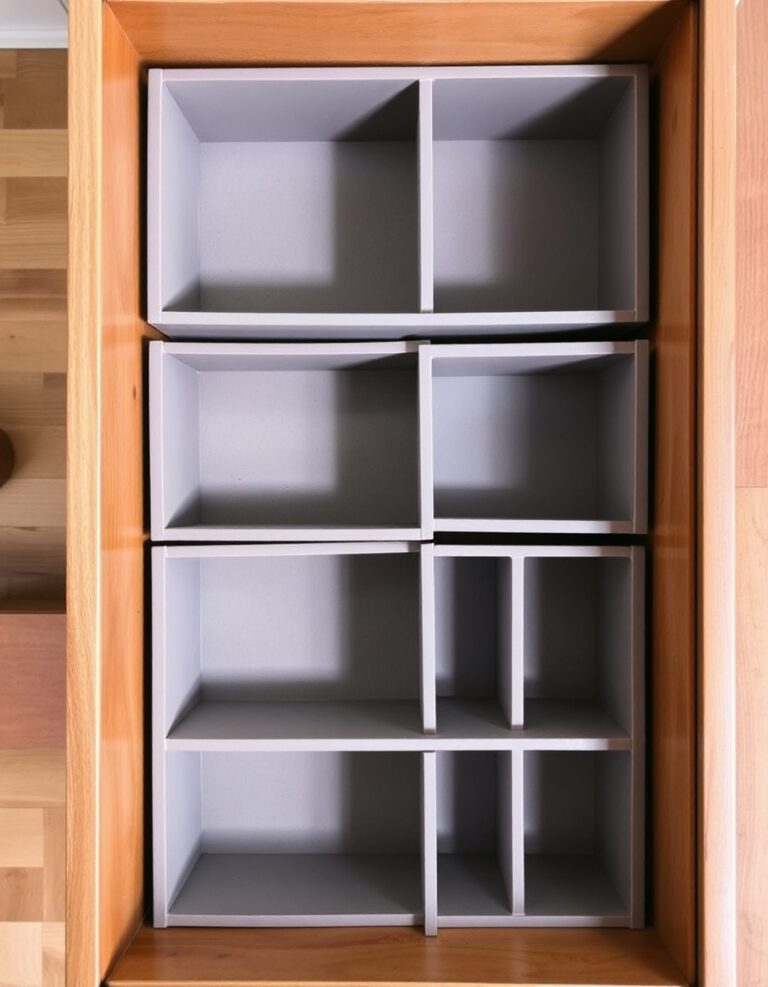
Dedicated baking supply zones keep flour, sugar, baking soda, baking powder, extracts, and measuring tools in a single location. Drawer inserts with individual compartments prevent these items from mixing or tipping. Also, keeping baking supplies together reduces prep time significantly during active cooking.
Deep drawer inserts typically range from 3 to 6 inches in depth and accommodate both tall and short containers. Adjustable divider systems offer the most flexibility for irregularly sized baking items. However, drawer-based baking storage requires a pantry with at least one deep drawer, which not all pantry configurations include.
- Best for: flour, sugar, baking extracts, measuring cups and spoons, baking soda, yeast
- Compatible storage: pull-out drawers, deep shelves with dividers, cabinet inserts
- Limitation: requires a drawer or deep shelf space of at least 4 inches in depth
Chalkboard or Whiteboard Labels for Pantry Containers
Chalkboard and whiteboard label surfaces allow users to change container labels without peeling and reapplying stickers. They work well for households that rotate between different grains, flours, or pasta shapes over time. Similarly, they suit households where multiple people restock containers with different products.
Chalkboard labels typically use liquid chalk markers for crisp, erasable writing. Whiteboard surface labels erase with a dry cloth. However, neither type provides the permanent, professional appearance of printed labels on dedicated label tape.
- Best for: dry goods containers with rotating contents, shared household pantries
- Tools needed: chalk marker or dry-erase marker
- Limitation: chalk labels smear if touched before fully dry; whiteboard labels require periodic re-marking as writing fades
Pantry Organization for Snack Stations
A snack station consolidates all snack items into one designated shelf or bin cluster. This prevents snacks from scattering across multiple shelves and makes snack selection faster. Additionally, a visible snack station reduces the frequency of unnecessary pantry searches.
Open bins, low shelves, or pull-out drawers all work effectively for snack stations. Placement at a lower height suits households with children. Because snacks consume quickly and restock frequently, the snack zone typically requires weekly reassessment to maintain order.
Bulk Food Storage and Pantry Inventory Management
Bulk food storage requires airtight containers sized for the purchased quantities of rice, flour, oats, lentils, and similar items. Proper airtight sealing prevents moisture intrusion and pest access. In contrast, leaving bulk items in their original bags allows moisture, odors, and insects to compromise the food.
Inventory management supplements physical storage. A simple handwritten list inside the pantry door or a shared digital list tracks current stock levels. As a result, households avoid duplicate purchases and identify low-stock items before they run out completely.
- Best for: rice, oats, flour, sugar, lentils, quinoa, dried beans
- Container materials: glass with gasket lids, BPA-free plastic with locking lids
- Pest prevention: always transfer bulk grains and legumes to sealed containers immediately upon purchase; original packaging does not provide adequate pest or moisture protection
For more helpful tips, check out our organization section.