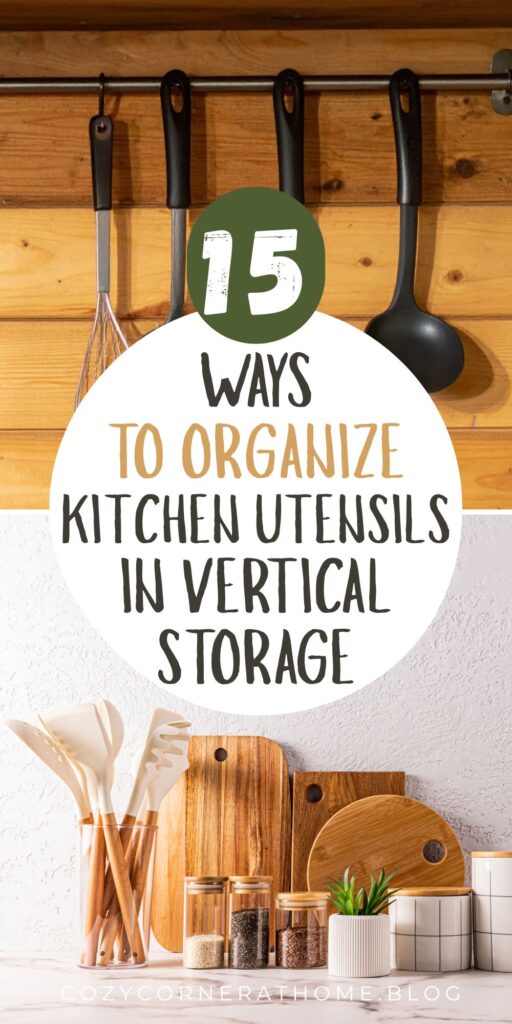
15 Ways to Organize Kitchen Utensils in Vertical Storage
This site contains affiliate links, view the disclosure for more information.
Vertical storage can help reclaim counter space and make utensils easier to reach. When drawer space runs short, looking upward often opens up new options. These approaches focus on keeping everyday tools accessible without adding clutter to your cooking area.
Using Wall-Mounted Magnetic Strips for Metal Kitchen Utensils
Magnetic strips attach directly to walls or cabinet sides. They tend to hold knives, scissors, and metal tongs securely in place.
Installation usually involves screws or strong adhesive backing. Mount the strip at a height that feels comfortable for daily use. Some people place them near the stove for quick access during cooking.
Metal utensils stay visible and dry when stored this way. The open design allows air circulation, which may help reduce moisture buildup over time.
How to Store Kitchen Utensils in Countertop Canisters
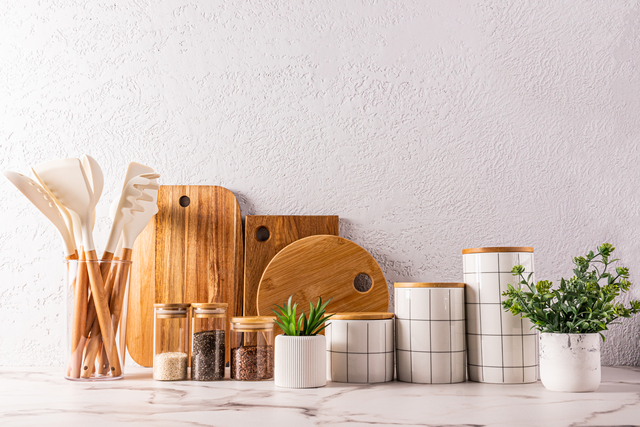
Countertop canisters are containers that sit upright on your workspace. They come in ceramic, stainless steel, glass, or plastic materials.
Choose a canister that fits your counter depth and holds the number of utensils you use regularly. Larger openings make grabbing tools easier when your hands are busy. Weighted bases help prevent tipping when you pull out a whisk or spatula.
Group similar items together if you use multiple canisters. One might hold stirring tools while another keeps serving spoons separate. This can reduce the time spent searching during meal prep.
Hanging Kitchen Utensils on S-Hooks and Rods
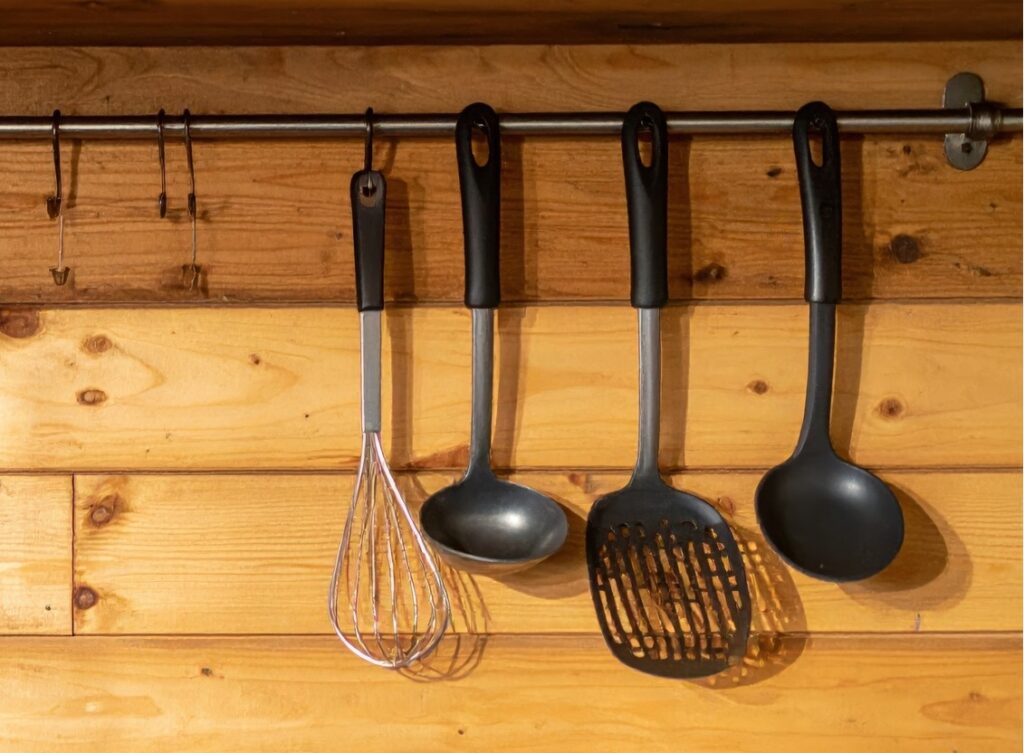
S-hooks over horizontal rails mounted below cabinets or on open walls. The setup creates a display that keeps handles within reach.
Rods can be installed using brackets or tension mounts, depending on your wall type. Stainless steel rods often support heavier utensils without bending. Space hooks evenly to prevent crowding.
This method works for ladles, measuring cups, or anything with a loop or hole in the handle. Items hang freely and dry quickly after washing. The arrangement can be adjusted as your tool collection changes.
Related Post: 6 Fixes for Cabinets With Hard to Reach Corner Space
Organizing Kitchen Utensils Inside Cabinet Doors
The inside surface of cabinet doors offers unused vertical space. Adhesive hooks, small racks, or narrow baskets can attach to these areas.
Measure the interior clearance before adding organizers to avoid blocking shelves when the door closes. Lightweight utensils like measuring spoons or icing spatulas fit well in these spots.
This approach keeps tools hidden from view while maintaining easy access. It may work better in cabinets you open frequently, so items don’t get forgotten over time.
Storing Kitchen Utensils in Pegboard Systems
Pegboard panels mount to walls and accept movable hooks or pegs. The grid pattern allows you to customize the layout based on your utensil shapes and sizes.
Paint or stain the pegboard to match your kitchen decor if desired. Metal pegboards offer a more industrial look and may hold heavier items. Rearrange pegs as your storage needs shift.
Outline tool shapes with paint or tape to create a visual guide for returning items to their spots. This can help maintain organization when multiple people use the same tools.
Kitchen Utensil Storage in Drawer Dividers with Vertical Slots
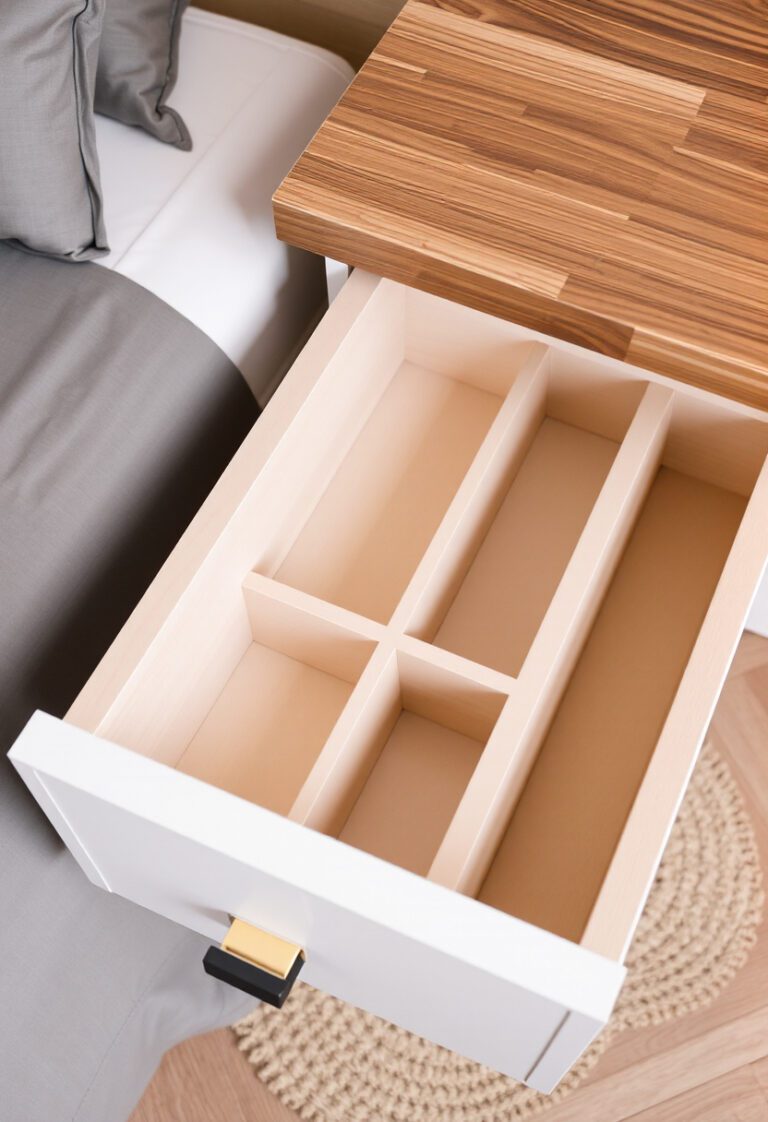
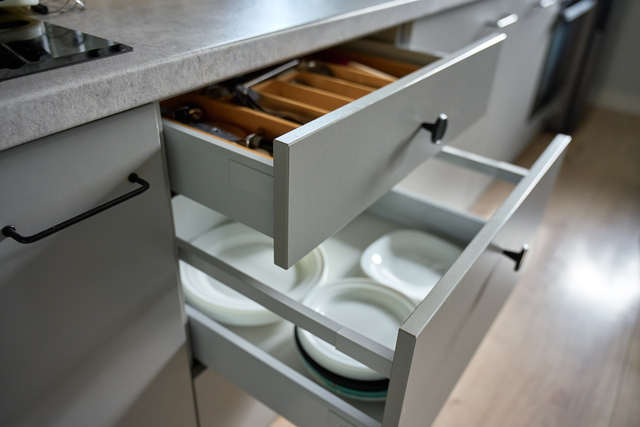
Some drawer organizers feature tall slots that hold utensils upright rather than flat. These dividers maximize drawer depth and keep handles accessible.
Adjustable dividers let you resize sections to fit different tool widths. Bamboo, plastic, and metal versions are common. Measure your drawer interior before purchasing to confirm fit.
Storing utensils vertically in drawers can free up additional drawer space for other items. The upright position also makes it easier to identify each tool at a glance.
How to Use Tension Rods for Vertical Kitchen Utensil Storage
Tension rods press between two surfaces without requiring screws or nails. They can fit inside cabinets, under sinks, or between open shelving units.
Pair tension rods with S-hooks to hang utensils by their loops. Multiple rods at different heights can create layered storage zones. This setup works well in rental spaces where permanent mounting isn’t allowed.
Check the rod’s weight capacity before loading it with heavy tools. Some rods slip under pressure, so periodic adjustments may be needed to maintain stability.
Also Read: 7 Fixes for Kitchen Drawers That Overfill Too Easily
Storing Kitchen Utensils in Over-the-Door Organizers
Over-the-door racks hang from the top edge of pantry or cabinet doors. They often include pockets, hooks, or small baskets designed for various kitchen items.
Look for organizers with adjustable hooks that fit your door thickness. Clear pockets let you see contents without opening compartments. Metal versions tend to hold more weight than fabric or plastic.
This storage method keeps utensils off counters and out of drawers. It works particularly well in smaller kitchens where wall space is limited.
Kitchen Utensil Organization with Freestanding Vertical Racks
Freestanding racks sit on counters or floors and include multiple tiers or hooks for hanging tools. They don’t require installation and can be moved as needed.
Tiered designs offer vertical layering, while rotating carousels provide access from all sides. Weighted bases prevent tipping when utensils are removed quickly. Materials range from wood to coated metal.
These racks suit kitchens where drilling into walls isn’t practical. They also work for temporary setups or frequent rearrangements.
Hanging Kitchen Utensils on Grid Panels
Grid panels are metal or wire frameworks that mount to walls or lean against backsplashes. They accept a variety of clips, baskets, and hooks for flexible storage.
Mount panels near cooking zones to keep spatulas and tongs close by. The open structure allows steam and heat to pass through without trapping moisture. Panels come in different grid sizes, so match hook types to the grid spacing.
Rearrange attachments without tools by simply lifting and moving them to new positions. This adaptability can be helpful as your cooking habits evolve.
Read More:
- How to Organize Kitchen Wooden Spoons and Spatulas
- How to Organize Kitchen Cabinets in Small Spaces
- How to Organize Kitchen Utensils in a Messy Drawer
Storing Kitchen Utensils in Slim Rolling Carts
Slim rolling carts fit into narrow gaps between appliances or counters. They pull out for access and tuck away when not in use.
Vertical compartments or attached hooks on the cart sides can hold utensils upright. Locking wheels keep the cart stationary during use. Metal carts often support more weight than plastic models.
This option adds storage without claiming permanent floor space. It may suit kitchens with awkward layouts or limited cabinetry.
How to Organize Kitchen Utensils on Open Shelving with Hooks
Open shelves paired with under-shelf hooks create visible, accessible storage. Hooks screw into the underside of shelves or clip onto shelf edges.
Arrange utensils by frequency of use, placing daily tools at eye level. Group items by function to streamline meal preparation. The open design keeps everything in sight, which can reduce duplicate purchases.
Dust may accumulate on exposed utensils over time. Regular wiping or occasional rinsing can help maintain cleanliness.
Vertical Kitchen Utensil Storage in Repurposed Containers
Tall jars, vases, or tin cans can serve as improvised utensil holders. Weighted bases or sand added to the bottom improve stability.
Decorative containers add a personal touch to kitchen decor. Mason jars, ceramic crocks, or enamel pitchers work well for this purpose. Match container height to your utensil lengths to avoid tools toppling forward.
This approach offers a low-cost entry point for vertical storage. Containers can be swapped or rearranged easily as your style preferences change.
Kitchen Utensil Organization in Vertical Pull-Out Trays
Pull-out trays install inside cabinets and slide forward for access. Vertical slots or dividers within the tray keep utensils separated and upright.
Soft-close mechanisms prevent trays from slamming shut. Measure cabinet width and depth carefully before ordering to ensure proper fit. Some trays include adjustable dividers for customizable sections.
This built-in solution keeps utensils concealed while maintaining the benefits of vertical storage. It may require professional installation depending on cabinet construction.
Storing Kitchen Utensils on Adhesive Wall Hooks
Adhesive hooks attach to walls, tiles, or cabinet exteriors without drilling. They support lightweight utensils like whisks, peelers, or silicone spatulas.
Follow package instructions for surface preparation and weight limits. Some adhesive formulas work better on smooth surfaces than textured ones. Hooks may lose grip over time in humid environments or high-heat areas.
This temporary solution suits renters or those testing layouts before committing to permanent fixtures. Remove hooks carefully to avoid surface damage when relocating them.
Vertical storage offers multiple ways to keep kitchen utensils organized and accessible. The method you choose may depend on your available space, budget, and how often you rearrange your kitchen. Testing one or two approaches can help you determine what feels most practical for your daily routine.
For more helpful tips, check out our organization section.