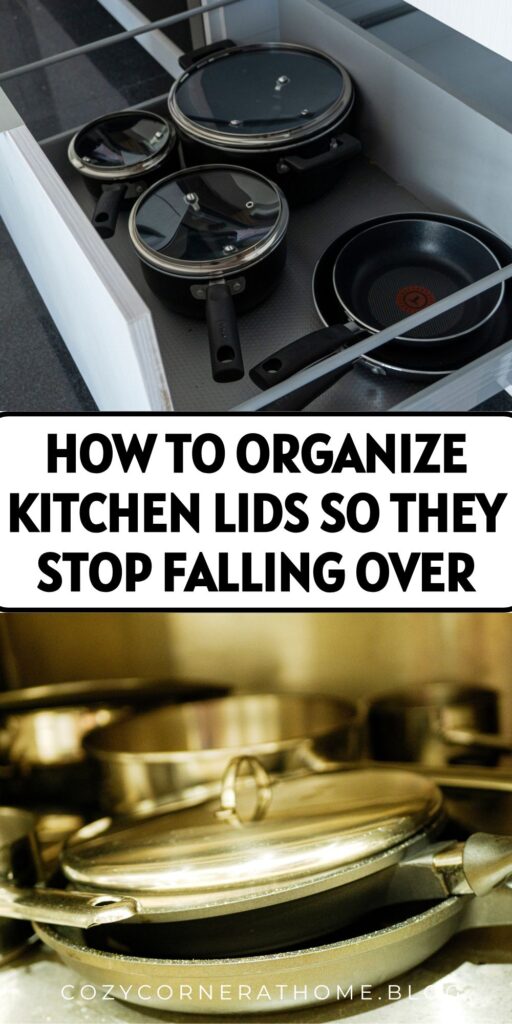
How to Organize Kitchen Lids So They Stop Falling Over
This site contains affiliate links, view the disclosure for more information.
There’s a sound most people know from their own kitchen. A cabinet opens. Something shifts. And suddenly two or three lids are sliding off a shelf and hitting the floor.
It’s a small thing — but it happens often enough to feel worth solving. The challenge with lids is that they’re not shaped like anything else in a kitchen. They’re round, smooth, and don’t naturally lean or stack without slipping.
The good news is that there are several approaches worth considering, ranging from free rearrangements to low-cost tools. This guide walks through them one angle at a time.
Why Kitchen Lids Are So Hard to Keep Organized in the First Place
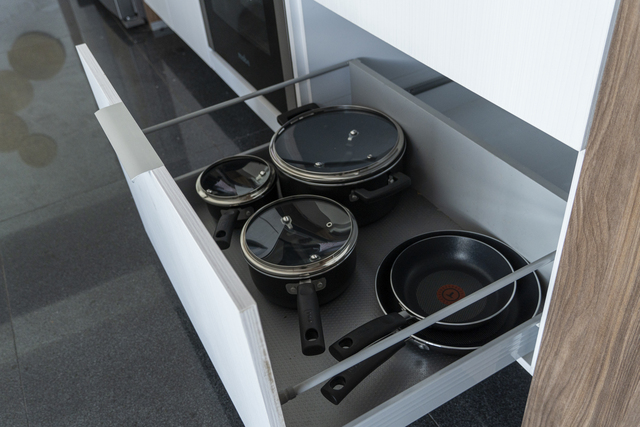
Most kitchen cabinets were designed for flat dishes or upright pots — not curved, smooth-bottomed lids.
Lids tend to get stacked on top of pots, or stuffed into whatever space is left. Neither approach tends to hold. Over time, they migrate, lean, and eventually tumble.
Understanding this shape-mismatch makes it easier to choose a storage approach that actually fits how lids behave — rather than one that just looks tidy for a week.
How a Lid Organizer Rack Can Simplify Your Pot and Pan Cabinet
A vertical lid rack is one of the more practical tools for this situation. It holds lids upright, each slotted individually, so they’re not leaning against each other.
Most racks are adjustable. This tends to matter, because kitchens rarely have just one lid size — there’s usually a mix of small saucepan covers and larger stockpot lids sharing the same space.
Before buying anything, measure the available space. Some racks are built for deep shelves. Others fit better in shallower drawers. A rack that’s the wrong depth for your cabinet may not help much.
Read More: 15 Pot Lid Storage Solutions for Standard Cabinets
Using a Tension Rod to Store Lids Vertically Without Spending Much
Tension rods are usually associated with curtains or under-sink organization. But they work reasonably well for lid storage too.
A single tension rod installed inside a cabinet door creates a slot for lids to stand upright. Lids slide behind the rod and rest against the door panel. It takes up no shelf space and costs very little.
This approach tends to work more reliably with flatter, lighter lids. Heavier glass lids with raised handles may need a little testing first to see how securely they stay in place.
Storing Pot Lids in a Deep Drawer: A Setup That Works for Many Kitchens
If your kitchen has a deep drawer — sometimes called a pots-and-pans drawer — it can be a natural home for lids laid flat.
Lids stored flat in a drawer are easier to see at a glance. You can scan them and pull out the right size without anything toppling. A drawer divider or small bin inside can keep them from sliding when the drawer opens.
This setup doesn’t work in every kitchen. But if the option exists, it’s worth considering before adding hardware to a cabinet.
DIY Ways to Keep Kitchen Lids from Falling Over Using What You Already Have
Not every lid organization fix requires a new product. A few things already common in most kitchens can help.
A baking rack stood on its side can hold lids upright on a shelf.. A small dish drying rack placed inside a cabinet can also function as an upright lid holder.
These aren’t polished solutions — but they can be useful for testing whether a vertical storage approach works for your space before investing in a dedicated organizer.
Read More:
- 21 Ways to Organize a Small Kitchen on a Budget
- How to Organize Kitchen Drawers Without Dividers
- 15 Under-Sink Organization Tips for Pipes That Block Storage
The Right Way to Sort Your Kitchen Lid Collection Before You Organize
Before choosing a storage method, it’s worth spending a few minutes sorting through the lids themselves.
Many kitchens have lids for pots that were donated, worn out, or lost years ago. Holding onto those lids takes up space without purpose. A quick sort by size — small, medium, and large — also helps clarify how many lids actually need a home, and what kind of system makes sense for that number.
Organizing a smaller, sorted collection tends to go more smoothly than trying to fit every lid into one crowded system.
Cabinet Door Lid Storage: A Space-Saving Option for Smaller Kitchens
In smaller kitchens where cabinet interiors are already crowded, the inside of a cabinet door is often underused.
Several types of door-mounted racks are designed specifically for lids. They attach with screws or adhesive strips and hold lids in a row along the door. This keeps the cabinet shelf open for pots or other items.
The main thing to check is clearance — whether the lids on the door can clear the shelves when the cabinet closes. This varies by cabinet design, so measuring before installing anything tends to save frustration.
What to Do When Your Kitchen Lid Drawer Keeps Getting Messy Again
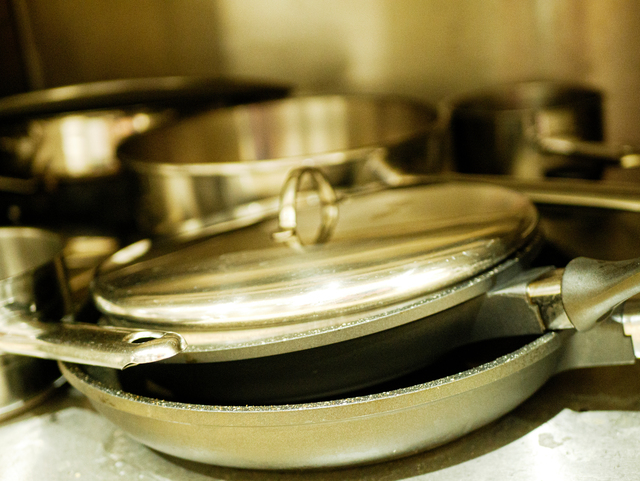
Some kitchen lid setups work well at first and then gradually drift back into disorder. This is common, and it usually points to one of two things.
Either the system doesn’t match how the kitchen actually gets used — meaning the lids are stored too far from where they’re needed — or the storage approach requires more effort than feels natural in the moment. If putting a lid away takes extra steps, it tends not to happen consistently.
Adjusting the location of lid storage so it’s close to the stove, or simplifying the system so lids drop in easily, often helps more than reorganizing the same space a second time.
Read More: 8 Storage Solutions Ideas for Small Bathrooms
Magnetic Lid Holders and Newer Storage Products Worth Knowing About
There’s a newer category of kitchen storage products built specifically for lids. Magnetic lid holders, stackable lid organizers, and expandable under-shelf baskets all approach the problem differently.
Magnetic holders mount to the side of a refrigerator or metal cabinet and hold lids flat against the surface. They work well for frequently used lids that need to stay accessible.
Stackable organizers are designed to hold lids at a slight angle inside a cabinet, and can be layered vertically when shelf height allows. These products vary in quality and fit, so checking dimensions carefully before buying tends to save a return trip.
A Simple Kitchen Lid Storage Setup That’s Easy to Maintain Over Time
The most practical lid organization system is usually the one that’s easiest to keep up consistently — not the most elaborate one.
For many kitchens, that looks like a single vertical rack or a designated spot in a drawer, with lids grouped loosely by size. It doesn’t have to be precise. It just has to be consistent enough that lids return to roughly the same place each time.
Small frictions — lids that don’t quite fit, a rack placed inconveniently, a drawer too far from the stove — tend to undo even well-intentioned setups over time. Keeping the system close to where cooking actually happens tends to be more durable than a more complex arrangement tucked away in a corner.
It also helps to think of lid storage as something that can shift as the kitchen changes. A setup that works well in one season may feel off after a new pot enters the rotation or a cabinet gets reorganized. Revisiting it occasionally — not as a chore, but as a small adjustment — tends to keep things running without a full reset.
For more helpful tips, check out our organization section.