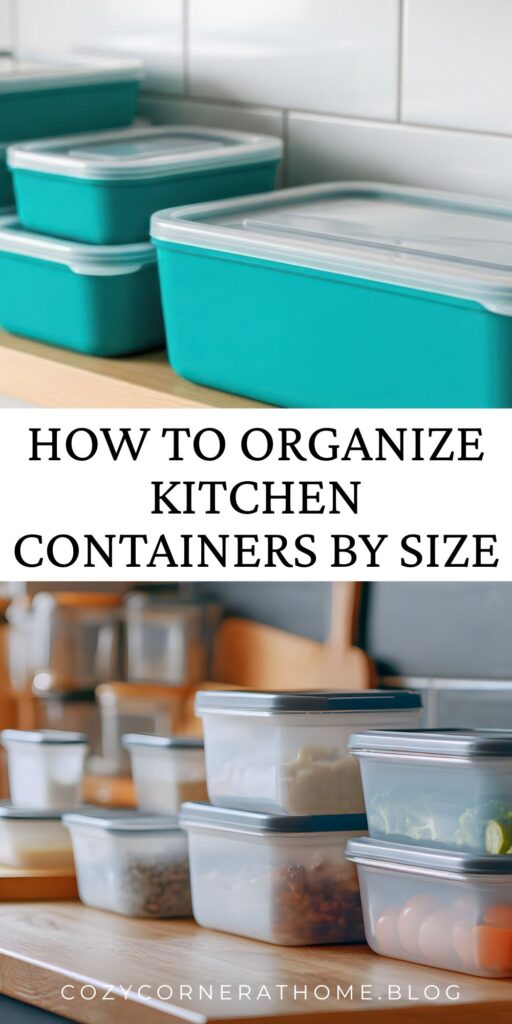
How to Organize Kitchen Containers by Size
This site contains affiliate links, view the disclosure for more information.
Disorganized kitchen containers create wasted space and daily frustration. Mismatched lids, toppling stacks, and containers you can’t find waste time during meal prep. Learning how to organize kitchen containers by size solves these problems and makes your kitchen more efficient.
Different kitchens have different storage spaces and container collections. Some people use mostly rectangular containers while others have round ones. Cabinet depth, drawer height, and the number of containers you own all affect which organization method works best.
This guide covers proven methods to organize kitchen containers by size in cabinets, drawers, and shelves. You’ll learn measurement systems, stacking techniques, and storage solutions that keep containers accessible and matched with their lids.
Measure Your Storage Space First
You need accurate measurements before choosing an organization system.
Measure cabinet width, depth, and height between shelves. Write these numbers down. Measure drawer dimensions if you plan to store containers there.
Count how many containers you own in each size category. Group them into small, medium, and large. This tells you how much space each size group needs.
Check for obstacles like pipes or shelf supports that limit usable space.
Sort Containers into Size Categories
Remove all containers and lids from storage. Place them on a counter or table.
Create three piles: small containers (under 2 cups), medium containers (2–6 cups), and large containers (over 6 cups). You can add a fourth category for extra-large if needed.
Match each container with its lid now. Recycle any containers or lids without matches. This reduces clutter before you organize.
Stack containers of the same size together. This shows you exactly how many you have in each category.
Organize Kitchen Containers Using Nested Stacking
Nested stacking saves the most vertical space.
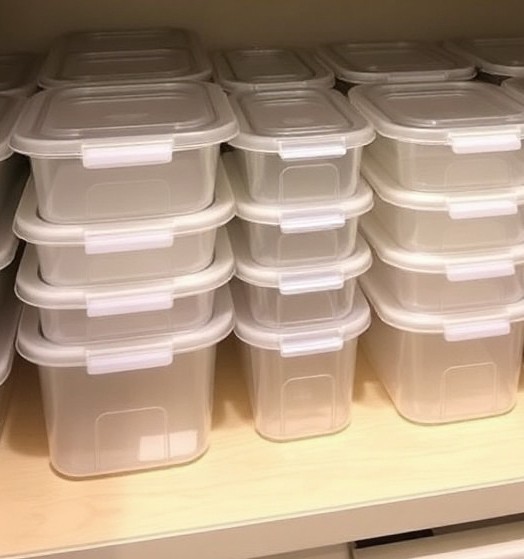
Place the largest container from each size category on the bottom. Nest the next smallest container inside it. Continue until all containers in that size group are nested.
Store lids separately from containers when using this method. Lids prevent proper nesting and waste space.
Keep one set of each size outside the nested stack for daily use. This prevents you from unstacking the entire set to grab one container.
Nested stacking works best for round and square containers. Rectangular containers with different length-to-width ratios don’t nest as efficiently.
Store Containers and Lids Separately
Separated storage makes both containers and lids easier to access.
For Containers
Stack same-size containers inside each other as described above. Arrange size categories from largest to smallest, left to right or front to back.
Place your most frequently used sizes in the most accessible spot. Medium containers typically get used most often.
Leave space between size categories so you can remove one stack without disturbing others.
For Lids
Stand lids vertically in a file organizer, tension rod system, or lid rack. Organize them by size from smallest to largest.
Label the spine of each lid with its size using a label maker or marker. This speeds up matching.
You can also use a shallow drawer with dividers to organize lids flat by size.
Use Drawer Dividers for Flat Storage
Drawer storage keeps containers visible and easily accessible.
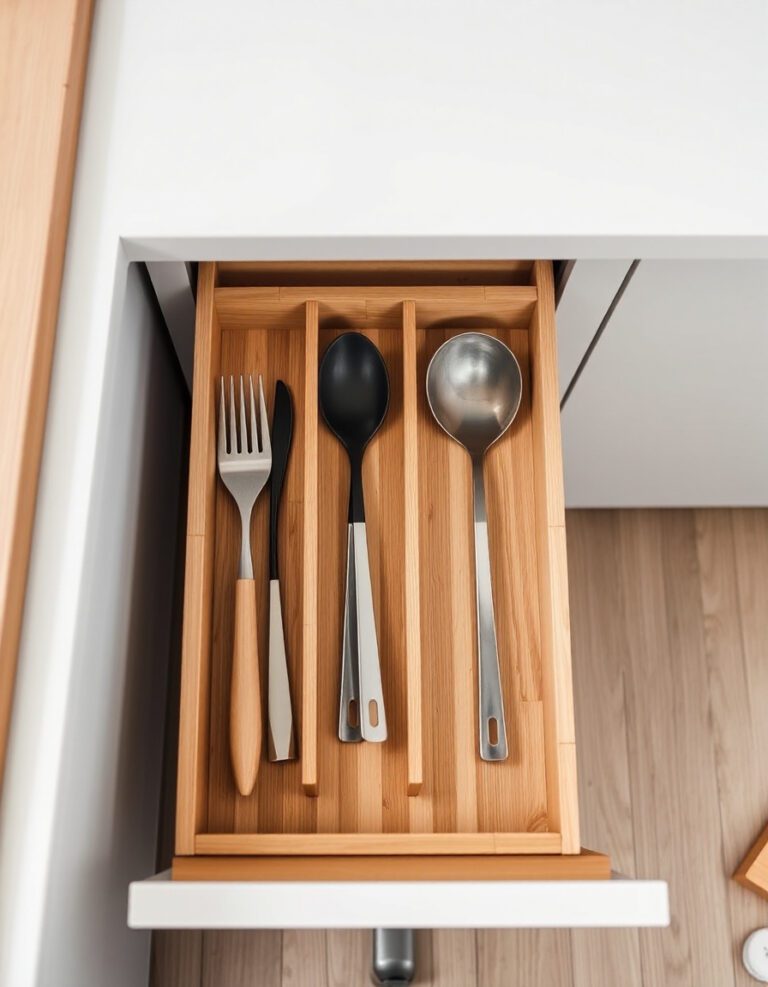
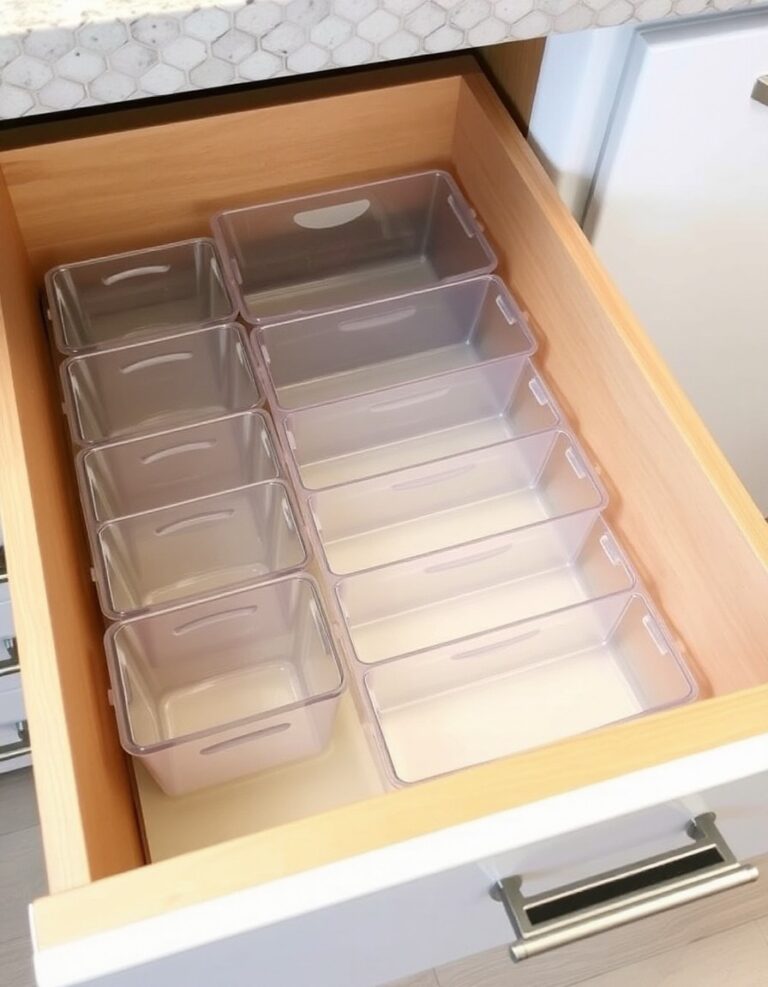
Install adjustable drawer dividers to create size-specific sections. Make the sections progressively larger from front to back or left to right.
Stack containers of the same size in each divided section. Keep stacks low enough that you can see and grab the top container easily.
Do not stack more than 3–4 containers high in a drawer. Taller stacks topple when you open the drawer quickly.
Store lids in the same drawer using a separate divider section, or dedicate a second drawer to lids only.
Organize Kitchen Containers with Shelf Risers
Shelf risers double your usable cabinet space.
Place a riser on your cabinet shelf. Put large containers on the lower level beneath the riser. Put medium containers on top of the riser.
Small containers can stack on either level depending on your collection size. Keep frequently used sizes at eye level or on the front of each level.
Use risers with non-slip surfaces to prevent containers from sliding. Wire risers allow you to see through to the lower level.
Read more: How to Organize Kitchen Utensils in a Messy Drawer
Create Zones by Container Use Frequency
Frequency-based organization reduces time spent searching.
Identify which container sizes you use daily, weekly, and rarely. This varies by household but often medium containers get daily use while extra-large containers are used weekly.
Place daily-use containers in the most accessible cabinet or drawer location. This is usually between waist and eye level, near your food prep area.
Store weekly-use containers in standard cabinet spaces. Place rarely used containers on high shelves or in less convenient locations.
Keep backup containers of frequently used sizes in easy-to-reach spots. Store extras of rarely used sizes in harder-to-access areas.
Stack by Shape for Maximum Stability
Shape-based stacking prevents avalanches and makes containers easier to grab.
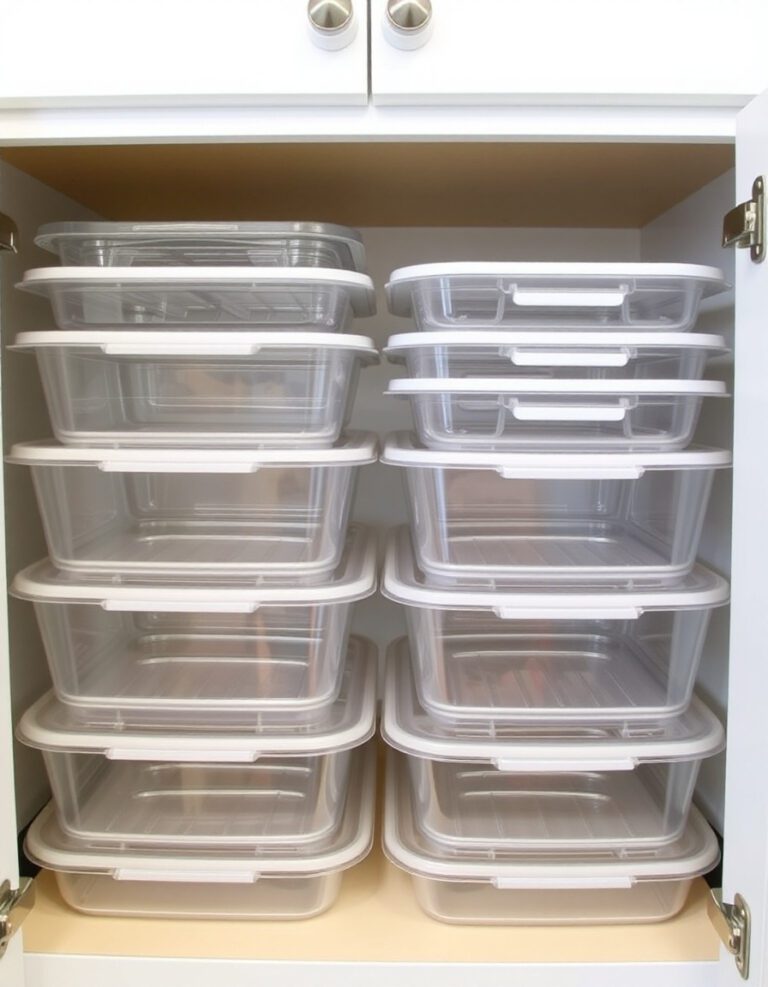
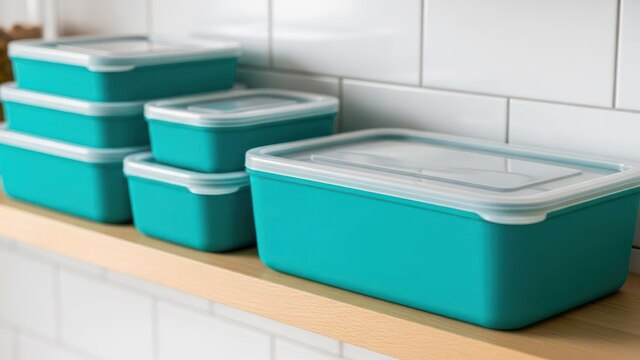
Group rectangular containers together. Stack them with largest on bottom, smallest on top. Align all edges.
Group round containers separately. These nest more efficiently than rectangles but need different storage depths.
Store square containers in their own section. Square containers stack more stably than round ones but don’t nest as tightly.
Never stack round containers on top of rectangular ones. This creates unstable stacks that fall when you remove one container.
Use Tension Rods for Lid Organization
Tension rods create vertical lid storage inside cabinets.
Install one or two tension rods vertically inside a cabinet. Space them about 1–2 inches from the cabinet wall.
Slide lids vertically between the tension rod and cabinet wall. Organize by size from smallest to largest, left to right.
This method works best for cabinets at least 12 inches wide. You can store containers on the same shelf in front of the lids.
Tension rods work only with lids that have rigid edges. Flexible silicone lids need different storage.
Install Pull-Out Drawers in Deep Cabinets
Deep cabinets hide containers in the back and waste space.
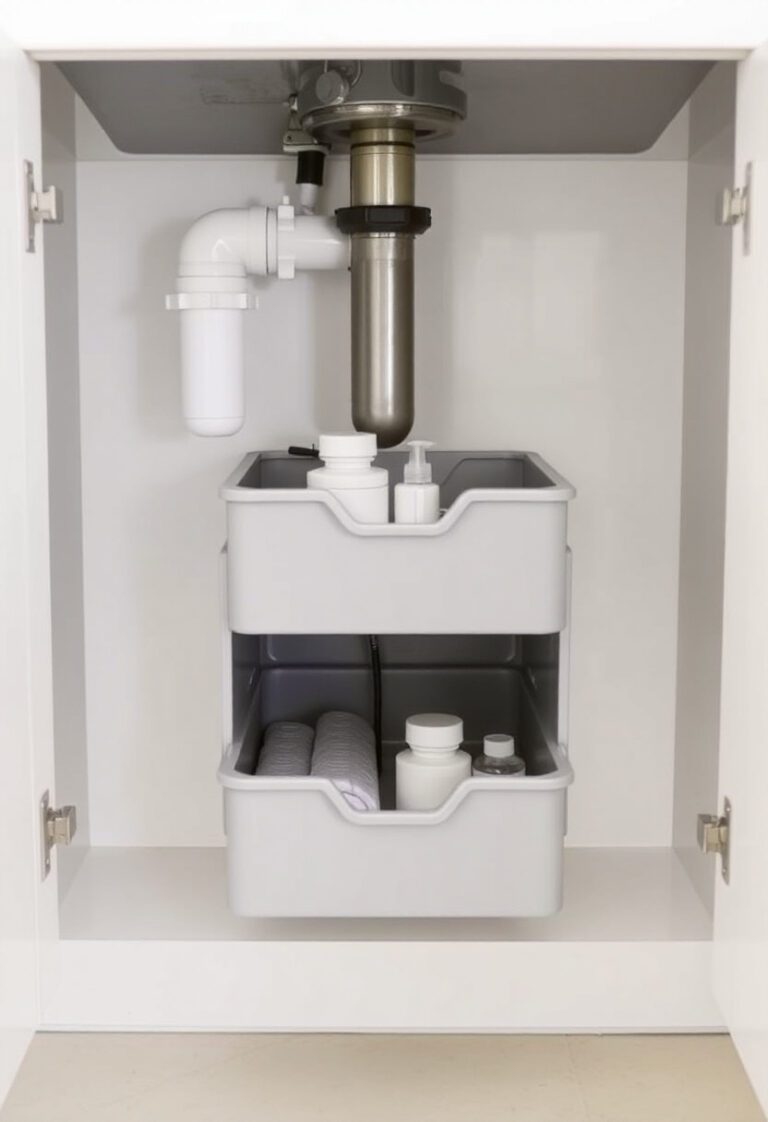
Install pull-out drawer systems designed for cabinets. These typically mount to cabinet sides or floor.
Organize containers by size from front to back on each pull-out level. Place frequently used sizes at the front.
Use dividers on pull-out drawers to keep size categories separated. This prevents containers from shifting when you pull the drawer out.
Pull-out systems cost more than other solutions but provide the best accessibility for deep cabinet storage.
Also Read:
- 19 Ways to Organize Kitchen Under the Sink for Easy Access
- How to Organize Kitchen Wooden Spoons and Spatulas
- 15 Ways to Organize Kitchen Mixing Bowls
Organize Kitchen Containers in Turning Trays
Turning trays work well for corner cabinets and deep shelves.
Place containers on the turntable organized by size in a circular pattern. Put tallest containers toward the center, shortest toward the edge.
Spin the turning tray to access containers in the back without removing front items. This reduces the unstacking problem common in corner cabinets.
Use Turning trays with raised edges to prevent containers from falling off during rotation.
Store lids separately when using a turning tray. Lids prevent efficient use of the circular space.
Handle Glass Container Storage Carefully
Glass containers need extra stability to prevent breakage.
Never stack glass containers more than 2–3 high. Glass is heavier than plastic and creates more pressure on bottom containers.
Place rubber shelf liners under glass container stacks. This prevents sliding and provides cushioning.
Store glass containers away from cabinet edges where they might get knocked off. Center them on shelves or place them against the back wall.
Keep lids on glass containers if you stack them. The lid distributes weight more evenly than stacking glass directly on glass.
Maintain Your Organization System Weekly
Container organization requires ongoing maintenance.
Return containers to their designated size zones after washing. Put them back in the correct stack or nested position immediately.
Relocate containers if you notice you’re consistently reaching past one size to get another. This means your frequency zones need adjustment.
Remove and recycle any containers that lose lids during the week. Don’t let unmatched containers accumulate.
Wipe down shelves or drawer bottoms weekly when containers are in use. This prevents dust buildup and keeps containers clean when stored.
For more helpful tips, check out our organization section.