14 Ways to Organize Kitchen Cabinets Without Extra Spending
This site contains affiliate links, view the disclosure for more information.
Cluttered kitchen cabinets slow down meal prep and make it harder to find what you need. Learning how to organize kitchen cabinets using items you already own can improve access and reduce wasted space. This guide covers practical methods that require no purchased organizers.
The strategies below focus on repositioning, repurposing, and removing excess. Each method uses common household items or free rearrangement techniques. You can combine multiple approaches depending on your cabinet layout and storage needs.
Remove Expired and Duplicate Items First
Clear out items you no longer use before rearranging what remains. Check expiration dates on canned goods, spices, and condiments. Discard anything past its date or visibly spoiled.
Group duplicates together. Keep one or two of each item and relocate extras to a pantry or donate them. This step reduces volume and makes it easier to see what you actually store.
Wipe down empty shelves before returning items. Use a damp cloth to remove crumbs and dust.
Group Items by Frequency of Use
Place everyday dishes and glasses on lower shelves within easy reach. Store items used less than once per week on higher shelves or in back corners.
Create zones based on task. Keep baking supplies together, breakfast items together, and snack foods together. This reduces the number of cabinets you open during meal prep.
Do not stack heavy items above shoulder height. This increases the risk of items falling during retrieval.
Use Tension Rods as Vertical Dividers
Install tension rods vertically inside cabinets to create slots for baking sheets, cutting boards, and pot lids. Measure the interior height of the cabinet before selecting a rod.
Position rods approximately two to three inches apart. Slide flat items into the created slots. This keeps them upright and prevents stacking.
Tension rods work best in cabinets at least ten inches deep. Shallow cabinets may not provide enough support.
Read More: 6 Ways to Organize When Shelves Won’t Adjust
Repurpose Shoe Boxes as Drawer Organizers
Cut down cardboard shoe boxes to fit inside deep drawers or cabinet shelves. Use them to corral small items like seasoning packets, tea bags, or utensil sets.
Remove lids and trim box height if needed. Label each box with a marker or tape. This prevents items from shifting when you open and close the drawer.
Replace boxes when they become worn or stained. Cardboard absorbs moisture over time.
Stack Plates and Bowls by Size
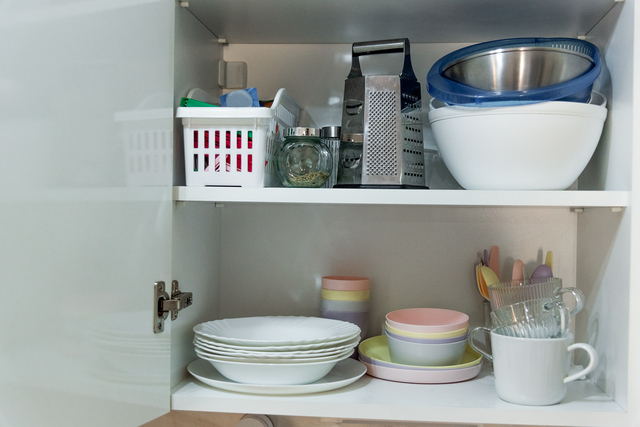
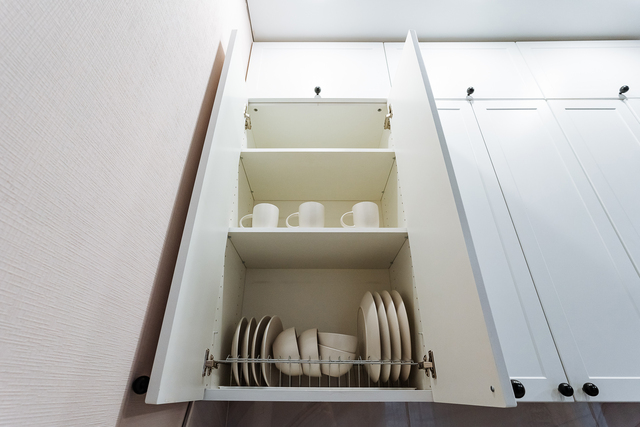
Store plates in stacks sorted by diameter. Place largest plates on the bottom and smallest on top. This prevents smaller items from getting trapped underneath.
Limit stacks to six to eight items. Taller stacks are harder to access and more likely to tip. Use a second shelf or relocate overflow to another cabinet.
Keep daily-use dishes on the lowest shelf. Reserve upper shelves for serving platters and specialty dishware.
Turn Cans and Jars to Face Forward
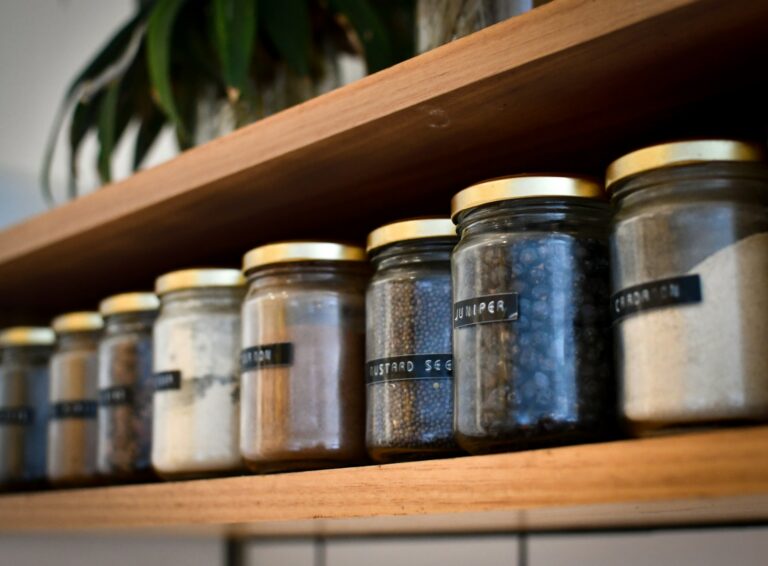
Rotate all labels to face the front of the shelf. This eliminates the need to pull items out to identify them.
Arrange cans by category: vegetables, soups, sauces. Within each category, group similar items together. Place taller jars in back and shorter cans in front.
Check labels during each use. Move items nearing expiration to the front.
Use Lid Racks from Pot Sets as Shelf Dividers
If your cookware came with a removable lid rack, repurpose it as a shelf divider. Place it on its side to create vertical sections for trays or tupperware lids.
Secure the rack with non-slip shelf liner if it slides. This prevents it from shifting when you remove items.
Nest Mixing Bowls and Storage Containers
Store mixing bowls inside each other from largest to smallest. Keep matching lids in a separate stack or box nearby.
Nest food storage containers the same way. Store lids vertically in a repurposed box or slot them between nested containers if space allows.
Avoid forcing mismatched lids onto containers. This can warp plastic and reduce seal effectiveness.
Relocate Rarely Used Items to High Shelves
Move seasonal items like holiday platters, large serving bowls, and specialty appliances to the topmost shelves. Use a step stool to retrieve them as needed.
Store lightweight items only at high levels. Heavy items like stand mixers or dutch ovens should remain on lower shelves or counters.
Label high shelves if contents are not visible from below. Use tape and a marker to note what is stored there.
Related Post: 6 Fixes for Cabinets With Hard to Reach Corner Space
Create a Command Zone Near the Stove
Organize kitchen cabinets closest to the stove with oils, spices, and cooking utensils. This reduces movement during meal prep.
Keep pot holders, trivets, and wooden spoons within arm’s reach. Store baking spices and extracts in a separate cabinet near the oven if space permits.
Avoid storing heat-sensitive items like chocolate or certain oils directly above the stove. Heat can degrade quality over time.
Use Baskets or Bins You Already Own
Repurpose wicker baskets, plastic bins, or small boxes from other areas of your home. Use them to group snack bags, tea boxes, or condiment bottles.
Choose containers that fit your shelf depth. Leave at least one inch of clearance to pull the basket out easily.
Wash bins before using them in food storage areas. Remove any previous labels or residue.
Hang Measuring Cups and Spoons Inside Cabinet Doors
Use existing adhesive hooks or small nails to hang measuring tools on the inside of cabinet doors. This frees up drawer space and keeps tools visible.
Ensure hooks are rated for the weight of metal or ceramic measuring cups. Plastic hooks may not hold heavier items securely.
Open and close the door slowly after installation to confirm items do not catch or swing.
Also Read: 7 Fixes for Kitchen Drawers That Overfill Too Easily
Store Baking Sheets and Cutting Boards on Their Sides
Stand baking sheets, cookie trays, and cutting boards upright along the side wall of a cabinet. Use a tension rod or existing divider to keep them separated.
This method works best in cabinets at least twelve inches wide. Narrower spaces may not provide enough stability.
Avoid storing warped or bent sheets this way. They are more likely to fall forward.
Dedicate One Shelf to Overflow and Extras
Reserve one shelf or section for backups: extra dish soap, unopened spice jars, or bulk snack bags. This prevents overflow from spreading into organized zones.
Rotate stock as you use items. Move backups to the front when you open the last of an item.
Review this shelf monthly. Relocate or donate items that have sat unused for more than three months.
These methods require no purchased organizers and can be completed in one to two hours depending on cabinet size. Reassess your system every few months as household needs change. Adjust groupings and placements to maintain accessibility and reduce clutter.
For more helpful tips, check out our organization section.