How to Organize Kitchen Bakeware Without Stacking Clutter
This site contains affiliate links, view the disclosure for more information.
Bakeware storage often leads to stacked pans, tangled racks, and difficult-to-reach items at the back of cabinets. These issues can slow down meal prep and increase the risk of items falling when you pull one piece out. Learning how to organize kitchen bakeware using vertical dividers, adjustable racks, and designated zones can reduce clutter and improve accessibility.
This guide covers methods that keep baking sheets, muffin tins, cake pans, and cooling racks separated and visible. Each approach focuses on eliminating the need to lift multiple items to reach one piece. The techniques work in cabinets, drawers, and open shelving depending on your available space.
Most solutions require basic organizing products or items you may already have at home. No permanent installation is required for the majority of methods listed here.
Clear Out and Sort Bakeware Before Organizing
Remove all bakeware from its current location. Place items on a counter or table where you can see everything at once.
Group similar items together: baking sheets in one area, round pans in another, specialty molds in a third. Discard any pieces with warping, rust, or nonstick coating that has peeled significantly. These items can affect baking results or release particles into food.
Count how many of each type you use regularly. If you have duplicates that rarely see use, consider donating or storing them separately from everyday items.
Use Vertical Dividers to Organize Kitchen Bakeware in Cabinets
Vertical dividers create individual slots for each baking sheet or pan. This prevents stacking and allows you to slide one item out without moving others.
Adjustable wire or acrylic dividers fit inside most cabinets. Measure your cabinet’s interior width and depth before purchasing. Most dividers extend from 8 to 12 inches tall, which accommodates standard baking sheets and pizza pans.
Place the divider at the front of the cabinet shelf. Slide baking sheets, cutting boards, and cooling racks into each slot. Leave at least half an inch of space between items to prevent scratching nonstick surfaces.
Install Pull-Out Racks for Deep Cabinet Storage
Pull-out racks slide forward to bring items at the back within reach. They work well in lower cabinets where bending or reaching creates difficulty.
Measure the cabinet’s interior dimensions, including the height clearance when the shelf is fully extended. Some models require screws for mounting, while others use tension or adhesive strips. Metal racks typically support more weight than plastic versions.
Load heavier items like cast iron skillets or stoneware on lower tiers. Place lighter bakeware such as aluminum pans or silicone molds on upper levels. Test the slide mechanism before loading the rack completely to confirm smooth operation.
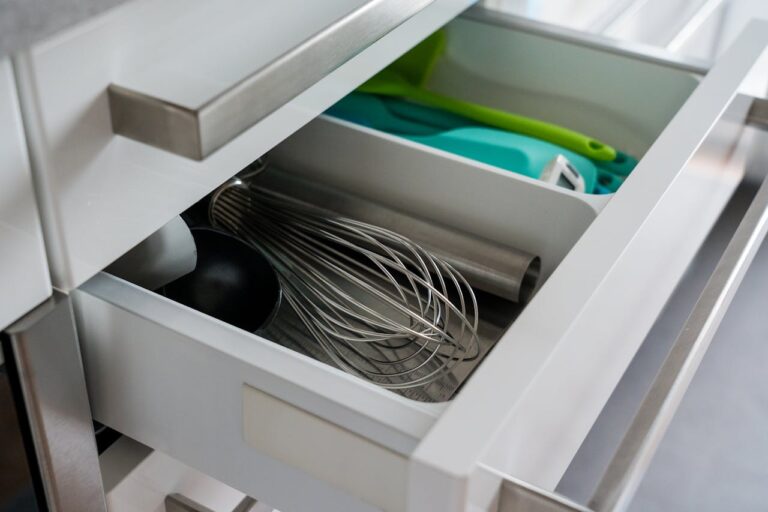
Organize Kitchen Bakeware Vertically in Deep Drawers
Deep drawers allow bakeware to stand upright with handles or edges facing up. This orientation uses vertical space efficiently and keeps items visible.
Add drawer dividers or tension rods to create sections. Tension rods install without tools by twisting to expand between drawer sides. Space them 2 to 3 inches apart depending on your pan widths.
Stand baking sheets and cutting boards vertically in the created slots. Store muffin tins and loaf pans with their longest edge upright. Check that drawer glides can handle the added weight before fully loading.
Related Post: 6 Fixes for Cabinets With Hard to Reach Corner Space
Use Pegboard Systems for Open Wall Storage
Pegboard panels mount to walls and accept movable hooks or pegs. This creates customizable storage that adapts as your bakeware collection changes.
Attach the pegboard to wall studs using screws and washers. Maintain at least a quarter-inch gap between the board and wall so hooks can insert from the front. Metal pegboards support heavier items than fiberboard versions.
Hang baking sheets, pizza pans, and cooling racks using J-hooks or S-hooks. Trace outlines of each item with a marker or paint to create a visual guide for returning items. Place frequently used pieces at eye level and specialty items higher or lower based on access needs.
Store Bakeware in File Organizer Racks
Desktop file organizers designed for papers also work for flat bakeware. The angled slots keep items separated and visible.
Metal mesh organizers withstand more weight than plastic versions. Place the organizer inside a cabinet or on a shelf. Slide one baking sheet, cooling rack, or cutting board into each slot.
This method works for items up to about 15 inches wide. Larger commercial-sized baking sheets may not fit standard file organizers. Check slot width before purchasing.
Organize Round and Square Baking Pans with Shelf Risers
Shelf risers create two levels of storage in the same vertical space. They reduce the need to stack pans directly on top of each other.
Choose risers with a stable base and smooth top surface. Adjustable-height models offer flexibility for different pan sizes. Place the riser toward the back of the shelf.
Store less-used items like springform pans or specialty bundt molds on the riser’s top level. Keep everyday round cake pans or pie dishes on the lower shelf. Leave space between items on each level to allow easy removal.
Also Read: 7 Fixes for Kitchen Drawers That Overfill Too Easily
Use Tension Rods to Divide Bakeware in Cabinets
Tension rods press between cabinet walls without screws or adhesive. They create vertical dividers similar to purchased organizers but at lower cost.
Measure the interior width of your cabinet. Purchase rods that extend at least an inch beyond this measurement to ensure firm pressure. Install rods vertically by twisting to expand the spring-loaded ends.
Space rods 2 to 4 inches apart based on your bakeware thickness. Slide baking sheets, cutting boards, and flat pans between rods. Avoid overloading sections, as excessive weight can cause rods to slip.
Organize Muffin Tins and Loaf Pans in Stackable Bins
Stackable bins with open fronts allow visibility while containing smaller bakeware. This prevents loose items from shifting around cabinets.
Choose bins sized to your pan dimensions. Clear plastic bins make contents easy to identify without labels. Metal bins often include handles for easier removal from high shelves.
Store muffin tins in one bin and loaf pans in another. Stack bins with heavier items on the bottom. Label bin fronts if using opaque containers.
Store Bakeware Lids Separately Using Door Racks
Lids for covered baking dishes often create storage challenges when kept with their bases. Separating them can reduce bulk.
Over-the-door racks or cabinet-door organizers hold lids vertically. Measure your door thickness before selecting an organizer. Some models hang over the door’s top edge, while others mount with screws to the door’s interior.
Arrange lids by size with largest at the bottom. This prevents smaller lids from falling through gaps. Match each lid to its base using numbered stickers if you have many similar sizes.
Read More:
- How to Organize Kitchen Wooden Spoons and Spatulas
- How to Organize Kitchen Cabinets in Small Spaces
- How to Organize Kitchen Utensils in a Messy Drawer
Organize Specialty Bakeware by Frequency of Use
Items like tart pans, ramekins, or decorating turntables may not need daily access. Designating a separate zone for these pieces keeps everyday storage less crowded.
Place specialty items on higher shelves or in less accessible cabinets. Use labeled bins or baskets to group related items—for example, all cookie cutters and decorating tools in one container.
Maintain Organization with Regular Audits
Set a reminder every 3 to 6 months to review your bakeware storage. Remove items that haven’t been used and assess whether your current system still meets your needs.
Wipe down dividers, racks, and bins during these audits to remove grease or dust. Check that tension rods and adhesive organizers remain secure. Tighten any screws on pull-out racks or door mounts if you notice loosening.
Adjust divider spacing or bin placement as your collection changes. This ongoing maintenance prevents clutter from rebuilding over time.
For more helpful tips, check out our organization section.