16 Laundry Room Organization Ideas for Small Spaces
This site contains affiliate links, view the disclosure for more information.
Small laundry rooms face consistent storage challenges. Limited wall space, narrow floor plans, and the presence of bulky appliances leave very little room for detergents, dryer sheets, hampers, and cleaning supplies. Most compact laundry spaces also lack built-in shelving, which forces homeowners to rely on freestanding or wall-mounted additions.
Because no single solution handles every storage need, laundry room organization often requires combining multiple systems. A wall shelf can hold detergent, but it cannot store a full hamper. A rolling cart can hold folded laundry, but it cannot replace overhead cabinet space. Therefore, most organized small laundry rooms use two or three complementary storage methods working together.
This guide covers 16 practical laundry room organization methods suited to small spaces. The solutions include wall-mounted shelving, over-door organizers, stackable units, magnetic storage, cabinet inserts, tension rods, and dedicated hamper systems. Each method works independently or alongside other solutions in the list.
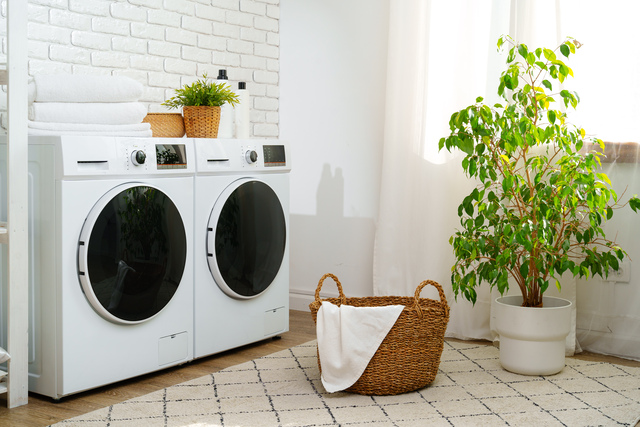
Wall-Mounted Shelving Above the Washer and Dryer
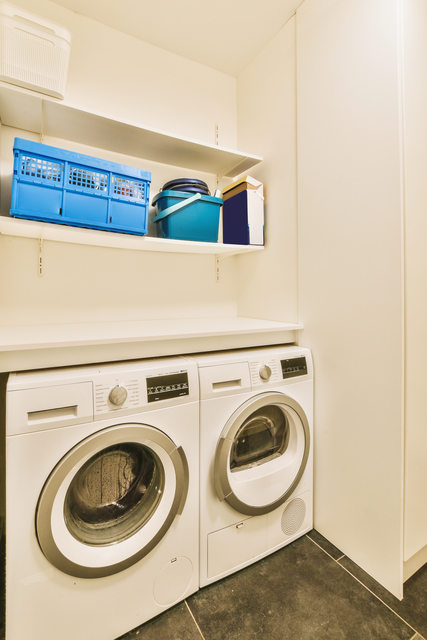
Laundry room organization starts vertically in small spaces. Wall-mounted shelves above the washer and dryer use otherwise empty wall space without occupying any floor area. Most homeowners install one to three shelves in this zone, depending on ceiling height and wall stud placement.
Standard shelf depth for this location typically runs 10 to 12 inches. Additionally, deeper shelves can interfere with loading top-load machines, so depth matters here more than in other rooms. Shelves can hold detergent, fabric softener, stain removers, and folded clean laundry.
- Typically supports 20–50 lbs per shelf depending on bracket type and stud anchoring
- Works best on drywall with stud backing or on concrete/block walls with anchor bolts
- Floating shelves without stud support can fail under the weight of liquid detergent containers
Shelves mounted without stud or wall anchor support pose a safety hazard if loaded with heavy items. This solution does not work well on walls shared with plumbing chases, where stud placement can be irregular or inaccessible.
Over-the-Door Organizers for Laundry Supplies
Over-the-door organizers hang directly on the back of the laundry room door without any drilling or wall anchors. They typically use wire, fabric, or plastic pockets to hold small bottles, dryer sheets, stain sticks, and lint rollers. Because they mount on the door, they free up every inch of wall and cabinet space for other uses.
However, these organizers work only on doors with standard clearance on the back side. A door that opens against a wall or appliance may not allow sufficient clearance for an over-door mount. Similarly, hollow-core doors can sometimes flex under heavier loads, which limits the total weight these organizers can support.
- Works on doors between 1.25 and 2 inches thick in most standard designs
- Pocket depth typically ranges from 2 to 4 inches, which suits bottles under 32 oz
- Wire versions allow visibility of contents; fabric versions conceal clutter
This solution does not accommodate large jugs of liquid detergent or bulky items without specialized heavy-duty versions.
Stackable Washer and Dryer Units to Free Floor Space
Stacking a dryer on top of a washer can reclaim up to 8 square feet of floor space in a small laundry area. This configuration requires a stacking kit specific to the appliance brand, and it only works with front-load machines. Top-load washers cannot accept a stacked dryer.
The freed floor space typically allows for a rolling hamper, a folding station, or additional cabinet storage. Additionally, many homeowners install a countertop across the top of the stacked unit, which creates a dedicated folding surface. The counter top can also hold a basket or bin for items waiting to be folded.
- Stacking kits vary by brand and model; universal kits often do not fit correctly
- Stacked units raise the dryer door height, which can create access challenges for shorter users
- Combined unit height typically reaches 72–76 inches
This configuration permanently limits machine replacement to same-brand or same-dimension models unless the stacking kit accommodates a different unit.
Related Post: 21 Small Laundry Room Organization Ideas for Supplies
Freestanding Laundry Room Organization Cabinets
Freestanding cabinets provide enclosed storage without any wall modification. Homeowners can place them beside or in front of machines, in corners, or along open walls. Because they require no installation, they move easily when the room layout needs to change.
Cabinet depth typically runs 12 to 16 inches, which accommodates standard laundry supply sizes. However, narrow laundry rooms with less than 36 inches of clearance may not permit a cabinet beside the machines without blocking walkway access. In those cases, corner-configured units or slim 9-to-10-inch-deep towers work better.
- Heights range from 36 inches (counter height) to 72 inches (full height)
- Adjustable interior shelves allow configuration for tall detergent bottles or stacked folded items
- Units without leveling feet can rock on uneven utility room floors
This solution adds the most storage volume but also consumes the most square footage of any freestanding option.
Rolling Laundry Carts Between Appliances
A rolling cart can fit into the gap between a washer and the wall, between two appliances, or beside a dryer in a side-by-side setup. Most carts measure 6 to 12 inches wide, which matches the typical clearance space in many laundry alcoves. They typically include two to five shelves and roll out for access.
Because these carts move on wheels, they allow access to the back of appliances for maintenance and cleaning. Also, locking caster wheels keep the cart stationary during normal use. Most models support 20 to 40 lbs per shelf, which handles detergent and small supply storage well.
- Available in metal mesh, plastic, or wood-veneer finishes
- Shelf spacing on fixed-shelf models may not accommodate tall bottles
- Carts with non-locking wheels tend to drift in rooms with uneven floors
This solution does not work in gaps smaller than 6 inches, as most standard carts require at least that width to roll in and out freely.
Tension Rod Storage Under Shelves or Between Walls
Tension rods mount between two walls or underneath a shelf without hardware. In a laundry room, a tension rod can hold spray bottles by their trigger handles, freeing shelf and counter space. Additionally, a horizontal rod mounted in a narrow alcove can hold a drying rack or hang delicate items.
Because tension rods require no tools or wall damage, they work well in rental properties or spaces where drilling is not permitted. However, they rely entirely on opposing wall pressure to stay in place. Therefore, walls farther than the rod’s maximum extension cannot use this method.
- Standard tension rods extend from 24 to 72 inches depending on model
- Support capacity typically ranges from 10 to 20 lbs for household-grade rods
- Rods mounted too loosely will fall; rods mounted too tightly can damage drywall finish
This solution works best between parallel walls no more than 60 inches apart for standard product sizes.
Magnetic Storage on the Side of the Washer or Dryer
Magnetic organizers attach directly to the metal exterior of a washer or dryer and hold small items like dryer sheets, stain pens, lint rollers, and measuring scoops. They require no installation, leave no marks, and reposition freely. However, this method only works on ferromagnetic metal surfaces, which excludes most stainless steel appliance panels.
Because these organizers mount on the machine itself, they keep frequently used items within immediate reach during laundry tasks. Also, they keep the machines’ side panels and top surfaces clear for other uses. Most magnetic organizers hold between 1 and 5 lbs, which suits small supply storage only.
- Available in single-pocket, multi-pocket, and bin styles
- Confirm appliance surface is ferromagnetic before purchasing; a refrigerator magnet can test this
- Magnetic force may weaken on painted or coated metal surfaces
This approach does not suit heavy items or large containers, and it cannot replace shelf or cabinet storage for primary supply organization.
Read More: 17 Kitchen Counter Organization Ideas for Small Appliances
Laundry Room Pegboard for Customizable Wall Storage
A pegboard panel mounts flush against a wall and accepts a variety of hooks, bins, and shelves that homeowners can rearrange at any time. In a small laundry room, a 2×4-foot panel can hold cleaning tools, brooms, dustpans, small baskets, and utility items. Additionally, pegboard accepts standard hooks found at most hardware stores, which keeps accessory costs low.
Because pegboard requires wall mounting, it works best on a clear wall section without plumbing or electrical access panels. Drywall anchors or stud mounting both work, but stud mounting provides more load capacity. The panel itself typically sits half an inch off the wall to allow hook engagement.
- Standard pegboard hole spacing measures 1 inch on center
- Panel thickness options include 1/8-inch (light use) and 1/4-inch (heavier loads)
- Hooks must match panel hole spacing; non-standard boards may limit accessory selection
This solution requires a minimum unobstructed wall section of approximately 24 inches wide for practical use.
Overhead Cabinet Installation for Concealed Laundry Storage
Wall cabinets mounted above the washer and dryer area provide fully enclosed storage, which reduces visual clutter. They accommodate larger items than open shelves because the enclosed space can hold awkwardly shaped supplies without them appearing disorganized. Similarly, cabinets keep laundry products out of reach of children and pets.
Cabinet installation requires stud location and wall anchoring with appropriate hardware. Cabinets deeper than 12 inches above a front-load washer can interfere with opening the door fully. Therefore, cabinet depth must align with the machine’s door swing radius before purchase.
- Standard wall cabinet depths for laundry applications run 12 to 15 inches
- Soft-close hinges prevent cabinet doors from slamming in rooms with hard surfaces
- Cabinet weight requires minimum two-stud mounting for units wider than 24 inches
Cabinets installed without proper stud or anchor support can fall and cause serious injury. This solution adds the most concealed storage but requires the most installation effort of any wall-mounted option.
Retractable Drying Racks Mounted to the Wall
A wall-mounted retractable drying rack folds flat against the wall when not in use and extends outward to hold wet garments for air drying. In a small laundry space, this eliminates the need for a freestanding drying rack that would otherwise occupy floor space. Most retractable models hold between 6 and 15 garments depending on bar count.
Because the rack folds back, it works in spaces too narrow for a permanent drying structure. Also, some models mount on the back of a door rather than a wall, which adds another placement option. Most retractable racks support 20 to 30 lbs when fully extended.
- Steel-frame models typically outlast plastic alternatives in humid laundry environments
- Mount height should allow garments to hang without touching the floor
- Some models extend 12–18 inches from the wall, which requires clearance planning
This solution handles delicates and air-dry items only; it does not replace the dryer for standard load processing.
Slim Rolling Hampers for Small Laundry Room Organization
Laundry room organization in tight spaces benefits from hampers designed with a narrow footprint. Slim rolling hampers typically measure 12 to 14 inches wide and 18 to 24 inches deep, which allows placement beside appliances or in corners. Many include a removable liner bag that makes carrying laundry to the machine easier.
Because the hamper rolls, it can slide under a counter or into a closet when not in use. Also, multiple slim hampers can sort laundry by color or fabric type without requiring a wide floor area. Most standard models hold one to one-and-a-half standard laundry loads.
- Vented side panels reduce odor buildup in enclosed laundry spaces
- Hampers with bag handles allow transport without removing the entire liner
- Models with lids contain odors but add height, which can create clearance issues under counters
This solution handles dirty laundry sorting but does not provide supply storage or folding space.
Also Read: 20 Under Cabinet Organization Ideas for Kitchen Storage
Countertop Over a Side-by-Side Laundry Setup
Installing a countertop over a side-by-side washer and dryer creates a flat folding surface without requiring additional floor space. The countertop uses the top of the machines as support, so it typically needs no wall attachment in most configurations. However, a wall-attached ledge bracket adds stability in high-vibration environments.
Because folding space often disappears first in small laundry rooms, a dedicated countertop significantly improves usability. Additionally, the counter can hold a folding basket, a small cabinet, or a mounted dispenser above it. Standard countertop depth typically matches the depth of the machines, around 27 to 30 inches.
- Laminate, butcher block, and solid surface all work for this application
- The top of most front-load machines sits at 36–38 inches, which aligns with standard counter height
- Top-load machines require a raised countertop on brackets, since the lid must open freely
This solution does not work above top-load machines without a bracket system that clears the lid’s full open position.
Under-Shelf Baskets for Extra Laundry Room Storage
Under-shelf baskets clip onto an existing shelf and hang below it, creating an additional storage layer without occupying any new wall space. In a laundry room, they work well for holding dryer sheets, small spray bottles, or lint rollers. Also, wire under-shelf baskets allow visibility of contents, which reduces search time during laundry tasks.
Because these baskets clip on, they require an existing shelf edge that the clip mechanism can grip. Most standard clips fit shelves between 0.5 and 1.25 inches thick. However, wire shelving with a round rod edge can limit clip compatibility depending on the basket model.
- Wire versions hold lighter items; solid-bottom versions suit liquid bottles better
- Typical load capacity ranges from 5 to 15 lbs depending on clip design
- Baskets that protrude below a shelf reduce usable headroom on the level beneath
This solution supplements existing shelving but cannot replace it as a primary storage method.
Labeled Bins and Baskets on Open Shelves
Laundry room organization with labeled bins on open shelves keeps similar items grouped and accessible. Each bin holds one category, such as stain removers, dryer accessories, or sewing supplies. Because the bins contain the clutter, the overall shelf looks organized even without cabinet doors.
Bin materials range from fabric (soft-sided, collapsible) to wire (rigid, ventilated) to plastic (waterproof, easy to wipe clean). In a laundry room with moisture and humidity, plastic or coated wire bins outlast fabric alternatives. Additionally, bins with front labels or chalkboard panels allow easy identification from across the room.
- Standard shelf bin widths run 6, 9, and 12 inches to fit common shelf dimensions
- Uniform bin sizing creates a cleaner visual line on open shelving
- Overcrowded bins defeat the organization system; bins should allow easy item retrieval
This solution requires consistent maintenance; bins that overflow or mix categories lose their organizational function quickly.
Read More: 19 Open Shelf Organization Ideas for a Balanced Look
Adhesive Hook and Adhesive Organizers for Small Items
Command-style adhesive hooks and small adhesive organizers mount to walls, cabinet interiors, and appliance sides without drilling. In a laundry room, they hold lightweight items like lint brush handles, small scissors, a measuring cup, or a whiteboard for laundry notes. Also, adhesive mounting works on tile, painted drywall, and cabinet surfaces without damaging finishes.
Because adhesive strength depends on surface preparation and product temperature range, laundry rooms with significant humidity fluctuations can reduce adhesive performance over time. Therefore, adhesive organizers work best for items under 2 lbs in total combined weight per mounting point. Additionally, following manufacturer instructions for surface cleaning before application directly affects how long the adhesive holds.
- Most command-style hooks support 0.5 to 5 lbs depending on hook size and surface type
- Removal strips allow clean removal from painted walls without peeling paint
- Re-adhesion after removal typically requires purchasing a new product
Do not use adhesive hooks to hold items over a working appliance without confirming weight capacity; falling objects near heat sources create a safety risk. This solution suits supplemental small-item storage only.
Built-In Laundry Niche or Alcove Shelving
A built-in shelving niche uses the recessed space between wall studs to create shallow storage without projecting into the room. In a small laundry space, a niche 3.5 inches deep and 14.5 inches wide can hold detergent packets, dryer balls, or stain pens flush with the wall surface. Because the niche sits inside the wall, it adds zero depth to the room’s usable area.
However, niche construction requires locating a section of wall with no plumbing, wiring, or blocking between studs. In many utility rooms, wall cavities contain service lines that prevent niche installation in preferred locations. Similarly, exterior walls include insulation that complicates niche construction.
- Standard stud spacing of 16 inches on center allows niches up to approximately 14.5 inches wide
- Interior walls work better than exterior walls for this application
- Niche shelves must either sit on cleats or use a custom insert; they cannot float without support
This solution requires basic carpentry skills and wall inspection before construction begins, which places it outside the category of no-install storage methods.
For more helpful tips, check out our organization section.