How to Organize Garage Shelves and Cabinets (Without Starting Over From Scratch)
This site contains affiliate links, view the disclosure for more information.
Garage storage problems follow predictable patterns. Tools land on random shelves. Seasonal items block daily-use equipment. Cabinets fill with unrelated objects grouped only by when they arrived. Most garages lack a consistent system, which causes items to accumulate without logical placement. These conditions make organizing garage shelves and cabinets feel impossible, even when the physical storage space already exists.
This guide covers practical methods for organizing garage shelves and cabinets without removing existing fixtures or purchasing a complete new system. It addresses wall-mounted shelving, cabinet zone layouts, bin and label strategies, vertical storage solutions, and heavy-load shelf organization. Each method works independently or alongside other approaches already in place.
How to Use Zones to Organize Garage Cabinets by Function
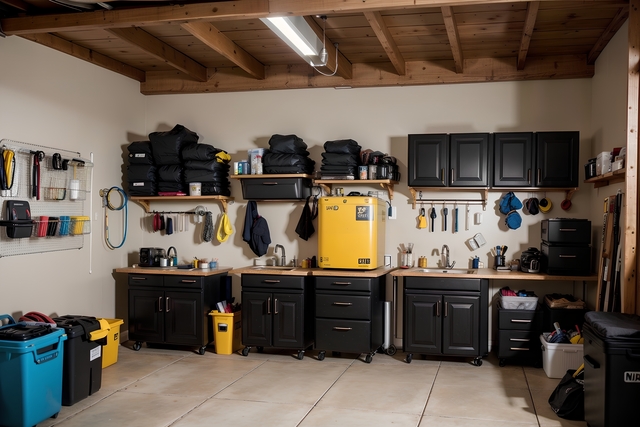
Zone-based organization divides the garage into dedicated areas based on how items get used. Each zone holds only the tools, supplies, or equipment relevant to a single activity or category. Common zones include automotive maintenance, lawn and garden, sporting goods, seasonal storage, and workshop tools.
Cabinets work well as zone anchors. When a cabinet holds only items from one zone, retrieval becomes faster and restocking happens more consistently. Additionally, zone boundaries reduce the tendency to place random items wherever space appears available.
Key factors that affect zone layout:
- Frequency of use (daily, weekly, seasonal)
- Physical weight of stored items
- Whether items need to stay near a door, vehicle, or workbench
- Cabinet height and shelf depth relative to item size
Zone systems typically break down when high-traffic areas lack designated homes for everyday items. Garages with limited cabinet space may need to assign multiple light-use categories to a single zone rather than maintaining strict separation.
Wall-Mounted Shelving Options for Garage Storage
Wall-mounted shelves extend storage capacity without consuming floor space. They attach directly to wall studs and support items that don’t fit inside cabinets. Most standard wall-mounted systems accommodate loads between 50 and 200 pounds per shelf, depending on bracket spacing and mounting hardware.
Steel bracket shelves offer adjustability. Wire shelving improves airflow around stored items. Solid wood or melamine shelves provide flat, stable surfaces for bins and boxes. However, wire systems can allow small items to fall through gaps, which limits their use for loose hardware or small containers.
Anchor wall-mounted shelves into wall studs, not drywall alone. Drywall anchors cannot reliably support loaded shelves over time.
Wall-mounted shelving works best for medium-weight, regularly accessed items. It does not suit very heavy loads such as engine parts or large tool collections without heavy-duty industrial brackets rated for that weight.
Related Post: 18 Garage Storage Ideas for Tools and Equipment
Bin and Label Systems That Keep Garage Shelves Organized
Bin systems assign physical containers to specific item categories. Clear bins allow visual identification without removing lids. Opaque bins pair with external labels to communicate contents. Similarly, color-coded bins can separate categories visually across multiple shelves without reading individual labels.
Standard bin sizes work across most shelf depths. Common sizes include shallow bins for small hardware, medium bins for tools and supplies, and deep bins for bulky items such as extension cords or hose attachments. However, mismatched bin sizes reduce shelf efficiency and create gaps where loose items tend to collect.
Effective label strategies include:
- Category name plus item count (e.g., “Screws – 4 boxes”)
- Location-based labels that indicate which shelf or zone the bin belongs to
- Date labels on consumable supplies such as caulk, paint, or lubricants
Bin systems require periodic maintenance. Without regular audits, bins accumulate unrelated items over time and the system gradually reverts to general clutter.
Heavy-Duty Shelf Units for Tools and Power Equipment
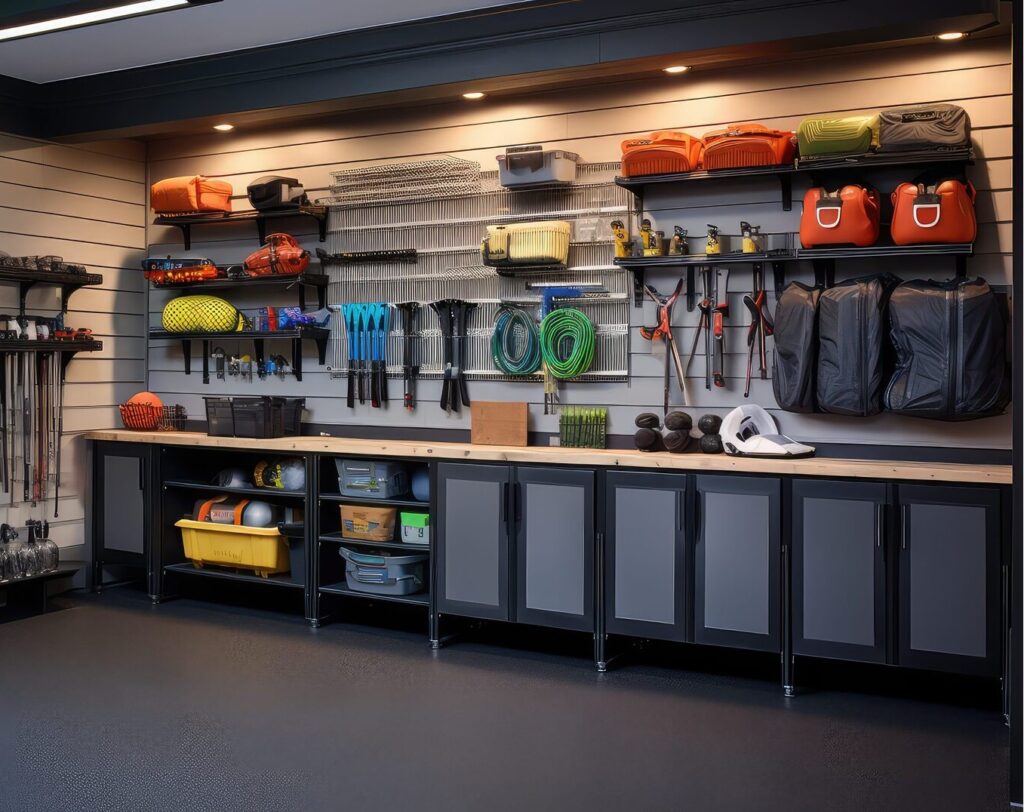
Freestanding heavy-duty shelving handles loads that wall-mounted options cannot. Steel wire or solid steel shelving units typically support between 500 and 2,000 pounds per unit across all shelves. They suit power tools, compressors, generators, and large containers of automotive or lawn care products.
Weight distribution across shelves matters significantly. Heavier items belong on lower shelves to keep the unit’s center of gravity low. Additionally, uneven loading on upper shelves can destabilize freestanding units over time, particularly on uneven concrete floors.
Most heavy-duty units come in standard widths of 36 to 48 inches and depths of 18 to 24 inches. Because garage floors often slope slightly toward drains, adjustable leveling feet help maintain shelf stability without shimming.
Freestanding heavy-duty shelving does not anchor to walls by default. In earthquake-prone regions or households with children, wall-anchoring straps add necessary stability.
Read More:
- 21 Ways to Organize a Small Kitchen on a Budget
- How to Organize Kitchen Drawers Without Dividers
- 15 Under-Sink Organization Tips for Pipes That Block Storage
How to Organize Garage Shelves Using Vertical Dividers
Vertical dividers separate tall, flat items stored upright on shelves. They prevent items such as lumber scraps, large cutting boards, folded tarps, or extension ladder sections from leaning, falling, or sliding. Most vertical dividers attach to shelf uprights or mount between shelf levels.
Adjustable dividers accommodate varying item widths across the same shelf span. Fixed dividers work better for permanent category separations where item types don’t change. In contrast, makeshift dividers made from scrap wood can work effectively for low-load applications.
Vertical storage increases usable shelf capacity in garages with high ceiling clearance. However, taller stored items may obstruct shelf access at eye level, which requires clear labeling or consistent placement habits to avoid retrieval problems.
Cabinet Door Storage for Small Garage Supplies
Cabinet door organizers attach to the interior face of cabinet doors. They hold small items — paint brushes, tape rolls, safety glasses, utility knives, and similar supplies — without consuming shelf space. Over-door racks, magnetic strips, pegboard panels, and pocket organizers all mount to standard cabinet door interiors.
Door organizers typically support lighter loads between 5 and 25 pounds depending on mounting method and door construction. Hollow-core cabinet doors cannot support the same loads as solid-wood doors. Therefore, checking door construction before mounting any organizer prevents door warping or hardware failure.
Because door organizers place items directly at eye level, they work well for frequently used small supplies. They also reduce the tendency to leave small items on open shelves where they contribute to visual clutter.
Also Read: 17 Garage Organization Ideas for Tools and Storage Bins
Pegboard Walls for Tool Organization Near Workbenches
Pegboard mounts to garage walls and accepts hooks, bins, and holders in any configuration. It suits hand tools, extension cords, spray cans, and other items that benefit from visibility and quick access. Because pegboard keeps tools in plain sight, it reduces the time spent searching through drawers or bins.
Standard pegboard comes in ¼-inch and ⅛-inch thicknesses. The ¼-inch version handles heavier tools more reliably. Pegboard requires a gap of at least ½ inch between the board and the wall surface to allow hook insertion. Additionally, pegboard must attach to studs or a backing frame — not to drywall alone — to remain stable under tool weight.
Pegboard works most effectively within arm’s reach of a workbench. It loses practical value when mounted in remote areas of the garage or in locations where items don’t return consistently to their designated hooks.
How Pull-Out Drawers Improve Deep Cabinet Access
Deep garage cabinets often trap items at the back. Pull-out drawer inserts slide into existing cabinet shelves and allow full access to rear storage without unloading front items. They typically fit cabinets with interior depths of 18 to 24 inches and come in metal or heavy-duty plastic versions.
Pull-out systems work well for automotive supplies, cleaning products, and grouped hardware kits. Also, they suit any cabinet where depth exceeds the arm’s comfortable reach. However, pull-out drawers reduce total vertical storage height within a cabinet bay because they require clearance above and below.
Installation requires a level cabinet floor and adequate side clearance. Cabinets with damaged interiors or non-uniform dimensions may not accept standard pull-out inserts without modification.
Stackable Storage Containers for Seasonal and Overflow Garage Items
Stackable containers provide uniform sizing that simplifies shelf use. When all containers share the same footprint, shelves fill with fewer gaps and more predictable weight distribution. Most stackable systems interlock between levels, which prevents shifting during access or in response to vibrations from garage door operation.
Containers rated for garage conditions typically use high-density polyethylene or polypropylene materials. These materials resist temperature fluctuations, moisture, and UV exposure better than standard storage totes. However, very large containers can exceed safe lifting weight when fully loaded, particularly on higher shelves.
Stackable systems work best when the same container type is used consistently across all shelves. Mixing container brands or sizes typically eliminates the stacking benefit and reduces the system’s overall efficiency.
For more helpful tips, check out our organization section.