13 DIY Garage Pegboard Ideas for Tool Organization
This site contains affiliate links, view the disclosure for more information.
DIY garage pegboard gives wall space a practical function. It keeps tools visible, accessible, and off the workbench. Most hardware stores carry the panels, hooks, and accessories needed to build a complete system.
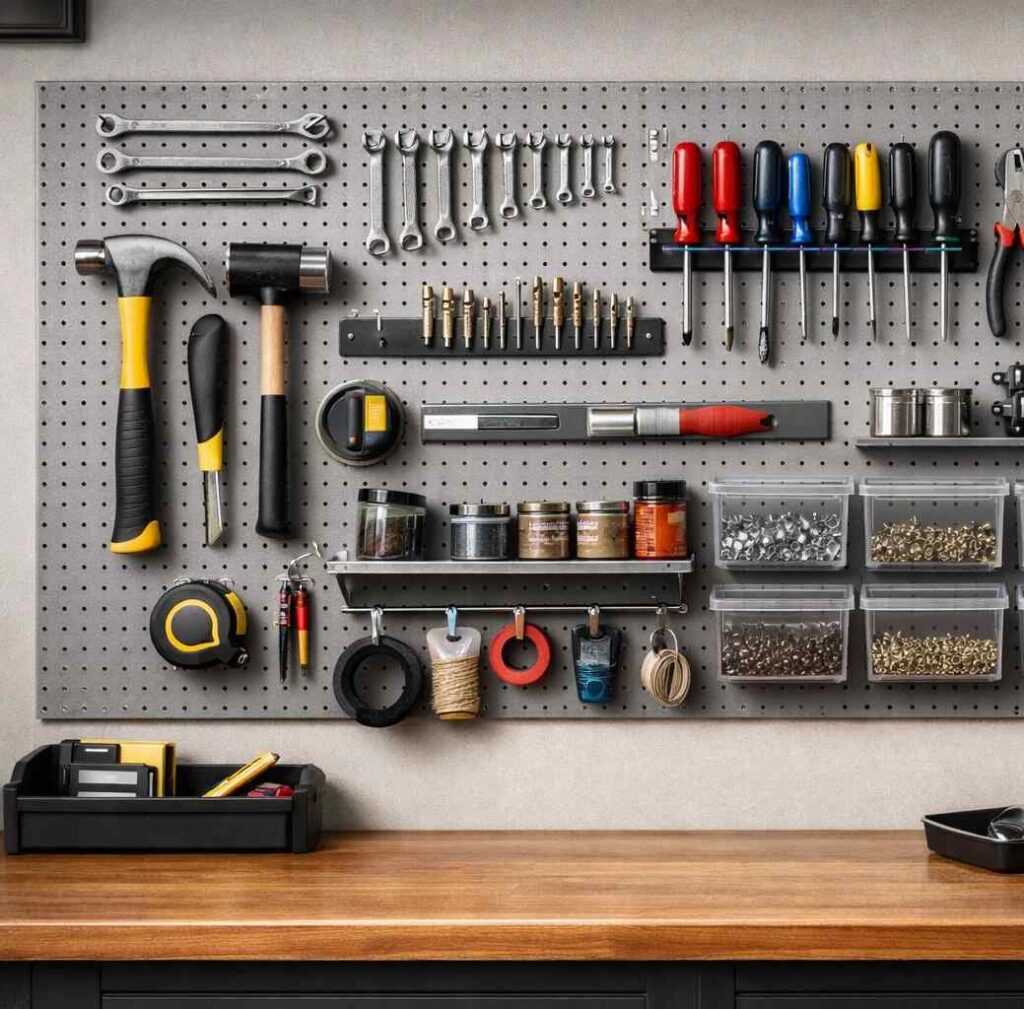
Garages store a wide range of tools — hand tools, power tools, cords, and small hardware. Because these items vary so much in size and shape, one hook type rarely handles everything. A mix of accessories typically produces a more functional layout.
This guide covers 13 pegboard configurations suited to different garage setups and tool collections. Each idea works on its own or in combination with others.
- Standard 1/4-inch hardboard pegboard works for most hand tools; heavier loads need 1/2-inch or metal panels
- Pegboard should be spaced off the wall so hooks can seat properly
- Most setups benefit from a mix of hooks, bin holders, and shelf brackets
- Hook sets, bins, and brackets are widely available at hardware and home improvement stores
Basic Hook Layout for Hand Tools
A simple grid of metal peg hooks handles most common hand tools. Hammers, screwdrivers, pliers, and wrenches each hang on individual hooks at eye level. Hook sets in assorted sizes are typically sold in packs of 20 to 50 pieces.
Double-loop hooks hold tools more securely than single-loop styles. Locking hook clips can prevent hooks from pulling out when a tool is removed. This setup works best for tools under five pounds per hook.


Metal Pegboard for Heavier Equipment
Steel or aluminum pegboard panels can support significantly more weight than standard hardboard. When anchored into wall studs, metal panels typically hold 50 to 100 pounds per panel. Always mount into studs — drywall anchors alone are not sufficient for heavy tool storage.
Metal panels also resist moisture and impact better than hardboard. They require metal-compatible hooks rather than standard wire or plastic types. This option suits garages with larger power tool collections.

Bin Holders for Small Hardware
Pegboard bin holders keep screws, drill bits, zip ties, and other small parts sorted and visible. Clear plastic storage cups attach directly to peg holes and allow contents to show without removal. Sets are widely available online and in home improvement stores, often in packs of 10 to 20 cups.
Labeled bins reduce time spent searching for parts. However, bins work best for loose small items — irregular tools like drill bits stay sharper in a dedicated index block.

Shelf Brackets for Boxed Tools
Some tools come in cases that won’t hang on hooks. Pegboard-mounted shelf brackets create flat storage surfaces using the same peg holes as standard hooks. Steel brackets typically hold 20 to 30 pounds per shelf when installed correctly.
Shallow shelves — four to six inches deep — work better on pegboard than deeper ones, which can shift the panel’s balance. Brackets are typically priced affordably at most hardware stores and are sold in pairs.

Shadow Board Layout for Shared Garages
A shadow board uses painted outlines to assign each tool a fixed position. When a tool is missing, the empty silhouette makes it immediately obvious. This approach works well in shared garages or workshops where multiple people use the same tools.
Spray paint or paint markers apply outlines quickly. Chalkboard paint allows labels to be updated as tools change. This system works best for stable collections — repainting becomes tedious if the layout changes often.
Trace each tool directly against the board before painting for an accurate silhouette.
Corner Pegboard Units
Corner units connect two panels at a 90-degree angle and make use of otherwise empty wall space. Total storage can increase noticeably without taking up additional floor space. Both panels need to align with stud locations on separate walls, which requires extra planning during installation.
Hinged connectors allow some adjustability in angle. This configuration suits larger garages more than compact single-car spaces where wall access matters.
Modular Tile Systems
Pegboard tiles connect side by side and allow a layout to grow over time. Individual tiles can be removed and repositioned without disturbing the rest of the installation. Plastic tiles suit lighter loads; metal versions handle heavier tools.
Modular systems cost more per square foot than sheet pegboard. They tend to suit renters or those who expect to reconfigure storage frequently.

Dowel Rod Holders for Cords and Straps
Dowel rods inserted into pegboard brackets hold extension cord coils, ratchet straps, and similar flexible items. Angled slightly upward, they prevent coils from sliding off. Pre-made dowel hook sets are available in packs of four to eight at most hardware retailers.
Dowels limit access to items stored behind them in dense configurations. They work best when positioned near the edge of a panel layout.
Also read: How to Organize Garage Shelves and Cabinets (Without Starting Over From Scratch)
Magnetic Strip Integration
A magnetic tool bar mounted alongside pegboard holds small metal tools that are awkward on hooks — hex keys, chisels, and small screwdrivers attach quickly and release with one hand. Bars are available in 12-, 18-, and 24-inch lengths and are typically priced affordably at home improvement stores.
Magnetic strips don’t hold tools with plastic, rubber, or aluminum components. Mounting the bar at the top edge of the panel keeps it accessible without blocking the hook area below.
Pegboard With a Workbench Surround
Pegboard installed directly above and around a workbench keeps frequently used tools within arm’s reach during projects. The layout can follow the shape of the bench and extend onto adjacent walls. This configuration reduces time spent walking to a separate storage area mid-task.
The pegboard height should align with comfortable reach — typically 18 to 60 inches from the floor. Items used most often hang closest to the bench surface.
Painted or Colored Panel Zones
Painting different sections of a pegboard layout in distinct colors helps organize tools by category or user. One zone might hold electrical tools, another woodworking tools. Color coding works particularly well in shared spaces.
Standard latex paint adheres to hardboard pegboard after light sanding. Avoid thick coats that can clog the peg holes. This method adds organization without requiring additional hardware.
Pegboard With Cabinet Combination
Pegboard and wall-mounted cabinets can share the same wall when positioned side by side or with the pegboard above the cabinet line. Cabinets handle tools that benefit from dust protection or locked storage; pegboard handles everyday accessible items. The combination uses vertical wall space efficiently.
This setup requires more planning during installation to ensure both systems anchor into studs at compatible heights. It suits garages being set up from scratch more than existing spaces with limited wall access.
Also read: 8 Garage Wall Storage Ideas – How to Use Vertical Space in Your Garage
Freestanding Pegboard Panel
A freestanding pegboard frame on casters doesn’t require wall mounting. It can be moved around the garage or repositioned when the layout needs to change. Some versions fold flat for compact storage.
Freestanding units typically hold less weight than wall-mounted panels. They work well as a supplemental station near a workbench rather than a primary storage system.
Pegboard works well alongside other garage storage methods. Wall-mounted rail systems, overhead storage, and freestanding shelving each handle categories that pegboard doesn’t — particularly bulk items, seasonal gear, and large power equipment.
For more DIY ideas, check out our DIY section.