21 Counter Organization Ideas for Spices
This site contains affiliate links, view the disclosure for more information.
Kitchen counters accumulate clutter quickly when spices lack a dedicated storage system. Bottles pile up near the stove, labels face backward, and frequently used seasonings become difficult to locate during cooking. Counter organization ideas for spices address these problems by creating accessible, visible systems that keep ingredients within reach while reducing visual clutter.
This guide covers 21 counter organization ideas for spices, organized from simple tiered risers to magnetic strips and drawer inserts. Each method includes tool requirements, space considerations, and setup steps. Material-specific cautions and storage boundaries appear where relevant.
Pre-Organization Preparation
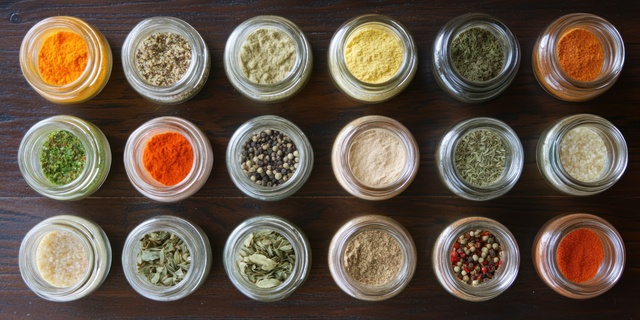
Remove all spice containers from counters, drawers, and cabinets. Wipe down each container to remove oil residue and dust. Check expiration dates printed on jar bottoms or labels. Discard ground spices older than two years and whole spices older than four years.
Group spices by use frequency. Place daily-use items like salt, pepper, and garlic powder in one pile. Separate baking spices, international seasonings, and occasional ingredients into additional groups. This sorting step determines which counter organization ideas for spices will provide the most efficient access.
Measure available counter space using a tape measure. Note the distance between the backsplash and counter edge, plus any areas blocked by appliances or outlets. Record these dimensions before selecting organizational tools.
Tiered Riser Shelving
Acrylic Step Organizers
Acrylic step risers create three or four levels of visibility on a single footprint. Each tier stands 2–3 inches higher than the one in front. This design allows label reading without lifting bottles.
Place the riser against the backsplash or along the counter’s back edge. Position tallest bottles on the highest tier. Arrange smaller jars on lower steps. Most acrylic risers measure 12–16 inches wide and accommodate 12–18 standard spice jars.
Wipe acrylic surfaces weekly with damp microfiber cloths. Avoid abrasive cleaners that scratch transparent plastic.
Expandable Bamboo Shelves
Bamboo step shelves adjust from 12 to 24 inches wide using sliding mechanisms. The natural wood finish suits farmhouse or minimalist kitchens. Each shelf tier supports approximately 5 pounds.
Extend the shelf to fit available counter space. Lock the side panels by tightening adjustment screws beneath each tier. Arrange spices with labels facing forward. Bamboo absorbs moisture, so position these organizers away from sinks and dishwashers.
Turntable and Turning Trays Systems
Single-Tier Turning Trays
Rotating platforms measure 10–16 inches in diameter and spin 360 degrees. Place the turntable in a corner or against a wall to maximize rotation clearance. Arrange spice jars around the outer rim with labels facing outward.
Single-tier turning trays hold 16–24 standard jars depending on diameter. Spin the platform to access rear bottles without moving front containers. Clean the rotating mechanism monthly by wiping the ball bearings underneath with a dry cloth.
Two-Tier Rotating Stands
Stacked turntables create two independent spinning levels. The upper tier typically measures 8–10 inches in diameter, while the lower tier spans 12–14 inches. This design doubles storage capacity in a vertical footprint.
Larger bottles belong on the bottom tier. Place smaller jars or spice blends on the upper level. Ensure the two platforms rotate smoothly without friction. Some models include non-slip surfaces that prevent jars from sliding during rotation.
Magnetic Spice Storage
Magnetic Strips with Tins
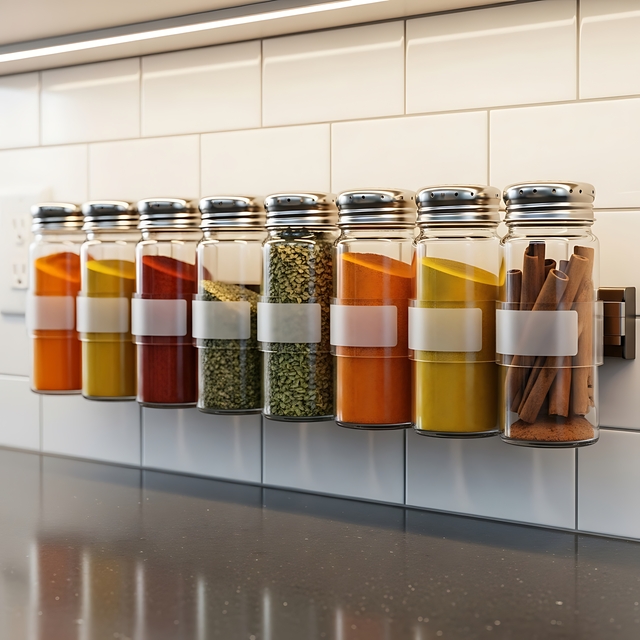
Mount metal strips horizontally on the wall above the counter or vertically on the side of a cabinet. Use adhesive strips rated for 10+ pounds or screw-mount hardware for tile backsplashes. Attach magnetic tins filled with spices to the strip.
Each tin typically holds 2–4 ounces of ground spices. Label tin lids with chalkboard stickers or printed labels. Magnetic strips measure 12–18 inches long and hold 8–12 tins. Mount strips at least 6 inches from stovetops to prevent heat exposure.
Position the strip at eye level for easy label reading. Tins should pull away from the strip with light force but resist sliding when attached.
Magnetic Spice Rack Boards
Flat metal boards mount on walls or backsplashes and function as display surfaces for magnetic containers. Boards measure 16–24 inches wide and 8–12 inches tall. Some include built-in shelves below the magnetic surface.
Arrange tins in alphabetical order or by cuisine type. The board’s flat design allows custom layouts that change as spice collections grow. Wipe metal surfaces monthly to remove grease buildup from cooking.
Pull-Out Counter Drawer Organizers
Slide-Out Cabinet Drawers
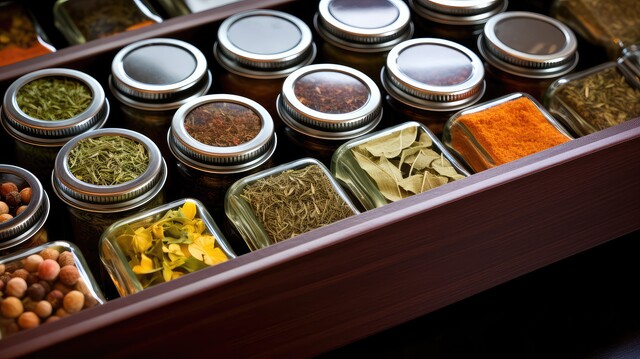
Install pull-out drawers inside lower cabinets directly beneath counter workspace. These drawers glide on ball-bearing tracks and extend fully for complete visibility. Measure cabinet interior width and depth before purchasing drawer units.
Most slide-out systems include adjustable dividers that create custom compartments. Arrange spices in rows with labels facing up. Soft-close mechanisms prevent slamming. Standard drawer units measure 12–18 inches wide and 20–22 inches deep.
Countertop Drawer Boxes
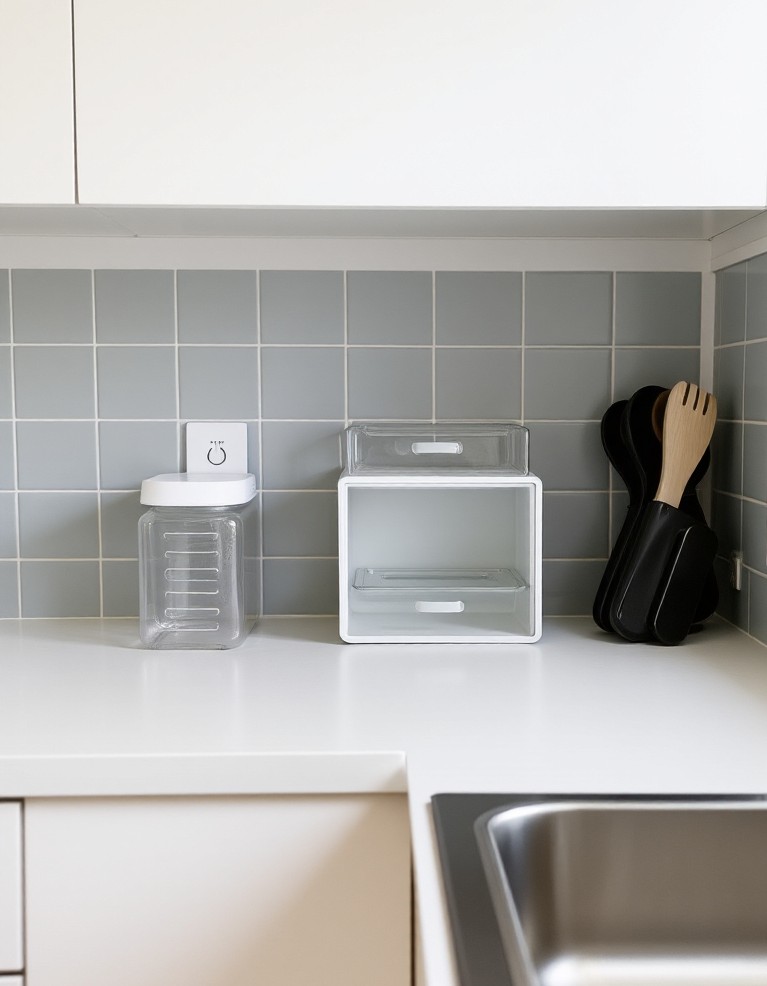
Freestanding drawer boxes sit on counters and hold 12–20 spice jars in shallow pull-out trays. Unlike cabinet installations, these units require no mounting hardware. The compact footprint measures approximately 10 × 10 × 12 inches.
Pull the drawer completely out to access rear jars. Some models include two or three stacked drawers for increased capacity. Position drawer boxes away from sink splash zones to protect wood or particle board construction.
Wall-Mounted Racks Near Counters
Floating Shelves
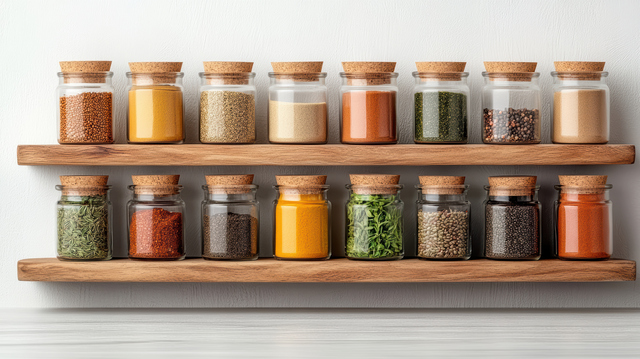
Install floating shelves 6–12 inches above counter height using wall anchors rated for 25+ pounds. Shelves measuring 24–36 inches long accommodate 15–25 spice jars in single rows. Use a level during installation to prevent bottles from sliding.
Place shelves above prep areas rather than above stoves. Heat and steam degrade spice potency. Space multiple shelves 8–10 inches apart vertically for easy access to each level.
Wire Grid Panels
Mount wire grid panels on walls adjacent to counters. S-hooks or basket attachments clip onto the grid and hold spice containers. Grid panels measure 24 × 36 inches and support modular organization.
Attach small baskets for bulk spice bags or individual hooks for hanging spice jars with loop lids. Reposition hooks as needed without tools. Wire grids work well in small kitchens where counter space is limited.
Read More: 19 Ways to Organize Kitchen Under the Sink for Easy Access
In-Drawer Counter Solutions
Spice Drawer Inserts
Angled drawer inserts tilt jars backward at 30–45 degrees, making labels visible when the drawer opens. These inserts fit standard 18–24 inch kitchen drawers and hold 24–36 jars.
Remove the drawer from its track. Place the insert inside and adjust dividers to match jar sizes. Return the drawer to the cabinet. Jars should sit securely without rattling when the drawer closes.
Expandable Drawer Dividers
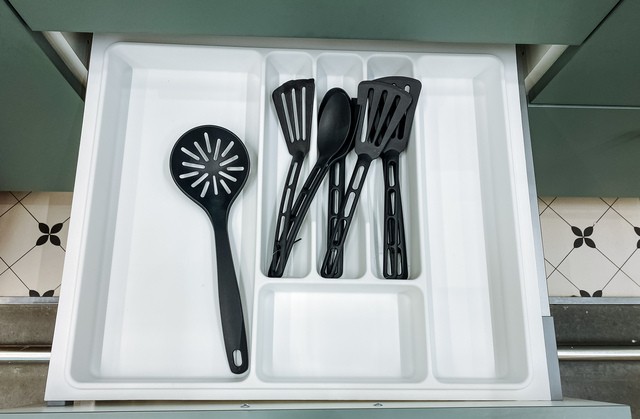
Adjustable dividers create custom compartments within existing counter-adjacent drawers. Spring-loaded ends press against drawer sides without adhesive or screws. Each divider supports lightweight spice jars up to 8 ounces.
Arrange dividers to separate spice categories: baking, savory, international. Labels should face up for easy identification. Expandable dividers work in drawers measuring 12–24 inches wide.
Countertop Spice Racks
Stainless Steel Tiered Racks
Metal racks with three or four tiers measure 12–16 inches wide and stand 10–14 inches tall. The open-wire design allows air circulation and prevents moisture buildup. Each tier slopes gently forward for label visibility.
Place the rack on the counter near primary cooking zones. Stainless steel resists rust and wipes clean with damp cloths. These racks hold 18–30 jars depending on configuration.
Wooden Countertop Stands
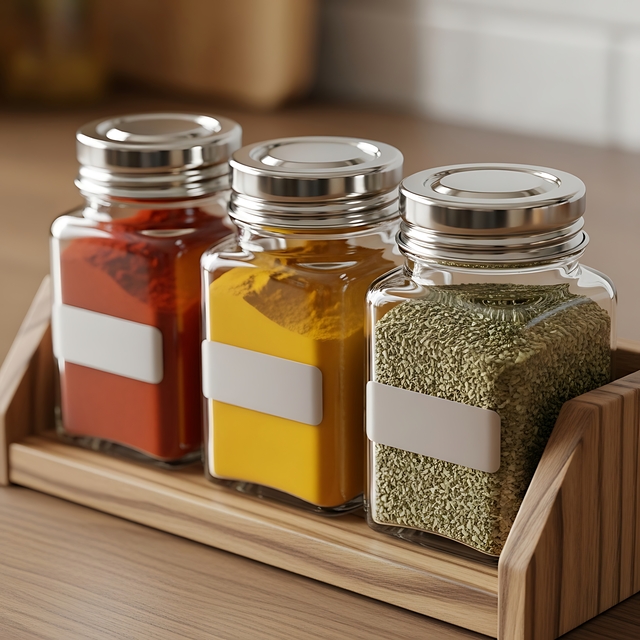
Solid wood stands feature slanted shelves that display spice jars at readable angles. Natural finishes suit traditional kitchens, while painted options match modern decor. Wood stands measure 14–20 inches wide.
Avoid placing wooden racks directly next to dishwashers or sinks. Moisture causes warping. Apply food-safe mineral oil every 6–12 months to maintain wood integrity.
Vertical Spice Towers
Tall revolving spice racks minimizes counter footprint while maximizing capacity. Each tier rotates independently.
Position spice racks in corners or at counter ends where height does not obstruct sightlines. The narrow base typically measures 8–10 inches in diameter. Some towers include adjustable tier heights to accommodate various jar sizes.
Test Tube and Vial Displays
Clear test tubes or glass vials arranged in wooden or acrylic holders create laboratory-style displays. Each tube holds 1–3 ounces of ground spices. Tubes measure 4–6 inches tall and fit into drilled holders.
Transfer spices into tubes using small funnels. Cork or screw-top lids seal contents. Arrange tubes alphabetically or by color for visual appeal. These displays work best for cooks with 15–30 spices who prioritize aesthetics.
Over-the-Counter Hanging Systems
Adhesive hooks mounted under upper cabinets support hanging spice racks or baskets. Command strips rated for 5+ pounds work on most cabinet surfaces. Hanging systems keep counters clear while maintaining easy access.
Attach small wire baskets to hooks and fill with frequently used spices. Ensure baskets hang low enough to reach comfortably but high enough to avoid interfering with counter work. This method suits renters who cannot drill into walls.
Spice Clips and Rail Systems
Metal or plastic clips attach to horizontal rails mounted beneath cabinets. Each clip grips a spice jar around its neck. Rails measure 12–24 inches long and hold 8–16 jars.
Slide jars into clips from the side. The rail keeps bottles suspended above the counter. Labels should face forward for identification. This system works for standard-sized jars with uniform neck diameters.
Clear Acrylic Bins
Stackable acrylic bins with open fronts organize spices by category. Each bin measures 6 × 6 × 4 inches and holds 4–6 jars. Stack two or three bins vertically to create drawer-like compartments.
Group similar spices: one bin for Italian seasonings, another for Mexican spices, a third for baking ingredients. Clear sides allow quick scanning without opening bins. Wipe bins weekly to remove fingerprints and spills.
Read More:
- How to Organize Kitchen Wooden Spoons and Spatulas
- How to Organize Kitchen Cabinets in Small Spaces
- How to Organize Kitchen Utensils in a Messy Drawer
Rolling Spice Carts
Mobile carts with two or three shelves provide flexible counter organization ideas for spices in kitchens with changing layouts. Locking wheels stabilize the cart during use. Most carts measure 18–24 inches wide.
Load shelves with spice jars, small appliances, or prep tools. Roll the cart to the stove during cooking and back to storage afterward. Metal carts resist moisture better than wood or bamboo options.
Mason Jar Counter Arrays
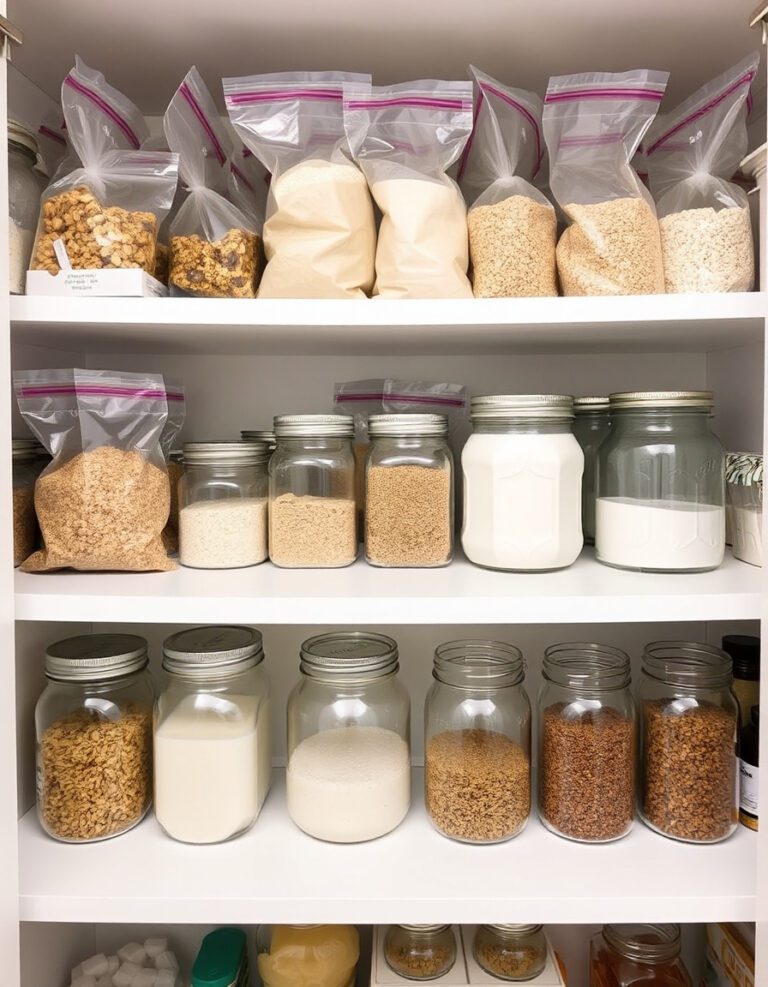
Uniform mason jars create cohesive visual displays on counters. Half-pint or 4-ounce jars suit most ground spices. Arrange jars in rows on trays or directly on counter surfaces.
Label jar lids with waterproof markers or printed stickers. Mason jars seal tightly and protect spices from humidity. The clear glass allows instant content identification. Group jars on small trays for easier cleaning.
Spice Drawer Organizers with Angled Inserts
These specialized inserts fit inside shallow drawers and angle jars at 45 degrees. The sloped design keeps labels visible without removing jars. Inserts typically accommodate 16–24 standard bottles.
Measure drawer interior dimensions before purchasing. Most inserts adjust to fit drawers between 12 and 18 inches wide. Jars should slide into slots snugly without excessive force.
Counter-Edge Spice Strips
Narrow adhesive or screw-mount strips attach to counter edges or backsplashes. Small shelves or clips protrude from the strip to hold spice jars. Strips measure 1–2 inches deep and 12–36 inches long.
This method uses otherwise wasted edge space. Jars sit in a single row with labels facing out. Ensure strips attach to solid surfaces, not laminate edges that may peel.
Also Read: 21 Ways to Organize Kitchen Small Appliances in Cabinets
Spice Drawer Liners with Built-In Dividers
Silicone or foam liners fit inside drawers and include molded compartments for spice jars. Each compartment prevents jars from sliding during drawer movement. Liners measure 12 × 18 inches on average.
Trim liners to fit drawer dimensions using scissors. Place jars in compartments with labels up. The non-slip surface eliminates rattling and keeps organization intact.
Tiered Turning Trays Cabinets
Corner cabinets with built-in turning trays extend to counter level, allowing spice storage that rotates into view. These systems typically include two or three circular shelves connected to a central pole.
Arrange tall bottles on lower tiers and short jars on upper levels. Spin shelves to access items in the cabinet’s rear. This method suits kitchens with corner counter spaces adjacent to cabinet openings.
Uniform Jar Systems
Replace mismatched spice containers with uniform jars that stack or nest efficiently. Square jars maximize space better than round bottles. Transfer spices into matching containers using funnels.
Label each jar with spice names and purchase dates. Uniform heights allow stable stacking. Most systems include 24–48 jars in 4-ounce or 6-ounce sizes.
Material-Specific Cautions
Avoid storing spices in direct sunlight, which degrades flavor compounds. Keep containers away from heat sources including stovetops, ovens, and dishwashers. Excessive heat causes clumping and potency loss.
Moisture damages labels and encourages mold growth in jars with loose seals. Position organizational systems at least 12 inches from sinks. Wipe containers before returning them to storage if splashed during cooking.
Plastic containers absorb odors over time. Glass or stainless steel jars better preserve spice flavors. Replace plastic containers every 2–3 years even if spices remain fresh.
Maintenance and Boundaries
Clean organizational systems monthly by removing all jars and wiping surfaces with damp cloths. Dry thoroughly before replacing containers. Check jar seals quarterly to ensure airtight storage.
Rotate spice stock by moving older containers to the front of displays. Use oldest spices first to prevent waste. Most ground spices maintain peak flavor for 6–12 months after opening.
Limit counter displays to 15–25 frequently used spices. Store specialty or seasonal items in cabinets to reduce visual clutter. Overfilled organizational systems become difficult to maintain and defeat accessibility goals.
For more helpful tips, check out our organization section.