
17 Ways to Organize Spice Jars in Cabinets
This site contains affiliate links, view the disclosure for more information.
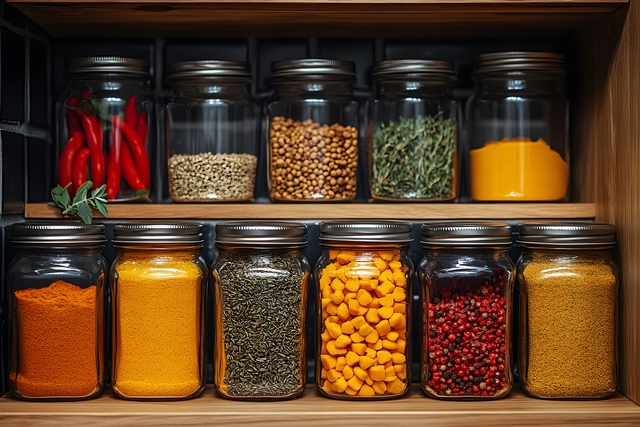
A chaotic spice cabinet can slow down your whole cooking routine. When jars are buried, mismatched, or stacked three deep, finding what you need takes longer than it should.
The good news? There are a lot of smart, low-effort ways to organize spice jars in cabinets — and most of them don’t require a full kitchen overhaul. Whether your setup is big or small, there’s likely something here that fits.
Why Your Spice Cabinet Setup Tends to Fall Apart Over Time
Spice organization isn’t a one-time fix. Jars get shoved back in after cooking, new ones arrive before old ones are used up, and the whole system slowly drifts into disorder.
It helps to think about how you actually cook — which spices you reach for daily, and which ones rarely leave the shelf. That context can guide which storage method works best for your space.
1. Use a Tiered Spice Rack to Organize Spice Jars in Cabinets
A tiered riser lifts the back rows so you can see every jar at once. No more digging around to find the cumin.
These come in bamboo, metal, and plastic — most fit standard shelves without any installation. A two- or three-step riser can immediately improve visibility.
2. Add a Turntable for Easy Access
A spinning turntable can make corner or deep cabinets much more functional. One rotation and every jar comes to you.
Look for one with a lip around the edge — it helps prevent jars from sliding off when you spin it. Sizes range from 10 to 18 inches, so measure your shelf first.
3. Mount a Door-Mounted Spice Rack Inside the Cabinet
The inside of your cabinet door is often unused space. A mounted rack there can hold 12–20 jars depending on the design.
Just check that the door can still close fully with the rack attached. Some racks attach with screws; others use adhesive strips for a no-drill option.
4. Label Every Jar — Even the Obvious Ones
Clear labels are one of the simplest ways to keep spice jars organized in cabinets long-term. They help you return things to the right spot after cooking.
Chalkboard labels, printed labels, or even basic masking tape all work. The key is consistency — pick one style and stick with it.
5. Group Spices by Cuisine or Cooking Use
Instead of alphabetizing, try grouping by how you cook.
This approach can feel more intuitive if you cook from the same flavor profiles regularly. It tends to reduce the time you spend scanning.
Read More: 15 Pot Lid Storage Solutions for Standard Cabinets
6. Try Uniform Spice Jars for a Cleaner Look
Mismatched store-bought containers can make shelves feel cluttered even when they’re technically organized. Switching to uniform jars — same size, same shape — can help a lot visually.
Square jars pack together more efficiently than round ones. They also tend to stack better if you’re tight on shelf space.
7. Use a Deep Drawer Insert to Organize Spice Jars Flat
If you have a deep kitchen drawer near the stove, a spice drawer insert can let you store jars lid-side up. You read the labels from above instead of squinting at tiny side text.
These inserts come in adjustable and fixed styles. Many are customizable to fit different jar heights.
8. Sort by Frequency of Use (Front to Back)
Put the spices you reach for daily at the front. Less-used ones go toward the back.
This is a practical system that doesn’t require any special organizers. It just requires a little thought about your actual cooking habits.
9. Add a Pull-Out Spice Shelf for Deep Cabinets
Deep cabinets are notoriously hard to organize. A pull-out shelf slides forward so you can see and grab what’s in the back without moving everything else.
These often require simple installation — usually just a few screws — and can hold quite a bit of weight.
10. Stack Magnetic Spice Tins on the Cabinet Side Wall
Magnetic tins can stick to the interior metal sidewall of some cabinets — or to a mounted magnetic strip. They keep counters clear while putting spices right at eye level.
Make sure your cabinet interior is metal before buying, or plan to install a strip. Not all cabinet materials are magnetic-friendly.
11. Use a Narrow Shelf Riser for Side-by-Side Bottles
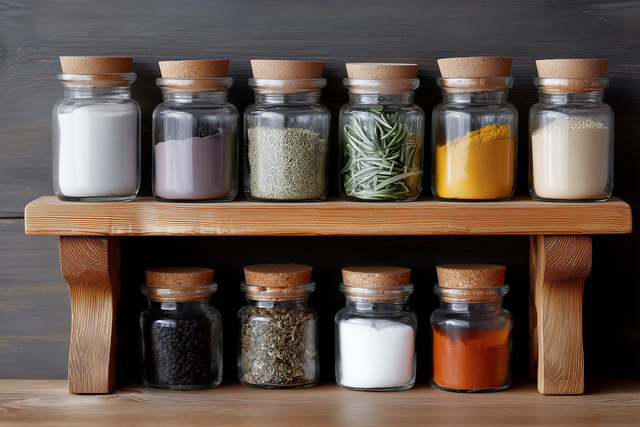
If your spices are lined up in rows, a simple shelf riser — basically a second elevated shelf — can double your usable space. One row on the shelf, one row above it.
These are inexpensive and usually don’t require any installation. They work especially well in taller cabinets with unused vertical space.
Read More:
- 21 Ways to Organize a Small Kitchen on a Budget
- How to Organize Kitchen Drawers Without Dividers
- 15 Under-Sink Organization Tips for Pipes That Block Storage
12. Try Alphabetical Order If You Have a Large Collection
For larger spice collections, alphabetical can be a solid fallback. It removes guesswork about which “zone” something belongs in.
The downside is that it can feel arbitrary if you cook by cuisine. Hybrid systems — alphabetical within categories — can offer the best of both.
13. Use Stackable Spice Jars to Maximize Vertical Space
Some spice jars are designed to stack directly on top of each other. They lock together so the tower stays stable.
These can be a smart option if shelf height is limited. Just keep the taller stacks toward the back so smaller ones stay visible.
14. Add Small Bins or Baskets to Group Spice Jars by Category
Small open-top bins can corral loose spice jars and keep categories together. Pull out the whole bin when you need a specific group.
Acrylic or wire bins tend to work well because you can see the jars inside without lifting the container. Clear materials generally help with visibility.
15. Keep Spice Jars Away from Heat Sources
Placement matters beyond just organization. Storing spices near the stove or above the oven can degrade flavor faster over time due to heat exposure.
A lower cabinet away from direct heat tends to be a better long-term home for your collection. It’s a small detail that can affect how long your spices stay potent.
Read More: 8 Storage Solutions Ideas for Small Bathrooms
16. Do a Quick Quarterly Purge
No organization system helps if you’re working around expired jars. A quick quarterly check — maybe 10 minutes — can keep the collection lean and current.
Toss anything past its expiration date or anything that’s lost its smell. Fewer jars often means easier organization overall.
17. Use a Chalkboard Shelf Liner to Label Sections
A piece of chalkboard contact paper on the shelf itself can let you write category names directly where jars sit. It’s low-commitment and easy to update.
This works well if your organization system changes seasonally or as your cooking evolves. It’s easy to erase and redo.
A Few Things Worth Keeping in Mind
Avoid overcomplicating your system. The more steps it takes to put a spice back correctly, the less likely you are to do it consistently.
Start with one change at a time. A tiered riser or a turning tray is a low-effort entry point that doesn’t require buying a whole new set of jars.
Also, be realistic about your cabinet dimensions before buying any organizer. Measuring first can save a lot of return shipping hassle.
For more helpful tips, check out our organization section.